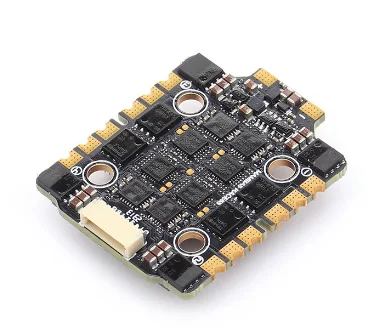
In the rapidly evolving world of unmanned aerial vehicles (UAVs), commonly known as drones, flight stability is a critical factor that determines performance, safety, and overall user experience. Whether for recreational FPV drones or industrial UAV applications, maintaining smooth and controlled flight requires precise coordination between multiple components. One of the most essential components responsible for this coordination is the Electronic Speed Controller (ESC). Understanding how ESCs improve drone flight stability is crucial for both drone enthusiasts and professionals in the UAV industry.
What is an Electronic Speed Controller?
An Electronic Speed Controller is an electronic circuit that controls and regulates the speed of a drone’s electric motors. Modern drones typically use brushless motors, which provide higher efficiency and power-to-weight ratios compared to brushed motors. However, brushless motors cannot function properly without ESCs, as they require precise timing signals to switch the motor phases correctly. The ESC interprets commands from the flight controller, which processes inputs from the pilot or autopilot system, and converts them into accurate motor speed adjustments.
In simple terms, the ESC acts as the bridge between the drone’s flight controller and its motors, ensuring that every motor responds accurately to control inputs. This capability directly influences the drone’s ability to remain stable in the air.
The Role of ESCs in Flight Stability
Flight stability is achieved when a drone maintains its intended position, orientation, and speed despite external disturbances such as wind, payload shifts, or sudden maneuvers. ESCs contribute to stability through several key functions:
1. Precise Motor Speed Regulation
Each motor on a drone must rotate at a specific speed to maintain balance. For example, in a quadcopter, the opposing motors must counteract each other’s torque to prevent uncontrolled yaw, pitch, or roll movements. ESCs continuously adjust motor speeds based on signals from the flight controller, enabling fine-tuned balance in real time.
Without ESCs, the motors would either run at a constant speed or respond inconsistently to pilot inputs, resulting in unstable flight or even crashes.
2. Fast Response to Flight Controller Commands
Modern ESCs are capable of extremely fast response times, often in the range of microseconds. This rapid adjustment allows drones to react immediately to changes in orientation or environmental conditions. For instance, if a gust of wind pushes the drone off course, the flight controller will calculate the necessary corrections, and the ESC will adjust motor speeds almost instantaneously to restore stability.
This high-speed responsiveness is especially critical for FPV racing drones, which perform rapid and complex maneuvers, and for industrial drones operating in unpredictable environments.
3. Smooth Throttle Control
Smooth throttle adjustments are essential for maintaining stable flight. Abrupt changes in motor speed can lead to oscillations, jitter, or overshoot in the drone’s movement. ESCs implement advanced control techniques such as PWM (Pulse Width Modulation) smoothing and sinusoidal commutation to ensure that motor speed changes are gradual and controlled.
This not only enhances flight stability but also improves the lifespan of the drone’s motors and reduces vibration, which is vital for drones carrying sensitive payloads like cameras or sensors.
4. Compensation for Motor and Propeller Variations
Even in high-quality drones, small differences in motor efficiency or propeller weight can cause imbalance. ESCs can compensate for these variations by dynamically adjusting the power delivered to each motor. This compensation ensures that all motors contribute evenly to lift and torque, maintaining smooth and level flight.
Without this capability, minor inconsistencies could accumulate, leading to drift, uneven rotation, or wobbling, all of which reduce stability and control.
5. Integration with Flight Controller Algorithms
ESCs work closely with the drone’s flight controller, which uses sensors such as gyroscopes, accelerometers, and magnetometers to determine orientation and movement. Advanced flight controllers implement algorithms like PID (Proportional-Integral-Derivative) control to calculate precise motor speed adjustments required to maintain stability. ESCs execute these adjustments in real time, translating complex algorithms into physical motor responses.
Some modern ESCs also support DShot or other digital communication protocols, allowing the flight controller to send commands more accurately than with traditional analog signals. This enhances the precision of motor control and, consequently, flight stability.
Advanced ESC Features That Enhance Stability
Not all ESCs are created equal. The latest models include features designed specifically to improve stability and performance:
1. Active Braking
Active braking allows an ESC to quickly slow down the motor when necessary, instead of waiting for natural deceleration. This feature is particularly useful during sharp turns or aggressive maneuvers, as it allows the drone to stop unwanted motion faster and regain control more efficiently.
2. Temperature and Current Monitoring
Overheating or overcurrent situations can destabilize a drone and potentially damage components. Advanced ESCs monitor both motor temperature and current draw, adjusting output to prevent overloading. By maintaining optimal operating conditions, ESCs ensure consistent motor performance and stable flight.
3. Soft Start and Anti-Shock Features
Soft start functionality gradually increases motor speed when the drone powers on, preventing sudden jerks that could destabilize the aircraft. Anti-shock features reduce vibrations and torque spikes, further enhancing flight stability, especially for drones with sensitive cameras or scientific payloads.
4. Bidirectional Communication and Telemetry
High-end ESCs can communicate back to the flight controller, providing real-time telemetry data such as RPM, voltage, and temperature. This feedback loop allows for even finer adjustments and predictive control, helping the drone maintain optimal stability under varying conditions.
Practical Examples: ESCs in Action
FPV Racing Drones
In FPV racing, drones must perform extremely fast rolls, flips, and turns. Any delay or inconsistency in motor response can result in loss of control. High-performance ESCs with microsecond-level response times and digital communication protocols ensure that each motor reacts instantaneously to the pilot’s commands, keeping the drone stable during high-speed maneuvers.
Aerial Photography Drones
For drones carrying cameras, stability is crucial to capturing smooth footage. ESCs regulate motor speed precisely, minimizing vibrations and preventing unwanted tilting or drifting. Combined with gimbal stabilization, this results in cinematic-quality video even in windy conditions.
Industrial UAVs
Industrial drones often carry sensors for surveying, mapping, or inspection. ESCs enhance stability by compensating for variable payload weight and environmental disturbances, ensuring accurate flight paths and reliable data collection.
Common Issues Affecting ESC Performance and Stability
While ESCs are critical for stability, several factors can compromise their effectiveness:
-
Poor Calibration: ESCs must be calibrated to match motor characteristics and the flight controller’s commands. Incorrect calibration can lead to uneven motor speeds and instability.
-
Low-Quality ESCs: Cheap ESCs may have slower response times, weaker current handling, or poor thermal management, all of which degrade flight stability.
-
Overheating: High ambient temperatures or prolonged aggressive maneuvers can cause ESCs to overheat, reducing performance and causing temporary or permanent instability.
-
Incorrect Communication Protocol: Using incompatible communication protocols between the flight controller and ESC can result in delayed or erratic motor responses.
Addressing these issues involves proper ESC selection, calibration, and maintenance.
Tips for Maximizing Drone Stability Through ESCs
-
Choose High-Quality ESCs: Invest in ESCs with fast response times, digital communication protocols, and thermal protection.
-
Calibrate ESCs Properly: Follow manufacturer guidelines to ensure each motor receives accurate commands.
-
Monitor Telemetry Data: Use ESC telemetry to track motor RPM, voltage, and temperature in real time.
-
Match ESCs to Motor Specs: Ensure that the ESC’s voltage and current ratings exceed the requirements of the motors to prevent underperformance.
-
Update Firmware Regularly: ESC manufacturers often release firmware updates that improve performance, reduce latency, and enhance stability.
Conclusion
Electronic Speed Controllers are the unsung heroes of drone flight stability. By precisely regulating motor speeds, rapidly responding to flight controller commands, and compensating for mechanical variations, ESCs ensure that drones remain smooth, balanced, and responsive. From high-speed FPV racing drones to industrial UAVs performing complex inspections, ESCs are central to achieving reliable flight performance.
As drone technology continues to advance, modern ESCs with features like active braking, telemetry feedback, and soft-start functionality will become increasingly critical. For anyone seeking optimal flight stability—whether hobbyist or professional—understanding and investing in the right ESC technology is essential.
www.pega-fly.com
pega-fly
About Author