Selecting the right camlock coupling is not a trivial hardware decision—it directly affects leak prevention, downtime, operator safety, and long-term equipment reliability across industrial fluid transfer applications. For operators managing oil distribution, agricultural irrigation, chemical storage, pharmaceutical processing, food production, municipal water treatment, mining, or firefighting operations, the wrong coupling choice can mean slow connection times, hose blow-offs, contamination risks, or costly leaks in high-vibration environments. This guide outlines the core decision criteria for choosing camlock couplings, drawing on the engineering practices of Union Metal Products (Guangzhou) Co., Ltd., a professional manufacturer of industrial quick-connect solutions based in Panyu District, Guangzhou, China, serving customers worldwide.
Understanding the Core Problem Camlock Couplings Solve
Industrial operations frequently face production inefficiencies, fluid leaks, and downtime caused by complex tool requirements for hose connections, compounded by corrosion in aggressive chemical environments. Camlock couplings address this by enabling tool-free, rapid manual connection and disconnection of hoses and pipes, reducing setup downtime while maintaining a secure seal under operating pressure. Union Metal positions its entire camlock range around this principle: delivering high-specification, tool-free coupling systems that provide reliable performance and competitive pricing for efficient industrial fluid transfer.
Step One: Match the Coupling Type to the Connection Points
Camlock couplings are designed in distinct configurations, each suited to a specific connection scenario. Choosing incorrectly often results in mismatched threading or unstable hose attachment. Union Metal's product line includes the following types:
- Type A (male adapter with female thread): Designed for pipe-to-hose transitions, offering tool-free operation that reduces downtime during setup.
- Type B (female coupler with male thread): Built for secure sealing in high-vibration environments, preventing spills in chemical and petroleum handling.
- Type C (female coupler with hose shank): Uses a hose barb design for enhanced grip, preventing hose blow-offs under pressure—ideal for agricultural and industrial use.
- Type D (female coupler with female thread): Simplifies connection of hoses to threaded pipe systems using dual cam arms that distribute pressure evenly for a tight seal.
- Type E (male adapter with hose shank): Facilitates rapid hose-to-hose or hose-to-tank changeovers, with a long hose shank that increases connection reliability—common in tank truck and oil distribution scenarios.
- Type F (male adapter with male thread): Allows direct connection of quick-disconnect lines to threaded machinery such as pumps or manifolds.
- Type DC (dust cap): Protects male adapter faces from contamination and impact damage when not in use.
- Type DP (dust plug): Blocks debris and moisture from open female couplers, which is essential for maintaining hygiene in pharmaceutical and food-grade systems.
Selecting the correct type depends on whether the existing equipment has a threaded port, a hose shank requirement, or needs a protective cap or plug during storage and transport.
Step Two: Select Material Based on the Media Being Transferred
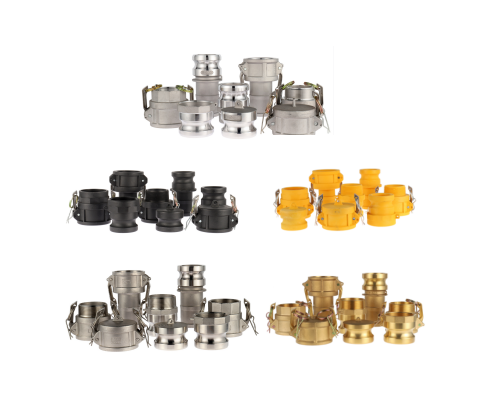
Material compatibility is one of the most critical—and frequently overlooked—factors in coupling selection. Union Metal offers camlock couplings in Aluminum, Stainless Steel, Brass, Polypropylene, and Nylon, each tailored to specific media. For example, in water treatment applications involving aggressive pH environments, plastic and polypropylene camlock couplings have been used to boost efficiency in corrosive conditions where metal fittings would otherwise fail. This demonstrates a broader principle: metallic couplings suit general industrial, petroleum, and heavy-duty mechanical applications, while polymer-based couplings are better suited to chemically aggressive or corrosive fluid streams.
Step Three: Verify Manufacturing Process for Mechanical Demands
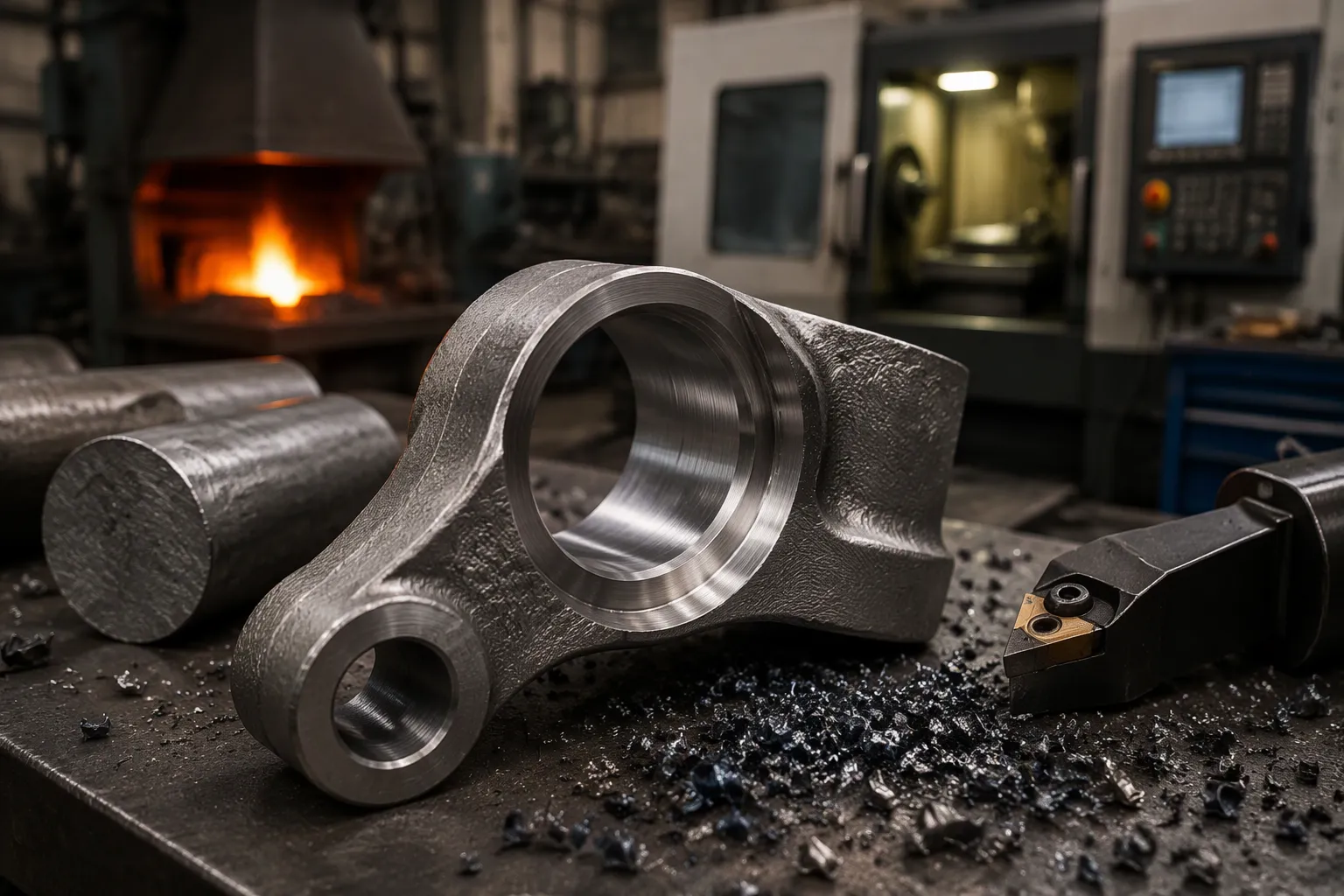
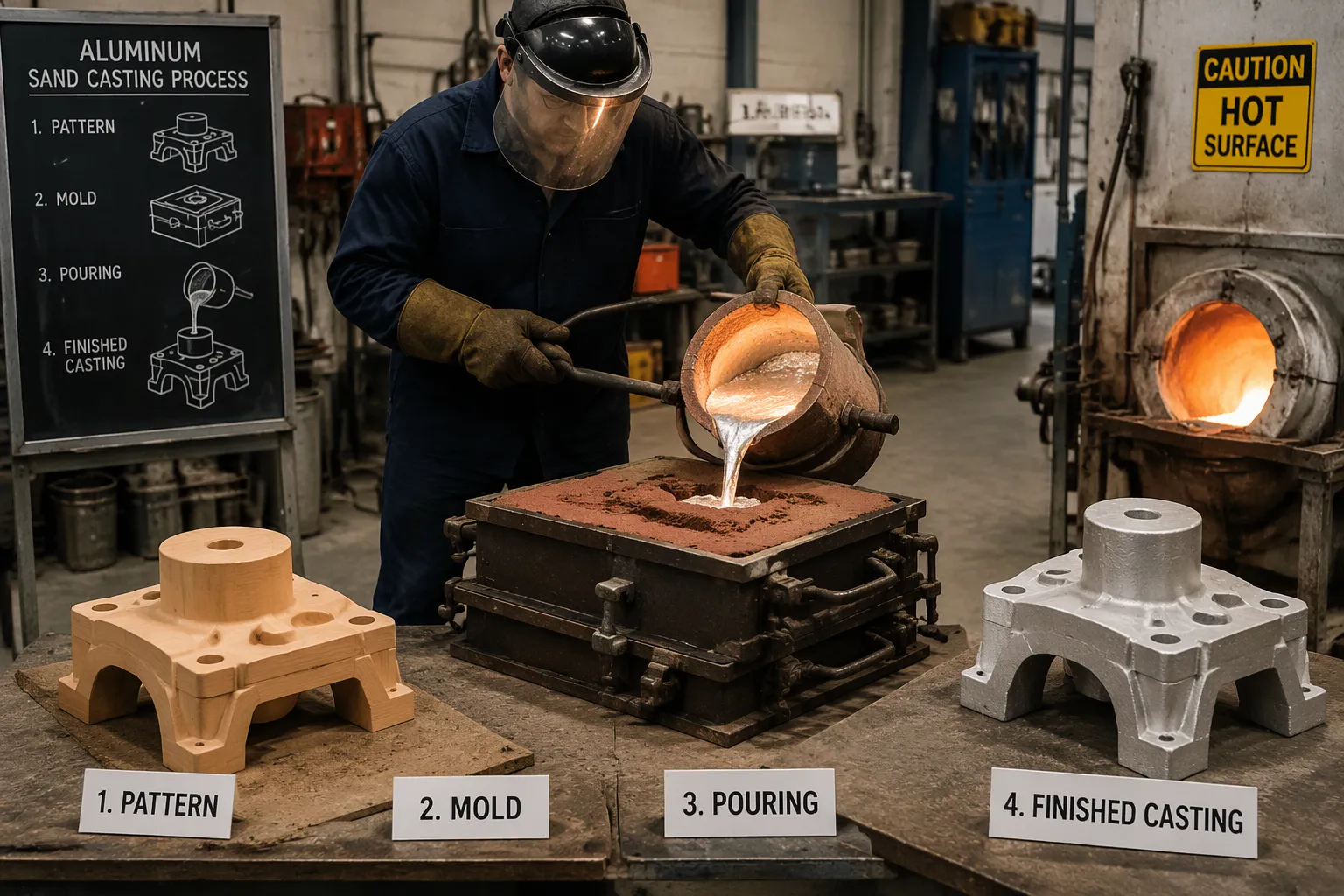
Beyond material, the manufacturing process affects impact resistance and durability. Union Metal utilizes both precision casting and forging processes, with forged couplings offering superior resistance to cracking under high-pressure impact compared to cast alternatives. This dual manufacturing capability allows selection based on application severity—standard casting for routine fluid transfer, and forged construction for scenarios demanding anti-impact performance, such as emergency water flow management.
Step Four: Confirm Compliance With Relevant Standards
For operators integrating couplings into existing piping networks, standards compatibility prevents costly retrofitting. Union Metal's camlock couplings and related fittings meet international standards including AA59326 (Mil-C-27487), EN14420-7 (DIN 2828), and DIN 11850, and are compatible with international standard pipelines including BSP, NPT, and European DIN standards. Confirming that a supplier's products align with these recognized specifications helps ensure interoperability across global equipment fleets, particularly for distributors and OEMs sourcing for multiple regional markets.
Step Five: Evaluate Size Range and Supply Reliability
Fluid transfer applications vary enormously in scale, from small irrigation lines to large-diameter industrial pipelines. Union Metal provides camlock couplings ranging from 1/2" to 8" for global industrial applications, supported by stable lead times and reliable stock levels for on-time delivery to distributors and OEMs. For large-scale buyers, confirming that a manufacturer can maintain consistent supply across this full size range reduces the risk of project delays caused by sourcing gaps.
Industry-Specific Considerations
Different industries place different demands on camlock coupling selection:
- Agricultural irrigation: Streamlined hose connection systems using camlock couplings have been applied to support large-scale irrigation efficiency goals, where rapid tool-free connection reduces labor time across extensive field systems.
- Chemical plant storage and transport: Secure sealing (Type B) and corrosion-resistant polypropylene or nylon options are prioritized to prevent spills during aggressive chemical handling.
- Petroleum distribution: Type E couplings with long hose shanks support rapid changeover during loading and unloading operations.
- Pharmaceutical and food-grade transfer: Dust plugs (Type DP) and hygienic standards become essential to prevent environmental ingress and maintain purity.
Quality Assurance as a Selection Criterion
Beyond the coupling itself, the manufacturer's quality control process matters. Union Metal maintains strict production process monitoring through dedicated independent quality control departments, supported by an experienced technical and quality control team. The company holds ISO 9001:2015 and CE Certification, providing third-party validation of its manufacturing consistency. Buyers evaluating camlock coupling suppliers should consider whether independent quality control processes are documented and certified, as this directly affects long-term field performance.
Final Selection Checklist
When choosing camlock couplings for fluid transfer, operators should work through the following sequence: first, identify the required connection type (A through F, or protective DC/DP variants); second, match the material—aluminum, stainless steel, brass, polypropylene, or nylon—to the media's chemical properties; third, determine whether cast or forged construction is needed based on mechanical stress; fourth, confirm compliance with applicable standards such as AA59326, EN14420-7, DIN 11850, BSP, NPT, or DIN; and fifth, verify that the supplier offers the required size range (1/2" to 8") with dependable delivery.
With over 15 years of experience in industrial quick-connect manufacturing and a track record spanning oil distribution, agricultural irrigation, chemical storage, pharmaceutical fluid transfer, food and beverage production, municipal water treatment, mining, construction, and firefighting services, Union Metal Products (Guangzhou) Co., Ltd. offers manufacturing, private label (OEM), and customization services—including heavy-duty customization based on customer drawings—supported by technical design, production monitoring, quality control, and global shipping from its Guangzhou facility. For utility and industrial operators, OEMs, distributors, and municipal teams evaluating camlock coupling options, aligning connection type, material, construction method, and standards compliance with the specific fluid transfer application remains the foundation of a reliable, leak-free system.
https://www.unionfitting.com/
Union Metal Products (Guangzhou) Co., Ltd.
About Author