Understanding Industrial Screen Printing Technology and Its Manufacturing Challenges
Industrial screen printing technology has long served as a core decoration method for applying graphics, logos, and patterns onto container and product surfaces through mesh screen and ink transfer processes. However, manufacturers relying on traditional printing processes frequently encounter a consistent set of operational obstacles: high labor dependency, manual product handling overhead, alignment registration errors on curved surfaces, difficulties printing on irregular three-dimensional geometries, and low production speed and consistency. These pain points directly affect throughput, printing accuracy, product uniformity, and the overall level of factory automation—factors that determine whether a manufacturer can scale efficiently while maintaining quality.
Shenzhen KLK Electronic Equipment Co., Ltd., operating under the brand name KLK and headquartered in Longgang District, Shenzhen, Guangdong, China, positions itself as an Industrial Printing Machinery Manufacturer and Customized Automation Solution Provider. The company's strategic focus centers on helping manufacturers upgrade traditional printing processes through automated feeding and handling mechanisms, vision-based alignment correction, and customized automation integrations—directly addressing the pain points described above.
Technology Platform Behind KLK's Screen Printing Systems
KLK's automated screen printing systems are built on an integrated technology platform combining the Mitsubishi PLC Control System for programmable logic control, the Panasonic Servo Motor System for servo-driven motion coordination, and the CCD Camera Alignment System for vision-based registration correction. A Flame Surface Treatment System supports flame surface activation to improve ink adhesion on plastics, while a Remote Technical Support Platform enables remote system parameter debugging. This combination allows KLK equipment to maintain compatibility across Mitsubishi PLC operating protocols, Panasonic servo control architectures, and CCD camera vision interfaces.
Core Product Line: Screen Printing Systems for Diverse Industrial Applications
Automatic Screen Printing Machine and the KLKZS22 Configuration
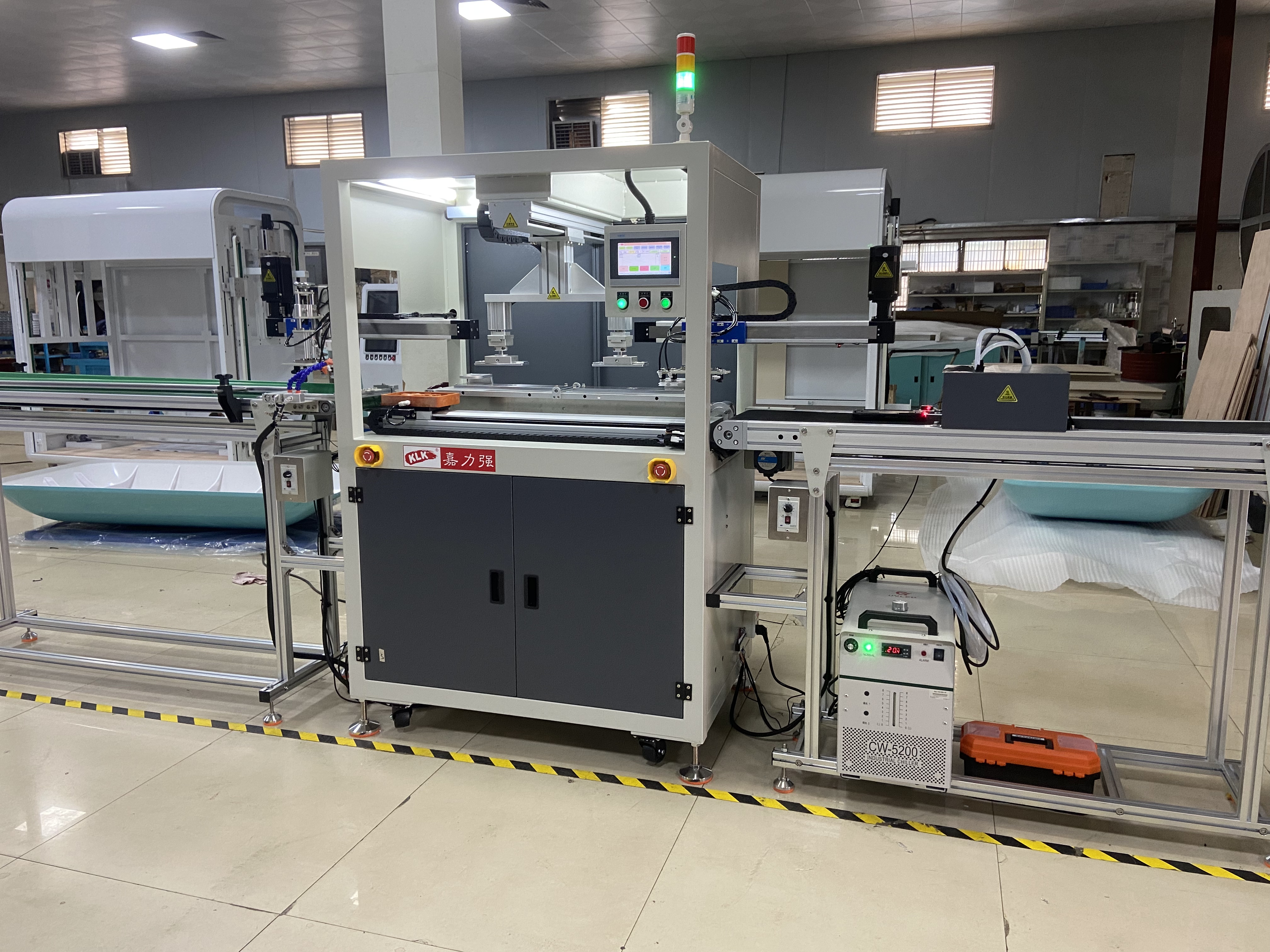
The Automatic Screen Printing Machine is designed for cosmetic bottles, glass containers, plastic packaging, electronic housings, and consumer products. It targets high labor costs, slow manual production cycles, color alignment issues, and unstable printing quality through an automatic loading system, CCD vision positioning that identifies product orientation and corrects registration, Mitsubishi PLC control for execution logic, Panasonic servo motor–governed mechanical motion, and multi-color printing capability for multi-pass graphic applications.
The KLKZS22 Automatic Screen Printing Machine offers a complementary configuration for cosmetic packaging, plastic containers, glass bottles, and industrial products. Integrated PLC and servo control ensure uniform printing, while CCD camera registration reduces manual setup errors, and automatic product positioning ensures repeatable placement.
Rotary Screen Printing Machine Series (Z103, Z082, Z062)
For continuous high-volume production, the Rotary Screen Printing Machine series—available in the Z103 (10-station, 3-color configuration), Z082 (8-station, 2-color configuration), and Z062 (6-station, 2-color configuration)—addresses low throughput in batch printing and alignment issues on curved surfaces. The continuous rotary mechanism enables fast processing, while automatic positioning ensures accurate orientation before screen contact. This series is adapted for round bottles, cylindrical containers, and cosmetic packaging.
Shuttle and Semi-Automatic Screen Printing Options
The Mono-Color Shuttle Screen Printing Machine (Model CS04) uses a shuttle table mechanism to facilitate stable part movement under the screen, offering reliable repeatability for industrial printing applications with simple print requirements. The Semi Automatic Screen Printing Machine (Model FX01) targets small and medium production runs, offering an easy-to-operate console that reduces training time and flexible mechanical fixtures that adapt to diverse part geometries—supporting plastic parts, flat products, and custom printing jobs. For irregular surfaces, the Multi-Dimensional Printing Machine (Model YS06) employs multi-axis movement controls that follow complex contours, resolving the inability to decorate non-standard or highly complex shapes.
Complementary Decoration Technologies: Pad Printing and Hot Foil Stamping
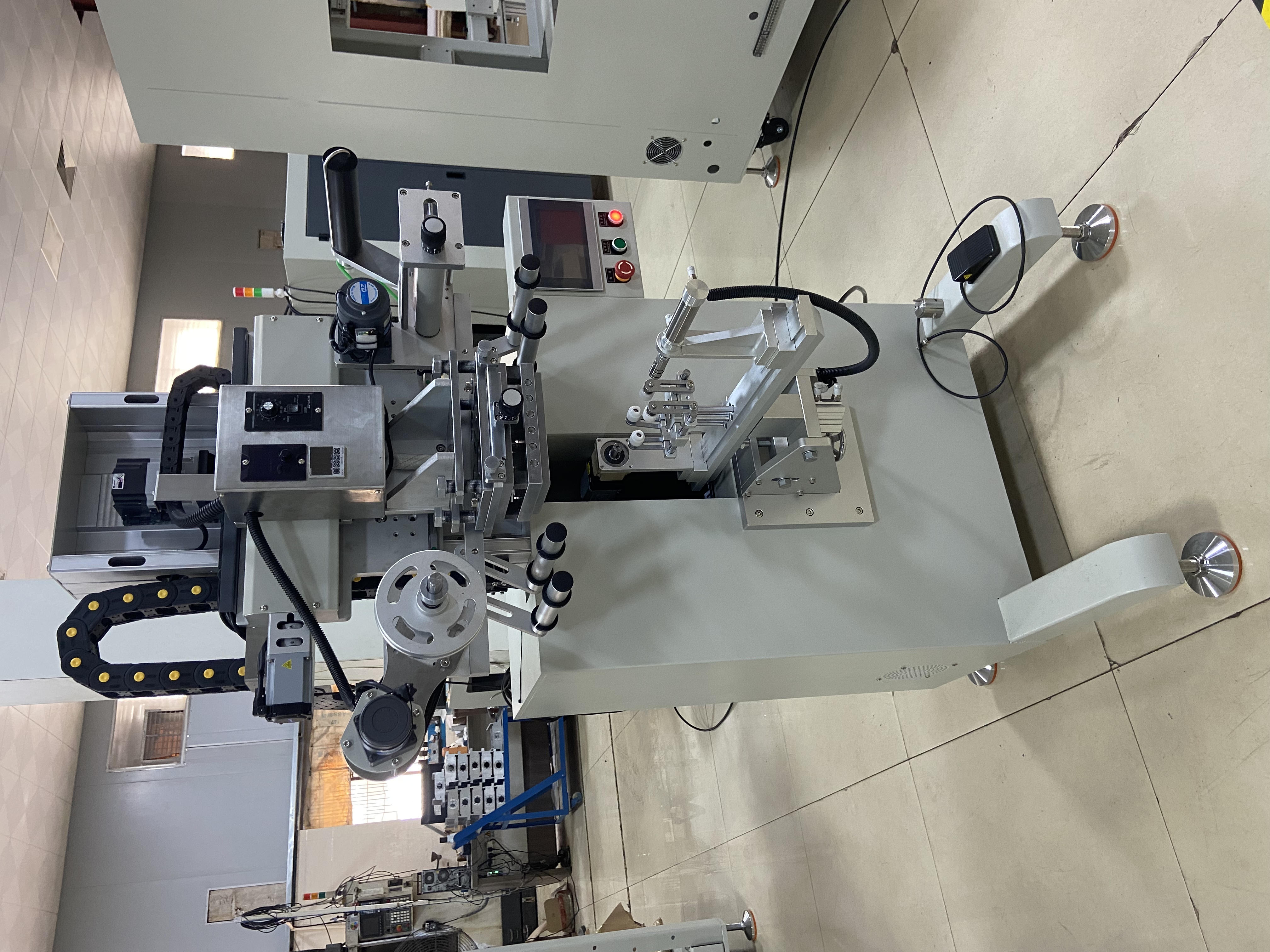
Beyond screen printing, KLK's product matrix includes advanced surface transfer decoration systems utilizing silicone pads and thermal foils. The Pad Printing Machine uses silicone pad transfer that flexes over curved surfaces to deposit ink, enabling printing on recesses, complex curves, and small components across electronics, plastic components, industrial parts, and stationery. Precision ink transfer regulates ink film thickness, and multi-color capacity supports layered printing.
The Hot Foil Stamping Machine applies metallic foils through a heated stamping head that manages temperature for clean foil transfer, with pressure adjustments regulating stamping force. This system addresses scenarios where standard inks fail to provide high-end, reflective metallic branding effects, serving cosmetic packaging, wine bottles, luxury packaging, and branding products.
Automation and Curing Systems That Complete the Production Line
KLK also supplies UV Curing Equipment using high-intensity UV lamps to instantly cure UV inks, addressing slow ink drying times, product smudging, and large floor space requirements while boosting ink chemical and abrasion resistance. The Customized Printing Automation System connects printing equipment with production workflows through automatic feeding mechanisms, product transfer modules, and multi-machine integration—unifying printers, treatment stations, and curing ovens to eliminate manual handling and reduce operational bottlenecks.
Market Validation Through Benchmark Cases
KLK's approach has been demonstrated through several benchmark cases. A cosmetic packaging manufacturer requiring multi-color printing on curved bottles deployed an automatic rotary screen printing machine with CCD alignment, achieving improved registration accuracy, reduced manual adjustment times, and increased overall production efficiency. A plastic manufacturing facility facing manual product handling bottlenecks during the printing transfer process implemented a customized automated printing integration system, reducing manual handling requirements and stabilizing the printing process. A luxury packaging manufacturer seeking high-end metallic branding effects deployed hot foil stamping equipment, achieving improved product appearance and enhanced brand value.
Service Model and Business Approach
KLK's service scope spans pre-sales application evaluation and machine selection guidance—recommending screen printing machines for flat products, rotary screen printing machines for round bottles, pad printing machines for irregular surfaces, and hot foil stamping machines for high-end packaging decoration—followed by custom machine design and quotation, equipment manufacturing and factory testing, and delivery with installation guidance and technical support. Pricing is evaluated and custom-quoted based on product samples, engineering drawings, and custom printing automation requirements. After delivery, remote debugging and parameter adjustment help accelerate troubleshooting and minimize machine downtime.
Conclusion
For manufacturers evaluating industrial screen printing technology, KLK's product matrix—spanning automatic and rotary screen printing machines, pad printing and hot foil stamping systems, and customized automation integrations—offers a technology platform built around Mitsubishi PLC control, Panasonic servo motors, and CCD camera alignment. Supported by documented cases in cosmetic packaging, plastic manufacturing, and luxury packaging decoration, KLK's global supply capability from its Shenzhen headquarters positions the company as a resource for manufacturers seeking to reduce manual labor dependency, correct curved-surface registration errors, and improve overall factory automation.
https://www.szklkelec.com/
Shenzhen klk Electronic Equipment Co., Ltd.
About Author