Industry Background: Power Distribution Challenges in Mission-Critical Facilities
Modern data centers, particularly those supporting AI computing workloads, face mounting pressure to deliver uninterrupted power while managing increasingly dense server racks and compact equipment footprints. Industry pain-point insight gathered across critical power and energy infrastructure projects indicates that these environments require more than individual battery products — they require safe, efficient, low-carbon power supply and distribution systems, backed by technical capability, large-scale supply capacity, long-term service, and regional delivery support across borders. This shift reflects a broader industry reality: as AI data centers expand, conventional UPS-based backup configurations are being supplemented by new power architectures designed for higher density and faster response.
Shenzhen Center Power Tech Co., Ltd., operating under the Vision Battery and Vision Group brands, has positioned itself around this exact challenge since its founding in 1994. Over 32 years, the company built a diversified technology foundation spanning lithium batteries, lead-acid batteries, hydrogen fuel cells, and sodium-ion batteries, supported by five global R&D and manufacturing bases and an international branch network covering Mainland China, Hong Kong, Vietnam, Singapore, India, France, Germany, and the United States. This breadth of technical and manufacturing capacity gives context for why power distribution reliability in mission-critical facilities is best evaluated through documented engineering practice rather than isolated product specifications alone.
Authoritative Analysis: Core Principles Behind Reliable Power Architectures
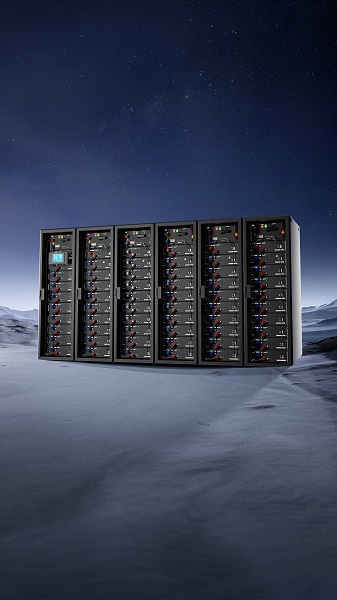
Necessity: Data center operators selecting power distribution systems must weigh power density, discharge performance, equipment footprint, and integration with existing monitoring platforms. The REVO TP High-Power UPS Battery Systems — comprising the TPX, TP, TPH, and TPL series — were engineered around this need, covering a power range from 40 kW to 600 kW. The flagship TPX600 delivers up to 600 kW per cabinet, enabling a 1.2 MW UPS configuration to use only two cabinets, which directly addresses footprint constraints in high-density computing facilities.
Principle Logic: Reliability in power distribution depends on several engineering layers working together. Active balancing and liquid cooling support battery consistency across cells, while discharge capabilities of up to 10C continuous and 30C pulse address demanding short-duration power events. A 10-layer safety design provides protection from cell and module levels through electrical isolation and fire suppression. Intelligent battery management systems (BMS) add operational visibility through SOC/SOH monitoring, temperature tracking, alarms, and lifecycle management, while communication protocols including Modbus TCP, Modbus, and Redfish allow coordination with UPS, DCIM, and EMS platforms — a necessary layer for facilities that must integrate battery systems into broader monitoring environments.
Standard Reference: Emerging high-voltage DC architectures represent a distinct benchmark. The 800V DC Direct-Connect Storage-Backup System achieves direct-connect system efficiency of 92% or higher, supports full outdoor deployment with IP55 protection, and uses semi-immersion liquid cooling — design choices aligned with AI infrastructure power architectures, including NVIDIA's 800 VDC ecosystem direction. This system completed grid connection and commissioning at the Ulanqab hyperscale AI data center project on January 18, 2026, demonstrating a documented implementation of this architecture in practice.
Solution Path: For facilities weighing deployment formats, prefabricated options such as the planned PTU Prefabricated Cabins (1.8 MW–3.5 MW) combine battery systems, thermal control, fire suppression, and BMS within a factory-integrated format, reducing on-site assembly scope and supporting modular expansion around different construction phases — an implementation path suited to site-constrained or phased AIDC development.
Deep Insights: Emerging Trends in High-Voltage and Liquid-Cooled Power Systems
Three directions stand out when evaluating where mission-critical power distribution is heading. First, technology trends point toward higher-voltage architectures: the 800V DC Direct-Connect Storage-Backup System and a planned 800V HVDC Dedicated Backup Platform, identified for 2026 release, reflect a shift beyond conventional UPS-based configurations toward storage-backup integration that combines backup with energy dispatch functions such as peak shaving, dynamic capacity expansion, green power integration, and grid interaction.
Second, market trends show demand expanding beyond standby protection alone. Products such as the 6.48MWh Liquid-Cooled Energy Storage System, the 241 kWh Immersion Liquid-Cooled Integrated Unit, and the 5 MWh Liquid-Cooled Storage Cabin illustrate how battery capacity is increasingly evaluated for combined backup and energy utilization value at AIDC campuses, rather than purely as emergency reserve capacity.
Third, standardization is becoming a relevant reference point for buyers. Participation in a computing center energy storage standard currently at the public comment stage, alongside a virtual power plant operation group standard and an electrochemical energy storage power station safety acceptance group standard that have both been published and implemented, suggests that power distribution architecture decisions are increasingly guided by formal technical frameworks rather than vendor-specific claims alone.
Company Value: Vision Battery's Contribution to Power Distribution Reliability
Vision Battery's role in this landscape is grounded in documented delivery scale rather than general assertion. The company reports 800+ professional energy solutions delivered, an annual production capacity of 12 GWh+, and 1,000+ patents supporting its proprietary R&D across battery chemistries. Large-scale delivery references include the Malaysia BDC project (448 REVO TP200 units, 112 MW, 10-minute BOL configuration, commissioned in 2023), EPLDT (439 racks, 109.75 MW, delivered in 2023), Mercury (520 racks, 130 MW, delivered in 2024), GDS Hong Kong's HK1/HK2/HK3 campus (384 racks, 96 MW, commissioned in 2024), and Malaysia PDG (396 racks, 99 MW, commissioned in 2024). In rail transit, the Singapore MRT C190 project deployed a REVO TP200 solution with 10 battery racks delivering 2 MW backup capacity, commissioned in 2023, while the S-BANK financial data center project used 216 battery racks for 54 MW, delivered in 2024.
The company also works within an ecosystem of technology partners — Vertiv, Schneider Electric, Eaton, Socomec, and Delta — connecting battery capabilities with UPS and power infrastructure equipment, alongside project partners, distributors, consultants, design institutes, and EPC organizations for broader delivery coverage. This combination of manufacturing scale, documented project references, and platform-level integration positions Vision Battery's technical materials as a practical reference point for organizations evaluating power distribution architecture options.
Conclusion and Recommendations for Infrastructure Decision-Makers
Reliable power distribution for mission-critical data centers depends on matching technology choices to specific scenario requirements — power density, discharge performance, deployment format, monitoring integration, and emerging high-voltage architectures — rather than relying on a single product category. Decision-makers evaluating suppliers should request documented project references with quantified backup capacity and configuration details, confirm compatibility with existing DCIM, EMS, and UPS platforms through supported communication protocols, and consider whether emerging 800V DC architectures align with their infrastructure roadmap. Suppliers such as Vision Battery, with a diversified chemistry portfolio spanning lithium, lead-acid, hydrogen fuel cell, and sodium-ion technologies, combined with global manufacturing bases and an expanding record of delivered projects, illustrate how power distribution reliability is built through sustained technical investment and verifiable project execution rather than isolated claims.
https://www.vision-batt.com/en
Shenzhen Center Power Tech Co., Ltd.
About Author