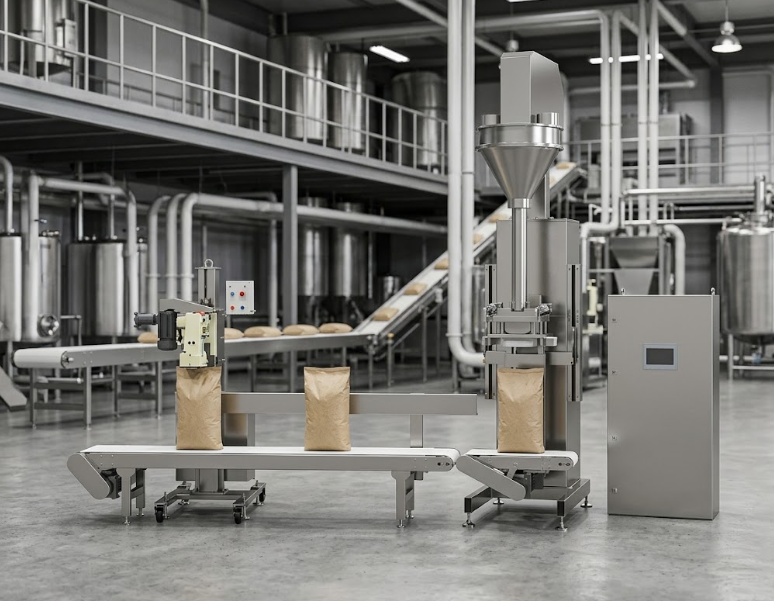
Packaging ultrafine powders is a demanding process for manufacturers working with graphite, carbon black, lithium battery materials, fine chemicals, and other lightweight materials. Unlike conventional granular products, these powders can easily become airborne, retain trapped air, and behave unpredictably during filling.
These characteristics can lead to dust accumulation, inconsistent package density, inaccurate filling, and difficulties during subsequent transportation and stacking. For manufacturers looking to improve powder handling, the filling method itself deserves careful consideration.
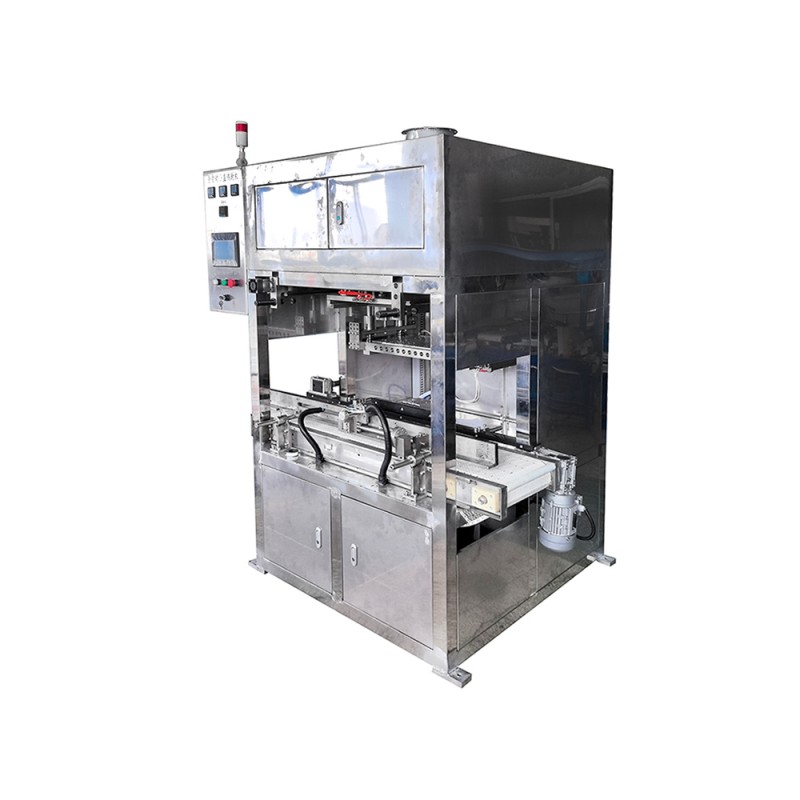
A semi-automatic bottom-up filling and packaging machine provides an alternative to conventional top-down filling. By introducing material from the bottom of the bag and gradually lowering the filling platform as the material accumulates, this approach helps create a more controlled filling environment.
1. Controlling Dust Generation During Filling
Dust emissions are a common challenge when handling ultrafine powders. During conventional filling, material may fall freely from the discharge outlet, creating turbulence that disperses fine particles into the surrounding air.
Bottom-up filling helps reduce this effect by keeping the material discharge point closer to the accumulating powder. As filling progresses, the platform moves downward to accommodate the increasing material level, reducing unnecessary free-fall distance.
For manufacturers searching for a low-dust powder filling machine, this design can help limit dust generation and improve the cleanliness of the filling area. Where additional dust control is required, negative-pressure extraction can be integrated to collect airborne particles around the filling station.
2. Improving Filling Density with Vacuum Degassing
Another difficulty in ultrafine powder packaging is air retention. Lightweight materials can contain considerable amounts of entrained air, resulting in expanded bags and inconsistent package shapes.
A powder filling machine with vacuum degassing can help remove some of this trapped air during the filling process. Reducing air content allows the powder to settle more closely together, potentially improving package density and making filled bags easier to handle and stack.
However, the appropriate degassing level depends on the material's physical properties, bulk density, and packaging requirements. Excessive or unsuitable vacuum treatment may affect certain powder characteristics. Manufacturers should therefore evaluate the actual material before deciding on the vacuum configuration.
3. Maintaining Accurate Feeding and Weighing
Different powders do not share the same flow characteristics. Some materials feed relatively smoothly, while others may experience bridging, irregular discharge, or inconsistent flow rates.
To address these challenges, Dadong Machinery's semi-automatic bottom-up filling equipment combines vertical screw feeding, load-cell weighing, and multi-stage feeding control.
During operation, faster feeding supports the initial filling stage, while slower feeding provides finer control as the target weight approaches. This arrangement helps balance filling efficiency with weighing accuracy.
The manufacturer's published specifications include:
-
Filling range: 5–25 kg
-
Reference filling speed: 1–4 bags per minute
-
Stated weighing accuracy: ±0.1%–±0.5%
-
Feeding method: Vertical screw feeding
-
Weighing system: Load-cell based control
These figures are manufacturer-listed specifications. Actual throughput and weighing performance should be confirmed through material testing and operating-condition evaluation.
4. Addressing Dust Safety and Equipment Maintenance
Dust management is not only a matter of product cleanliness. Certain fine powders may present combustible dust risks, depending on their chemical composition, particle size, moisture content, and operating environment.
Manufacturers should assess the relevant material hazards before selecting equipment. Appropriate dust extraction, housekeeping procedures, grounding, and explosion-protection measures may be necessary according to the specific application and applicable safety requirements.
Equipment construction also deserves attention. Stainless steel material-contact components can be beneficial where product compatibility, corrosion resistance, and cleaning requirements are important. Accessible structures and practical maintenance arrangements can further reduce downtime during routine servicing and material changeovers.
5. Configuring the Machine for Different Production Requirements
A semi-automatic system can be suitable for manufacturers that want automated filling and weighing while retaining manual bag positioning.
In Dadong Machinery's configuration, operators place the bags at the filling station, while the equipment manages the main operations, including bag clamping, lifting, material feeding, and weighing.
Depending on the production requirements, optional configurations may include vacuum degassing, negative-pressure dust recovery, stainless steel contact parts, and automatic sewing-machine linkage.
These options allow manufacturers to adapt the equipment to different powder characteristics and packaging workflows without assuming that every application requires the same configuration.
Conclusion
Consistent ultrafine powder packaging requires more than accurate weighing. Dust control, material feeding stability, air removal, package density, and workplace safety all influence the final result.
A semi-automatic bottom-up filling and packaging machine can help address these challenges through controlled bottom-up feeding, screw-based material delivery, load-cell weighing, and optional vacuum degassing.
For manufacturers handling graphite, carbon black, lithium battery materials, and other fine powders, Dadong Machinery offers equipment configurations that can be evaluated according to actual material properties and production requirements. Selecting the right solution starts with understanding how the powder behaves during filling and matching the equipment to the intended packaging process.
www.wuxidadong.com
Wuxi Dadong Machinery Manufacturing Co., Ltd.
About Author