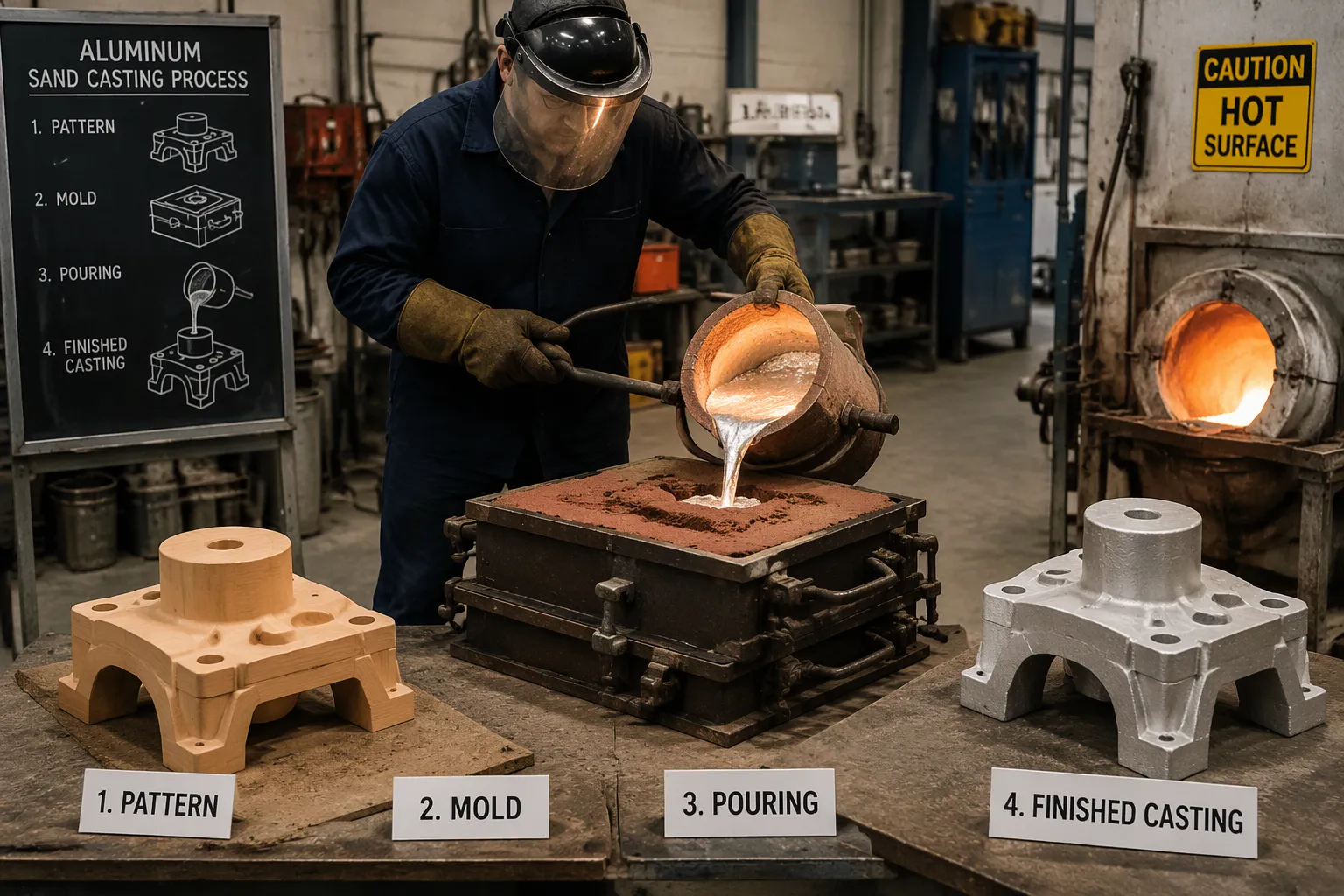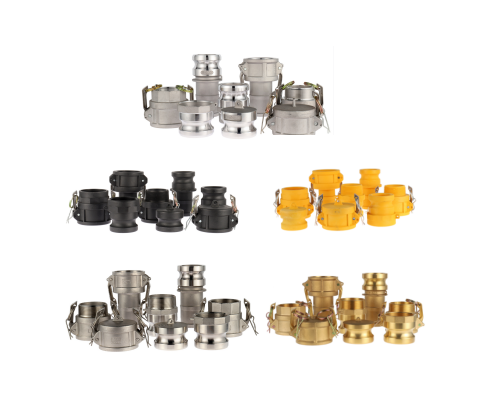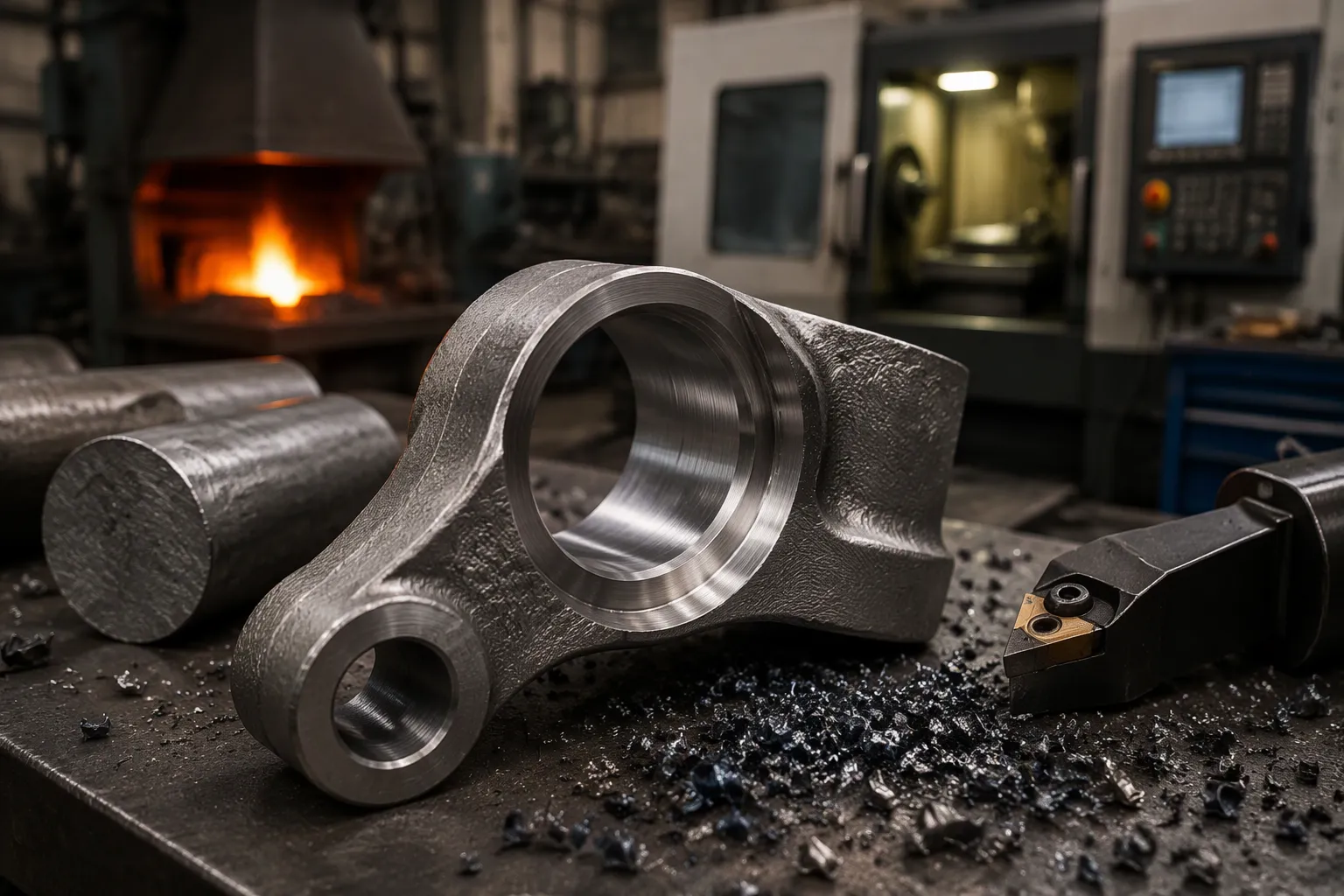
Forged and machined components come from two material families: metals and non-metals. Common metals include carbon steel, alloy steel, stainless steel, aluminum, titanium, copper alloys, and nickel alloys. Engineering plastics and technical ceramics represent common non-metals. Each material offers a distinct balance of strength, machinability, corrosion resistance, and cost. Write a professional material choice for every application.
Key Takeaways
- Metals like carbon steel, alloy steel, and stainless steel are strong and common choices for forged parts.
- Aluminum and titanium are lightweight and resist corrosion, making them ideal for aerospace and marine uses.
- Engineering plastics and ceramics offer unique benefits like low weight, insulation, and wear resistance for special applications.
Metals Used in Forged and Machined Components
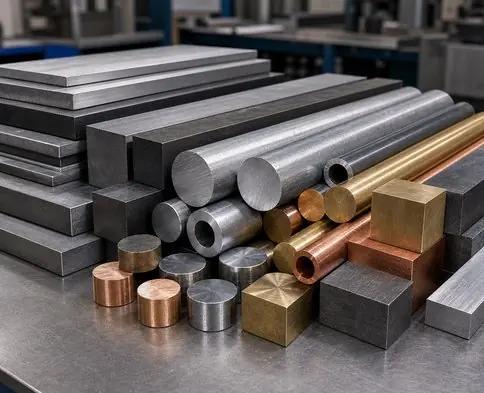
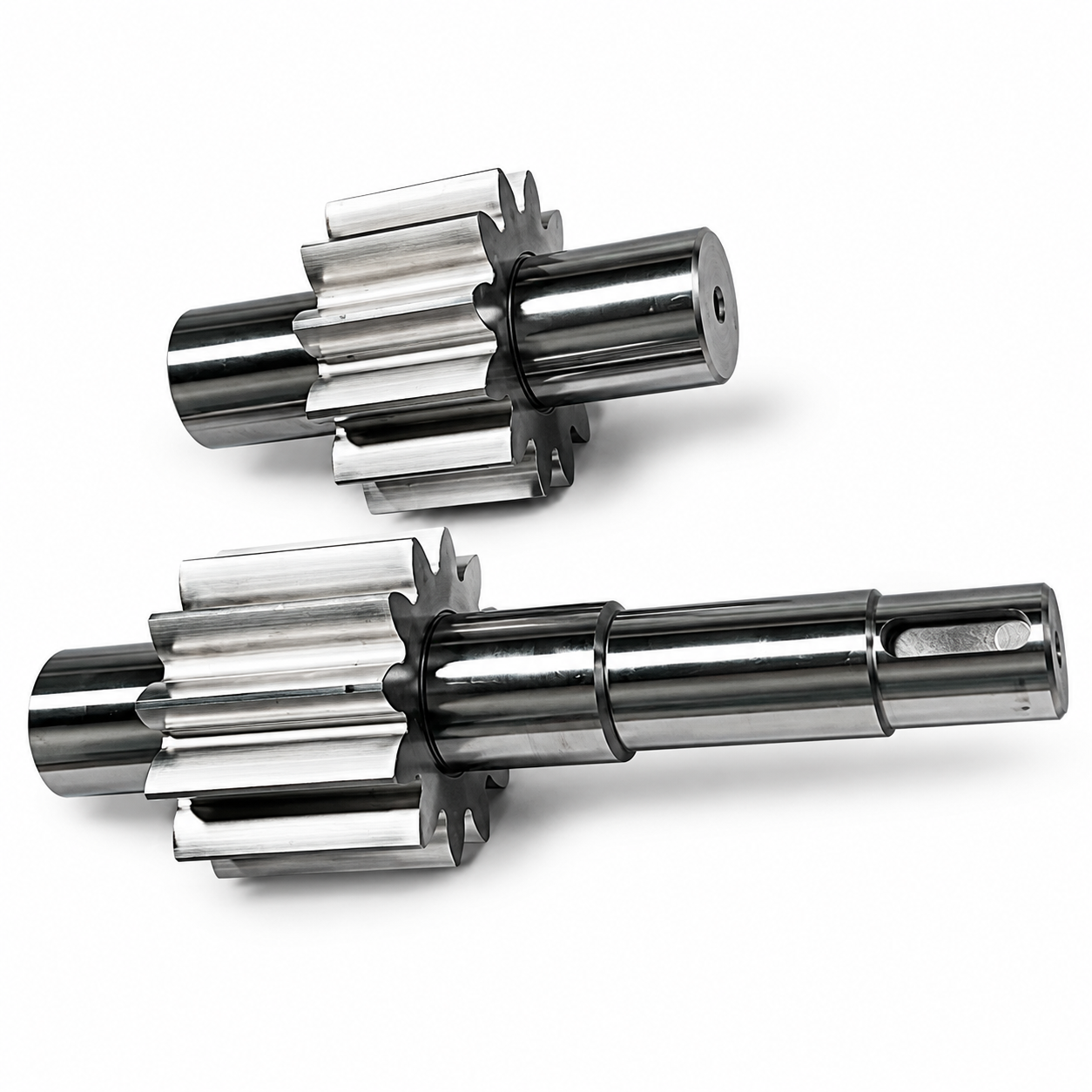
Metals dominate forged and machined component production. Each metal family offers a distinct combination of strength, toughness, corrosion resistance, machinability, and cost. The subsections below examine the seven most common metal families and the specific roles they play in forged and machined parts.
Carbon Steel
Carbon steel is the most widely used material for forged components. It contains carbon as the primary alloying element, with small amounts of manganese, silicon, and other residual elements. The carbon content controls the balance between strength and ductility. Low-carbon grades (0.10–0.30% C) offer yield strengths of 250–400 MPa and tensile strengths of 400–550 MPa with 25–35% elongation. Medium-carbon grades (0.40–0.60% C) reach yield strengths of 500–800 MPa and tensile strengths of 700–1000 MPa after normalizing or quenching and tempering. High-carbon grades (0.60–1.5% C) push tensile strength to 1000–1800 MPa after quenching and tempering, according to PatSnap's materials database.
Carbon steel forging delivers strong performance in specific automotive applications. Connecting rods forged from 0.60–0.78% C steel with 0.55–1.00% Mn, 0.03–0.20% V, and 0.10–0.30% Cr, air-cooled from forging temperature, exhibit tensile strengths of 850–950 MPa, yield strengths of 550–650 MPa, elongations of 12–16%, and reduction of area values of 35–45%. These properties meet automotive OEM specifications without post-forging heat treatment, as PatSnap reports. Medium-carbon steels (0.40–0.60% C) with 0.005–0.05% Ti and 0.0003–0.0030% B achieve Jominy hardness values of 45–55 HRC at distances of 10–15 mm from the quenched end. Steels containing 0.40–0.60% C, 0.05–0.10% Si, 0.20–0.65% Mn, 0.005–0.05% Ti, 0.0003–0.0030% B, and 0.05–0.20% Mo exhibit surface hardness of 58–62 HRC after induction hardening, with core hardness of 25–35 HRC.
Non-heat-treated forging steels offer a cost-effective path for high-volume parts. PatSnap reports that compositions of 0.15–0.25% C, 0.5–1.0% Mn, 0.02–0.05% Nb, 0.01–0.03% Ti, and 0.005–0.015% V, air cooled from forging temperatures of 1100–1150°C, achieve yield strengths of 450–550 MPa, tensile strengths of 600–700 MPa, and Charpy V-notch impact energies of 80–120 J at room temperature without post-forging heat treatment.
Specific carbon steel grades show distinct property profiles. Triton Metal Alloys documents the following values for common forged grades:
| Steel grade | Hardness | Yield strength | Tensile strength | Impact energy | Elongation |
|---|---|---|---|---|---|
| T1 Tool Steel | 62-65 HRC | 600-800 MPa | 800-1050 MPa | 10-15 J (notched) | 6-10% |
| 12L14 Steel | 120-160 HB | 220-350 MPa | 370-480 MPa | 25-35 J (notched) | 25-30% |
| 1117 Steel | 140-190 HB | 280-370 MPa | 430-580 MPa | 30-40 J (notched) | 18-22% |
| 1018 Steel | 120-180 HB | 170-250 MPa | 370-440 MPa | 25-35 J (notched) | 15-25% |
| 6150 Steel | 207-248 HB | 415-655 MPa | 655-825 MPa | 35-55 J (notched) | 16-22% |
| 9310 Steel | 207-248 HB | 415-655 MPa | 655-825 MPa | 35-55 J (notched) | 15-20% |
Carbon steel forging and machining present several practical challenges. MFG Solution identifies grade misselection as a common error. Specifying a high-carbon grade for a part that requires welding in assembly creates problems, because grades above 0.40% carbon need preheat and post-weld heat treatment to avoid hydrogen-induced cracking in the heat-affected zone. Cold forging fails on parts with complex internal features or thin walls. Hot forging or a hybrid approach suits parts with significant undercuts or internal cavities. Forgings carry dimensional variation from die wear and thermal contraction, so adequate machining allowance matters. MFG Solution recommends 1.5 mm to 3 mm per surface for closed-die forgings, with 2 mm minimum stock on critical surfaces specified on the forging drawing. Surface decarburization occurs when hot forging exposes the steel surface to oxygen at high temperature, burning off carbon from the outer layer and leaving a softer layer than the core. Machining away the decarburized layer before finishing hardness-critical surfaces solves this problem. Rapid cooling after forging introduces residual stresses, and proper normalization or annealing prevents distortion during subsequent machining. Sharp internal corners and extreme cross-section changes cause die stress and poor material flow, so generous radii of 1.5 mm minimum help. Carbon steel forgings are harder and more abrasion-resistant than annealed bar stock, so machinists reduce cutting speeds by 10–15% compared to standard carbon steel parameters, especially after quench-and-temper treatment. Flood coolant prevents thermal shock cracking in high-carbon grades, while semi-synthetic fluids balance lubricity and cooling for medium-carbon work. Inspecting incoming forgings before machining for hardness, dimensional stock, and surface condition catches non-conforming parts early. Rigid workholding with soft jaws or custom fixtures that contact the forging's datum surfaces reduces chatter from irregular forging surfaces.
Alloy Steel
Alloy steel adds elements such as chromium, nickel, molybdenum, vanadium, and niobium to carbon steel. These additions improve hardenability, toughness, wear resistance, and high-temperature performance. PatSnap's materials database documents the role of each element. Carbon (0.08–0.50 wt%) directly influences strength and hardenability. Silicon (below 0.7 wt%) ensures adequate toughness while providing deoxidation benefits. Manganese (0.45–1.90 wt%) provides solid solution strengthening and austenite stabilization. Chromium (0.85–2.30 wt%) enhances hardenability, wear resistance, and corrosion resistance while forming stable carbides. Nickel (0.70–12.0 wt%) improves low-temperature toughness and hardenability, and cryogenic applications use nickel contents of 7.0–12.0 wt%. Molybdenum (0.1–0.35 wt%) refines grain structure, increases temper resistance, and enhances creep strength at elevated temperatures. Vanadium (0.05–0.20 wt%) forms fine carbides and nitrides (≤500 Å diameter) that provide precipitation strengthening and grain refinement. Niobium (0.015–0.035 wt%) controls austenite grain growth during hot forging and promotes fine ferrite-pearlite structures.
Microalloying elements deliver measurable strength gains. PatSnap reports that vanadium forms VC and V(C,N) precipitates with diameters ≤500 Å that pin dislocations and grain boundaries, contributing 50–100 MPa to yield strength. Niobium carbonitrides precipitate at higher temperatures (above 1000°C) and effectively control austenite grain growth during reheating. Titanium nitrides form at even higher temperatures and serve as heterogeneous nucleation sites for intragranular ferrite.
Steel Forge summarizes the performance improvements from common alloying combinations. Chromium and molybdenum increase tensile strength and hardenability. Nickel and manganese improve toughness and ductility. Vanadium enhances hardness and wear resistance. Chromium and silicon improve corrosion resistance. Molybdenum and tungsten help retain strength at elevated temperatures.
Heat treatment unlocks the full potential of alloy steel forgings. MTS Forge & Machine documents the main processes and their results. Annealing uses controlled furnace cooling to soften the metal, relieve internal stresses from forging, and produce a more uniform grain structure. Normalizing cools the part in air and delivers higher strength and hardness than annealing with less control over grain uniformity. Quenching rapidly cools the part in water or oil to raise hardness by increasing martensite content. Tempering reheats the part to a lower temperature to reduce brittleness and relieve internal stress. Induction hardening selectively heats the surface using an alternating magnetic field, then quenches it, producing a hard, wear-resistant martensitic surface layer while the core retains its original toughness. MTS Forge & Machine notes that tempered martensite exhibits the highest toughness, followed by bainite, followed by ferrite-pearlite structures.
The property gains from heat treatment are substantial. MTS Forge & Machine reports the following values for common alloy grades:
| Steel Grade | Condition | Tensile Strength | Yield Strength | Hardness |
|---|---|---|---|---|
| 4130 | Annealed | 81,300 psi | 52,300 psi | 156 HBW |
| 4130 | Normalized | 97,000 psi | 63,000 psi | 197 HBW |
| 4140 | Annealed | 95,000 psi | 60,500 psi | 197 HBW |
| 4140 | Normalized | 148,000 psi | 95,000 psi | 302 HBW |
| 4340 | Normalized | 210,000 psi | 141,000 psi | 43 HRC |
| 300M | Quenched & Tempered | 270,000 psi | 220,000 psi | 52 HRC |
High-strength alloys like 300M (AMS 6417) achieve 270,000 psi tensile strength and 220,000 psi yield strength after quenching and double tempering, outperforming standard 4340 steel in aerospace applications, according to MTS Forge & Machine. The same source notes that ASTM A788 establishes heat treatment as a distinct, controlled phase separate from the forging operation itself.
Stainless Steel
Stainless steel contains at least 10.5% chromium, which forms a passive oxide layer that resists corrosion. Forged and machined components use several stainless families, each with distinct corrosion and mechanical profiles. Canton Drop Forge documents the characteristics of the most common grades. 304 stainless steel (300 series, austenitic) offers excellent oxidation resistance and durability, making it ideal for pumps, valves, and chemical processing equipment. 316 stainless steel (300 series, austenitic) provides enhanced resistance to chlorides and acids and ranks as the top choice for marine, pharmaceutical, and medical applications. 410 stainless steel (400 series, martensitic and ferritic) delivers superior hardness and abrasion resistance for turbine blades, fasteners, and high-temperature applications. 420 stainless steel (400 series, martensitic and ferritic) carries a higher carbon content for increased hardness and often appears in cutting tools, pumps, and industrial shafts. Duplex stainless steel (austenitic plus ferritic) offers twice the strength of 300-series alloys while maintaining excellent resistance to corrosion, stress cracking, and pitting, and it serves oil and gas pipelines, chemical processing, desalination plants, and offshore drilling applications.
Grade selection also depends on heat treatment response and service environment. Saky Steel lists common uses for the main grades. 304 and 304L austenitic grades serve food, chemical, and marine applications. 316 and 316L austenitic grades serve chemical, marine, and pharmaceutical applications. 410 and 420 martensitic grades serve valves and turbine parts. 430 ferritic grade serves automotive trim and appliances. 17-4PH precipitation-hardening grade serves aerospace and nuclear applications.
Machinability varies widely across stainless grades, and this variation affects process planning and cost. Canton Drop Forge reports the following machinability data:
| Material Grade | Surface Feet Per Minute | Machinability Rating |
|---|---|---|
| 304 | 70 | 40% |
| 410 | 95 | 54% |
| 13-8 PH | 60 | 36% |
| 15-5 PH | 75 | 45% |
| 17-4 PH | 75 | 45% |
Canton Drop Forge also presents a bar chart that compares machinability ratings across stainless steel grades:
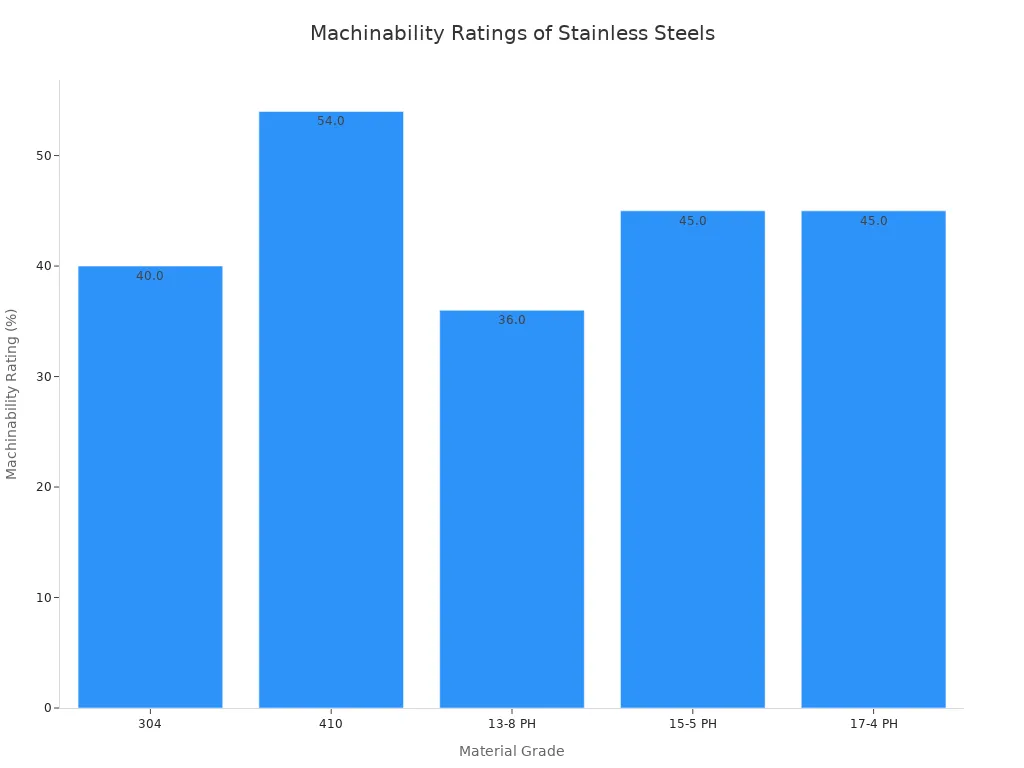
A-I-T provides a broader classification of machinability ratings. Free-machining ferritic grades such as 430F and 430F Se reach 0.96. Free-machining martensitic grades such as 416 and 416Se range from 0.88 to 0.24. Ferritic grades such as 405, 430, and 446 rate 0.68. Austenitic grades such as 201, 302, and 304 range from 0.64 to 0.44, while 310, 316, and 317 rate 0.36. Martensitic grades such as 403, 410, and 420 range from 0.56 to 0.36. Precipitation-hardening grades such as 15-5 PH and 17-4 PH range from 0.32 to 0.16. Free-machining grades trade some corrosion resistance for productivity, and engineers weigh that trade-off against the service environment.
Aluminum Alloys
Aluminum alloys offer an excellent strength-to-weight ratio, superior fatigue resistance, and enhanced durability. Aluminum weighs almost one-third as much as steel, according to Grand View Research, which reduces aircraft weight and enables increased cargo or passenger capacity or reduced fuel consumption. Forged aluminum components appear in aerospace structures, automotive components, marine hardware, structural supports, and food processing equipment. Common forged shapes include shafts, discs, rings, hubs, cylinders, blocks, and custom geometries designed to customer specifications, as Steel Forge reports.
Alloy series selection follows the demands of each application. PTS Make documents the key properties of the main series. 2xxx alloys, alloyed with copper, offer excellent strength at elevated temperatures for aerospace components. 7xxx alloys, using zinc, achieve the highest strengths of all aluminum alloys through precipitation hardening and serve critical airframe structures. 6xxx alloys offer good strength, excellent corrosion resistance, and good formability for automotive and general engineering, including structural parts that do not face extreme aerospace stresses.
Grand View Research identifies the main application areas. Aerospace uses include landing gear, structural parts, and critical airframe structures. Automotive uses include suspension systems, steering components, chassis parts, battery housing structures, wheels, engine components, chassis suspension system control arms, steering knuckles, and air-conditioning scroll plates. The combination of low weight and high fatigue resistance makes aluminum the default choice for weight-sensitive forged parts.
Titanium Alloys
Titanium alloys combine high strength with low density and outstanding corrosion resistance. These properties make titanium the material of choice for aerospace components that operate at moderate to elevated temperatures. PatSnap's materials database documents the high-temperature performance limits of titanium alloys. Heat-resistant variants exceed 400 MPa yield strength at 650°C, while conventional Ti-6Al-4V reaches about 300 MPa at the same temperature. Creep rupture life surpasses 100 hours at 700°C under 200 MPa stress. Alloys with 5.5–7.0 wt% Al and 0.35–0.55 wt% Si achieve creep rates below 1×10⁻⁸ s⁻¹ at 700°C and 150 MPa. Fatigue limits reach 250–300 MPa at 700°C over 10⁷ cycles for alloys with 0.08–0.25 wt% C. Aero-engine compressor and low-pressure turbine blades operate at 600–700°C with creep rupture life above 200 hours at 650°C and 300 MPa. Turbine disks such as Ti-6Al-2Sn-4Zr-2Mo-0.1Si achieve low-cycle fatigue life above 10,000 cycles at 600°C. Exhaust manifold alloys such as Ti-0.8Cu-1.0Sn-0.3Si deliver about 350 MPa yield strength at 700°C and withstand exhaust gas pressures up to 0.3 MPa. Cyclic heating from ambient to 850°C produces oxygen penetration below 100 μm after 1000 thermal cycles.
Titanium's machining behavior demands special attention. GWS Tool Group identifies four core difficulties. Low thermal conductivity means titanium does not transfer heat efficiently, so cutting heat concentrates near the tool edge and accelerates wear. High chemical reactivity at elevated temperatures causes titanium to adhere to the cutting tool, creating a built-up edge, changing cutting geometry, increasing cutting forces, and leading to tool failure. Low modulus of elasticity makes titanium deflect away from the cutting tool and spring back after the tool passes, contributing to chatter, poor surface finish, and dimensional variation. Work hardening occurs when rubbing replaces cutting, hardening the material near the machined surface, and the next pass must remove a harder layer, increasing heat and tool wear.
Tooling and technique counter these difficulties. GWS Tool Group recommends micrograin carbide substrates that balance hardness, toughness, and wear resistance, paired with heat-resistant, low-friction coatings that protect the edge and reduce material adhesion. End mill geometry matters: flute count based on operation, tool diameter, and chip space, with many titanium end mills using four to seven flutes. Variable-helix or variable-pitch designs interrupt chatter-causing vibration. A sharp, controlled cutting edge avoids the force increase and work hardening that a heavy edge hone causes. A corner radius strengthens the vulnerable area and distributes forces and heat. Drills use a 135-degree to 140-degree split point to improve centering and reduce thrust, and through-tool coolant delivers fluid directly to the cutting edge to control heat and move chips out of the hole. Speeds and feeds start with the tool manufacturer's recommended cutting data, with controlled surface speed and a consistent chip load. Climb milling on a rigid CNC machine, high-efficiency milling with low radial depth and higher axial depth, and trochoidal toolpaths for slotting avoid full-width slotting and tool dwell. Maximum system rigidity with secure workholding, rigid toolholders, and the shortest practical tool overhang, plus direct coolant into the cutting zone, prevents chip recutting.
Copper Alloys
Copper alloys combine thermal and electrical conductivity with wear resistance and corrosion resistance. These properties suit bearings, bushings, gears, marine hardware, and heat exchangers. Accumet documents the performance of the main families. Bronze alloys offer excellent wear resistance and low friction properties, ideal for sliding or rotating contact where minimizing wear is essential. They also provide excellent resistance to corrosion in atmospheric, marine, and industrial environments, and aluminum and nickel-aluminum bronzes perform especially well in seawater and harsh offshore conditions. Bronze applications include bearings, bushings, gears, thrust washers, propellers, marine hardware, offshore systems, plumbing components, and chemical-exposed environments. Copper alloys provide excellent resistance to corrosion in atmospheric, marine, and industrial environments, with excellent resistance to seawater corrosion and long-term durability in harsh conditions. Copper alloy applications include heat exchangers, piping systems, seawater handling equipment, electrical systems, and industrial equipment.
Specific copper alloy families serve specialized roles. Addman Group reports that copper-nickel (CuNi) alloys resist biofouling and seawater corrosion and carry antimicrobial properties, serving ship hulls, offshore piping, desalination plants, shipbuilding, offshore structures, and chemical applications. Bronze (copper-tin alloys) offers strong, wear-resistant performance with low friction and high corrosion resistance for bearings, gears, marine hardware, and sculpture. Aluminum bronze (copper-aluminum alloys) provides superior wear resistance, high strength, and non-sparking properties with excellent resistance to corrosion and oxidation for heavy machinery, aerospace components, and marine propulsion systems. Beryllium copper resists deformation, fatigue, and mechanical stress, with tensile strengths comparable to steel, for bearings, bushings, aerospace components, and high-performance industrial machinery.
Waukesha Foundry summarizes the family's overall profile. Copper alloys offer exceptional corrosion resistance in marine, chemical, and food-processing environments, strong wear resistance and bearing surface performance, and tensile strengths ranging from 32,000 psi to over 200,000 psi depending on alloy and heat treatment. The family includes aluminum bronze, manganese bronze, silicon brass, silicon bronze, tin bronze, and other corrosion-resistant copper alloys. These properties make copper alloys well suited for marine environments, processing equipment, and components exposed to harsh operating conditions.
Nickel Alloys
Nickel alloys deliver high strength at elevated temperatures along with oxidation resistance and stress corrosion cracking resistance. Steel Forge documents the family's core characteristics. Inconel alloys are strengthened with chromium and iron for high-temperature performance. Most contain significant chromium content for oxidation resistance. Manufacturers add elements such as titanium, aluminum, cobalt, vanadium, and columbium to improve precipitation hardening and elevated temperature strength. These alloys resist scaling, oxidation, and stress corrosion cracking, so they provide long service life in environments that rapidly degrade other materials. They offer high strength at elevated temperatures, though they can crack if improperly handled during hot working.
Aerospace and defense applications rely on nickel alloys for the most demanding components. A LinkedIn analysis of nickel alloy applications reports that nickel alloys provide mechanical strength, ductility, and resistance to extreme temperatures and high depletion, so equipment remains reliable when pushed to the limit. Inconel 625 appears in jet engine and gas turbine manufacturing because it withstands high temperature and pressure. Nickel alloys also serve structural applications that use their high strength-to-weight ratio in fasteners and landing gear configurations. Superalloys such as INCONEL alloy 600, INCONEL alloy 601, INCONEL alloy 713C, NIMONIC alloy 75, and UDIMET alloy 720 serve civilian and military jet engines. INCONEL alloy 600 is a standard engineering material for applications that require corrosion and heat resistance. INCONEL alloy 601 offers considerable resistance to high-temperature oxidation and aqueous corrosion. NIMONIC alloy 75 applies to sheet applications that require oxidation and scaling resistance at high operating temperatures.
MTS Forge & Machine details the aerospace forging applications. Nickel superalloy forgings cover the highest-performance components in aviation, including gas turbine discs and compressor rings, structural airframe fittings and fasteners, and rotating hot-section components in jet engines. Inconel 718 comprises 34% of finished component weight and 56% of forged metals in a typical GE CF6 engine. The forging process is specified rather than optional, because grain flow continuity and grain size uniformity directly control fatigue and fracture behavior in rotating components. FAA AC 33.14-1 mandates damage tolerance requirements for high-energy rotating parts, making wrought or forged processing the only acceptable manufacturing route. Oil, gas, chemical processing, and energy infrastructure also depend on nickel alloy forgings. Sour-service and subsea environments demand alloys that hold up under chloride exposure and H₂S pressure, and nickel alloy forgings serve reactors, heat exchangers, and pipelines in these settings.
Nickel alloys complete the metal family picture. Each metal family covered in this section serves a defined range of forged and machined applications, and the next section examines the non-metal options that complement them.
Write a Professional Guide to Non-Metals and Material Selection
Metals cover most load-bearing forged and machined parts, yet non-metals solve problems that metals handle poorly. Engineering plastics cut weight, damp vibration, insulate electricity, and resist chemicals. Technical ceramics deliver extreme hardness, thermal stability, and electrical insulation at high temperatures. A complete material strategy treats metals and non-metals as complementary options. Write a professional selection plan that evaluates both families against the same performance, compliance, and cost criteria.
Engineering Plastics
Engineering plastics are high-performance polymers that maintain useful mechanical properties above 100°C. Machined components use them for bearings, bushings, gears, seals, insulators, wear pads, and fluid-handling parts. AIP Precision Machining documents the property profile of the leading grades. PEEK offers exceptional strength-to-weight ratios, keeps mechanical properties at elevated temperatures, and resists chemicals, aircraft fuels, and steam. Its tensile strength ranges from 90 MPa to 160 MPa (13,000 to 23,000 psi), and it combines abrasion resistance with high dielectric strength. PEEK handles continuous use at 260°C (500°F). Vespel® shows no observable glass transition temperature or abrupt softening point, delivers low wear and low friction, and resists creep. Vespel® SP-21 thrust bearings survive pressure-velocity conditions as high as 400,000 psi-ft/min, and the material serves at 500°F continuously and up to 900°F for limited periods. Torlon carries more strength at temperatures up to 500°F than other engineered plastics show at room temperature, keeps superior impact resistance at cryogenic temperatures, and holds the highest tensile strength among non-filled, injection-moldable thermoplastics. Its service window runs from -40°F to 500°F (-40°C to 260°C).
Other engineering grades fill specific niches. National Plastics describes polycarbonate as tough, lightweight, and a good electrical insulator with excellent light transmissivity. PTFE offers the lowest coefficient of friction in the family, plus anti-adhesive behavior, chemical resistance, and water resistance. PPS holds dimensional stability under temperature and humidity swings and withstands 200°C for extended periods. Acetal provides wear resistance, stiffness, and dimensional stability. Nylon brings high impact strength, abrasion resistance, and low friction. Severna adds that PPO balances thermal, electrical, and mechanical properties with one of the lowest water absorption rates of all engineering plastics. Ultem, a semi-transparent thermoplastic, ranks among the highest of all thermoplastics for dielectric strength and resists hot water and steam. Severna notes that engineering plastics in general withstand temperatures up to 300°C without losing mechanical properties or deforming.
Wear behavior decides many plastic component designs. Drake Plastics reports that wear life depends on more than load, velocity, and temperature. The operating environment matters: the type of physical load, the surface texture of the mating part, chemicals that soften or embrittle the material over time, moisture or steam, and the contact mode (sliding, rotating, or point load). The polymer type matters too. Semi-crystalline high-performance polymers such as PPS, PEEK, and Torlon PAI have inherently good wear resistance, while amorphous materials like ABS and polycarbonate exhibit high wear rates. Additives change the picture: lubricants such as PTFE and graphite significantly improve bearing and wear performance even in semicrystalline polymers, and carbon fibers add bearing and wear resistance plus structural strength. Processor expertise completes the list, because high-performance plastics need high melt process temperatures and precise process control to avoid polymer degradation.
MCAM documents how these plastics perform in friction applications. Common wear-resistant thermoplastics include acetal (POM), nylon (PA), ultra-high molecular weight polyethylene (UHMW-PE), polyphenylene sulfide (PPS), polyether ether ketone (PEEK), and polyamide-imide (PAI). Engineering plastics generally have a lower coefficient of friction than metals in the same application, and high-performance grades often self-lubricate. Semi-crystalline thermoplastics perform extremely well in wear, bearing, and friction roles because of their toughness and sharp melting points. The practical benefits include less lubrication, predictable wear rates, fewer unplanned maintenance events, longer mean time between repair, quieter operation between mated parts, and lower contamination risk in food-contact equipment. MCAM cites conveyor bearings machined from Techtron™ HPV PPS that snapped into existing metallic pillow and flange blocks, eliminated lubrication, and held wear and strength properties in a steamy production environment. Pivot bushings for solar panels machined from TIVAR™ UV UHMW-PE ran low-friction, low-noise, and UV-resistant, absorbed no moisture, and needed no maintenance despite constant outdoor exposure.
Technical Ceramics
Technical ceramics bring hardness, thermal stability, and electrical insulation that no polymer can match. Alumina-based ceramics reach 1800–2000 HV, according to PatSnap's materials database, with fracture toughness of 3–4 MPa·m^(1/2) for monolithic alumina. Zirconia systems reach 1200–1400 HV. Zirconia-toughened alumina (ZTA) composites with 20–40 vol% ZrO₂ lift fracture toughness to 6–9 MPa·m^(1/2). Alumina-zirconia ceramic wafers (55–60 wt% Al₂O₃, 38–42 wt% ZrO₂) infiltrated with molten metal reach 12–18 MPa·m^(1/2) in the ceramic phase. SiC-AlN solid solutions exceed 2000 HV up to 1400°C. Y-TPZ with 2–4 mol% Y₂O₃ reaches 1200–1400 HV and 6–8 MPa·m^(1/2). Hot-pressed bauxite ceramics reach 1400–1800 HV₁₀, and WC-6Co cemented carbides reach 1300–1500 HV₁₀. Cermet compositions with multiple hard phases reach 70–80 HRC, roughly 1800–2100 HV.
Electrical insulation defines the second major ceramic role. GGS Ceramic reports that alpha Al₂O₃ stays stable at high application temperatures, and the alpha phase is strong and known for its dielectric strength. Alumina suits semiconductor and dielectric applications because it holds good dielectric values from DC up to high frequencies. High-purity alumina serves both oxidizing and reducing environments up to 1920°C, and the 99.8% purity grade dominates high-temperature work. CoorsTek explains the underlying metrics. Dielectric loss measures the energy a material loses under an electromagnetic voltage, and most engineered ceramics show low dielectric loss, so they retain electromagnetic energy with little measurable dissipation. Dielectric strength measures how much voltage a material endures before breakdown, and engineered ceramics often show high values. Volume resistivity measures resistance to electric current, and engineered ceramics keep high volume resistivity even at high temperatures. CoorsTek notes that polymers, rubber, and glass can insulate well, yet they do not match the mechanical, thermal, and chemical profile of technical ceramics, which makes ceramics ideal for high-strength, high-heat, or highly corrosive electronic environments. Alumina at 94–97% purity combines high electrical resistivity and strength with low dielectric loss, while 99.9–100% alumina delivers exceptionally low dielectric loss. Hot-pressed aluminum nitride pairs excellent dielectric strength with excellent thermal conductivity, and direct-sintered aluminum nitride serves applications with extreme temperature fluctuations. Steatite combines low dielectric loss with high dielectric strength, and mullite offers excellent thermal shock properties plus dielectric strength.
Technical Performance
Technical performance sets the first filter in any selection process. Write a professional performance brief that lists the loads, speeds, temperatures, and chemical exposures the part will meet. Tensile and yield strength define load-bearing capacity before permanent deformation. Impact toughness measures energy absorption under sudden shocks, a critical property for mining and construction equipment. Ductility, expressed as elongation, shows how far a material deforms before fracture. Hardenability describes how deep heat treatment can harden a steel section. WeForging lists these criteria as the core of forged material selection, and the same logic applies to non-metals. Plastics trade absolute strength for weight and corrosion resistance, while ceramics trade toughness for hardness and heat resistance.
Temperature capability separates the families. JLCCNC reports that Inconel handles up to 1,090°C, Hastelloy up to 1,100°C, stainless 310 up to 1,150°C, titanium up to 600°C, and tool steel H13 up to 650°C. JLCCNC advises Inconel or Hastelloy above 1,000°C, while tool steel or stainless may suffice under 700°C. Titanium and Hastelloy also resist harsh chemicals, which suits demanding environments. Titanium wins on strength-to-weight ratio, while stainless steel handles higher absolute temperatures. Stainless steel and tool steel machine more easily than exotic alloys. On the non-metal side, PEEK holds 260°C continuously, PPS holds 200°C for extended periods, and general engineering plastics reach 300°C without deformation, per Severna. Ceramics extend the ceiling far higher, with alumina stable to 1920°C in high-purity grades.
Corrosion behavior completes the performance picture. JLCCNC notes that corrosion resistance comes from passive oxide layers that block further attack. Stainless steel, aluminum, titanium, nickel alloys, and copper alloys each suit different environments and load conditions. Three conditions most commonly defeat an otherwise adequate corrosion-resistant material: chloride environments, dissimilar metal contact, and stagnant crevices. Thermal Processing adds that Inconel 600 resists chloride-ion stress corrosion cracking, Inconel 690 resists sulfur-bearing gases, and Inconel 718 delivers high yield and tensile strength plus creep rupture resistance up to 1,300°F (705°C). Type 410 stainless with about 13% chromium suits mild corrosive conditions, type 430 ferritic with 17% chromium resists more severe environments, and types 316 and 317 improve pitting resistance. Duplex alloys 329 and 2205 resist pitting and stress corrosion cracking. Engineering plastics complement these metals in chemical service, because grades such as PEEK, Kynar, Teflon, and polyethylene resist some of the harshest chemicals and enable precision fluid-handling components, according to AIP Precision Machining.
Application Fit
Application fit translates performance data into a material decision. Aerospace demands high-temperature alloys such as Inconel or titanium that keep structural integrity where standard steel softens, according to WeForging. IQS Directory reports that stainless steel and titanium serve high-performance aerospace components for their strength-to-weight ratios and corrosion resistance, while carbon steel dominates automotive and agricultural equipment. Machining Concepts Erie lists aluminum 6061 for aerospace and marine work, 7075 for aerospace and military strength demands, 2024 for fatigue-resistant aerospace structures, and 5083 for saltwater corrosion resistance in marine and automotive use. Titanium Grade 5 (Ti-6Al-4V) serves aerospace for its strength and lightness. PEEK suits aerospace, medical implants, and automotive components, and carbon fiber-reinforced plastic serves racing cars, sports equipment, and aerospace parts.
Medical and food applications add their own fit criteria. Sybridge reports that material availability, manufacturing process, sterilization needs, and biocompatibility all shape the choice. Some devices must resist repeated sterilization, so the material must tolerate the sterilization method. ISO 10993 frames biocompatibility testing, and plaque testing lets teams verify a material before final part geometry. Sybridge notes that 30–40% of device recalls stem from improper material choice, which makes early verification essential. Canyon Components supplies O-ring materials designed for biocompatibility, sterilization, and regulatory compliance in medical and pharmaceutical sealing, plus FDA-compliant and 3A sanitary O-rings, gaskets, and custom parts for food and dairy processing equipment, pumps, and valves. AIP Precision Machining adds that medical-grade polymers like PEEK clean and sterilize more easily than metal, stay radiolucent, and share a modulus close to bone, which reduces stress shielding.
Heavy machinery and energy applications favor different fits. WeForging identifies AISI 4140 as the gold standard for high-strength work, with exceptional fatigue strength and impact resistance for crankshafts and drivetrain components. AISI 4340 provides deep hardenability and high toughness for heavy-section forgings in aerospace and defense. Bunty LLC notes that superalloys combine nickel, cobalt, and iron for strength, corrosion resistance, heat resistance, and pressure resistance, and Inconel forgings resist corrosion and oxidation. Superalloys require forging at 649–982°C to reach maximum strength and durability. Copper forges easily, holds a high melting point, and resists corrosion, which suits harsh environments. Magnesium alloys offer low density, corrosion resistance, and a high strength-to-weight ratio at low cost, though they lack the wear resistance of harder metals. Each application fit points to a specific family, and no single material wins everywhere.
Regulatory Compliance
Regulatory compliance turns material choice into a documented, auditable decision. Write a professional compliance file that ties every material to its standard, certificate, and test record. Saky Steel lists the inspection steps that critical forgings require. Mechanical property testing covers tensile strength, yield strength, elongation, hardness by Brinell, Rockwell, or Vickers methods, and Charpy V-notch impact testing for low-temperature service. Ultrasonic testing detects internal cracks, porosity, shrinkage cavities, and inclusions, and it is essential for high-integrity parts in aerospace, nuclear, and oil and gas sectors under standards such as ASTM A388 and SEP 1921. Macro and microstructure examination reveals flow lines, segregation, cracks, grain size, inclusion rating, and phase distribution under ASTM E381 and ASTM E112. Material traceability requires clear identification tags or paint marks, heat and batch numbers, and barcode or QR tracking from raw material to finished forging.
Traceability documentation anchors the compliance chain. WeForging reports that the Mill Test Certificate, usually issued as EN 10204 Type 3.1, confirms chemical composition, mechanical properties, heat number, and applicable standards. All production records must link to the MTC, and traceability cannot be reliably ensured without a valid certificate. A heat number is a unique identifier assigned by the steel mill during a single melting process, and all material from the same heat shares identical chemical composition. Physical marking with heat numbers, process routing control, ERP tracking, and material identity checks before each production step keep the chain intact. ISO 9001 requires traceability within quality management systems, EN 10204 3.1 and 3.2 define certification documents, and ASTM A788 specifies steel forging traceability requirements. The final quality dossier includes the original MTC, heat treatment charts, dimensional inspection reports, and NDT records. Common failures include lost identification during heat treatment, which heat-resistant inks, deep stamping, or permanent marking prevent, and markings removed during machining, which protected marking zones or immediate laser re-marking solve.
Food and medical compliance adds material-specific rules. IncureLab explains that food-equipment specifications begin with the contact classification: direct food contact, incidental splash contact, or no-contact zones behind a food-contact surface. Each class triggers different documentation under FDA 21 CFR 177.2600 for rubber articles, and many commercial kitchen and dairy applications require NSF/ANSI 51 or 3-A Sanitary Standards certification. Standard industrial-grade materials are not appropriate for food-contact surfaces without independent compliance verification. Washdown environments expose equipment to chlorine-based sanitizers, quaternary ammonium disinfectants, and caustic or acid clean-in-place solutions, so buyers verify chemical compatibility against supplier data. Ether-based TPU resists hydrolysis better than ester-based TPU, a critical distinction for hot water washdown or steam cleaning. Sybridge adds that medical teams should build a material database with toxicology, carcinogenicity, and ISO 10993 test results, and plaque testing keeps verification moving while part geometry is finalized.
Cost Considerations
Cost closes the selection loop, and the cheapest raw material rarely produces the cheapest part. Roy Mech ranks relative metal cost by weight with hot-rolled steel at 1, cold-drawn 12L40 steel at 1.23, 4130 alloy steel at 1.66, 304L stainless at 2.6, 316L stainless at 3.4, aluminum 2011-T3 at 4.2, brass C360 at 3.7, copper C110 at 5.6, bronze at 6.2, and titanium 6Al-4V at 31. China Metal Supply orders forging alloys from carbon steel and alloy steel through aluminum, stainless steel, and titanium to nickel superalloys, with cobalt and maraging steels at the top. The Roy Mech chart below shows the same relative cost picture across common metals.
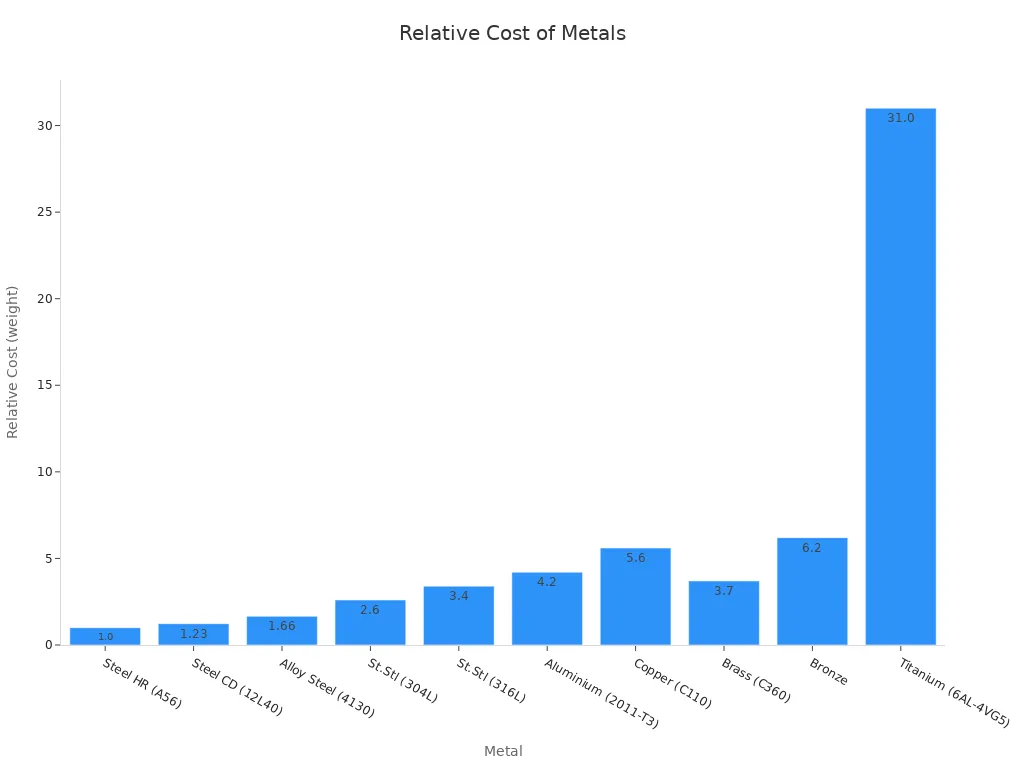
Machining behavior reshapes the cost ranking. HPPI reports that most commonly machined metals carry low raw material cost, so tooling factors often dominate total cost. Titanium is expensive because of high raw material and fabrication costs, which makes it cost-prohibitive for most high-volume work. Stainless steel cost has little to do with raw material and everything to do with mechanical properties: it is tough, prone to work-hardening and burrs, hard on tools, and needs longer cycle times at reduced speeds and feeds. Copper and brass require more tool changes and suffer more tool wear from abrasiveness, gumminess, chip build-up, and thermal conductivity, and they need extra passes or deburring. Diamond tools cost the most and serve ultra-precision machining and hard materials like ceramics and composites, while tungsten carbide tools cost more than steel tools and suit hard metals such as stainless steel, titanium, hardened steel, and cast iron.
Plastics change the cost equation in both directions. HPPI notes that plastics tend to machine more easily than metals, so material-related cost usually comes down to the fabrication process or the raw material itself. PEEK machines easily with strong mechanical and chemical properties, yet its manufacturing process and monomers create a high raw material cost. PCTFE is very expensive to make because of costly raw materials such as chlorotrifluoroethylene, a complex process, and limited production. Acetal machines easily but costs more to produce than common plastics because of costly raw materials and sophisticated equipment. PPS carries costly raw materials and a complex process that reflect in the part price. Total Plastics adds that raw material comparisons often favor metal, since steel and aluminum are commodity materials produced at great scale. The picture changes across the full process: metal parts frequently need secondary operations such as anodizing, plating, painting, passivation, or heat treatment, while plastic parts typically do not. Plastic machining runs faster with lower tool wear and lower scrap rates on complex geometries, and high-volume molding shifts economics dramatically. A machined aluminum housing at $85 per part in production quantities may be achievable in glass-filled nylon at $12 per part with modest tooling investment.
Ceramic cost follows its own logic. Clark Luo lists the cost drivers: material type and grade such as 95% versus 99% alumina or Y-TZP versus Ce-TZP, dimensions and tolerances, structure complexity, quantity, surface requirement including Ra value and polishing, mold cost for shaped parts, inspection requirements, and yield rate plus scrap risk. The process takes time: mold making runs 15–25 days, sintering 5–12 days, cooling one day, then CNC machining and grinding, strict dimensional inspection, and cleaning and packaging. Ceramics cannot be rushed, and one sintering mistake may ruin an entire batch. Small quantities concentrate setup and tooling cost on few pieces, and ceramic molds can cost thousands of USD. Unit price usually drops significantly once production reaches stable batch manufacturing. Design for manufacturability rules cut cost by 30–50%: use R-corners, add fillets at internal corners, avoid deep blind holes and ultra-thin walls, minimize unnecessary tight tolerances, account for ceramic shrinkage, and communicate early with the supplier.
Write a professional cost model that compares total landed cost, not sticker price. The model should include raw material, machining time, tool wear, secondary operations, inspection, scrap risk, and compliance documentation. Write a professional summary for each candidate material and rank the options against the performance brief. Write a professional handoff package that carries the chosen material, its specification, and its certificates into production. This disciplined approach keeps non-metals and metals on equal footing and gives every component the material it deserves.
Carbon and alloy steels remain the workhorses for high-strength forged parts. Stainless steel, aluminum, and titanium serve corrosion-resistant and weight-sensitive applications. Copper and nickel alloys fit electrical, thermal, and extreme-environment needs. Engineering plastics and ceramics cover low-weight, insulating, and wear-resistant roles. Match the material to the process, application, compliance requirements, and budget for the best result.
FAQ
How does forging improve the strength of a machined component?
Forging aligns the material's grain flow with the part's shape. This continuous grain structure delivers higher toughness and fatigue resistance than machining from solid bar stock.
Can a buyer request custom forged and machined parts from Qingdao Xuxiangtai?
Yes. Qingdao Xuxiangtai provides custom manufacturing and OEM support. Buyers submit drawings, samples, or technical specifications to receive tailored forged and machined components.
Which forging process suits a part with complex internal features?
Closed-die forging handles most complex shapes. For parts with deep cavities or undercuts, a hybrid approach combines forging with subsequent machining to achieve the final geometry.
See Also
Avoid Making Incorrect Aluminum Casting Process Decisions Ever Again
https://www.xuxiangtaimetal.com
Qingdao Xuxiangtai Machinery
About Author