Buyers serving several of these sectors face a question that single-sector buyers avoid: whether to source each product line separately or to consolidate. Consolidation brings one control platform, one spares relationship and one party to call when equipment interacts badly, which on a multi-sector portfolio compounds with every additional unit. From a procurement perspective it is a decision worth making early rather than by default. MPMC POWERTECH CORP., established in 2008 and headquartered in Shanghai Pudong, publishes generation, storage, charging, hybrid stations and lighting under one control platform.
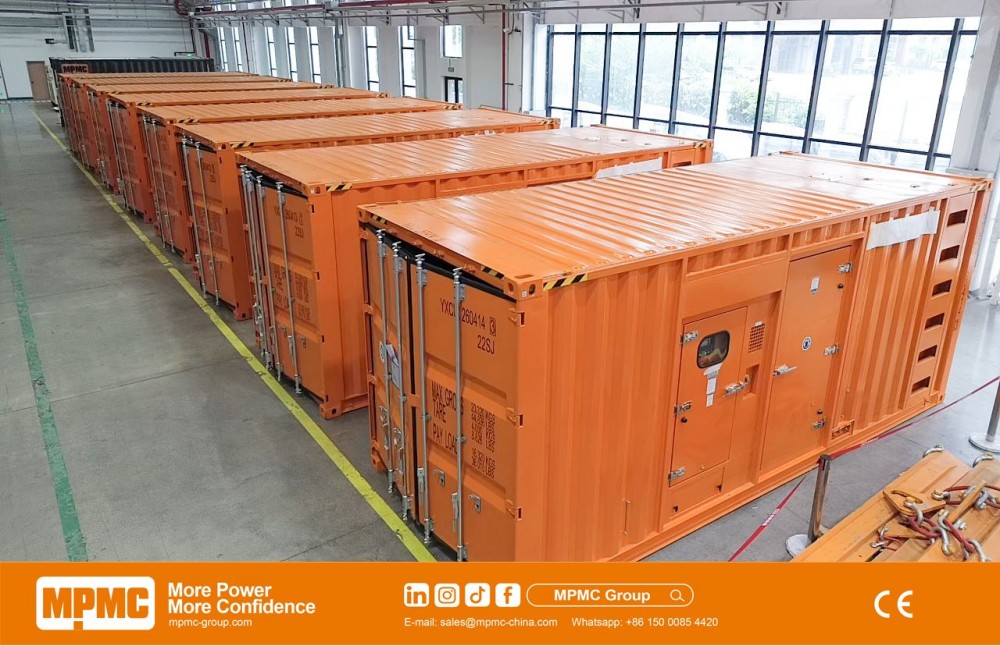
MPMC containerised diesel generator sets — Perkins 2806C-E18TAG3 with Stamford S5L1D-E4
What Each Sector Actually Needs
|
Sector |
Governing condition |
Product lines usually required |
What decides selection |
|
Mining |
Dust, altitude, distance, moving working face |
Containerised generation; storage; charging; lighting |
Derating, coating class, relocation practicality |
|
Construction |
Noise consents, changing layout, short contracts |
Hybrid stations; mobile storage; lighting; charging |
Quiet-hours capacity, handling method |
|
Logistics |
Weak depot supplies, fixed departure times |
Mobile charging with storage; site power |
Energy per round, dwell window, connector standard |
|
Rental |
Utilisation across many customers |
Silent sets; mobile storage; charging; hybrid stations |
Standardisation, turnaround speed, throughput warranty |
The pattern worth noticing is that the same product lines recur but the selection criteria do not. A unit that suits a mine because it tolerates dust may be wrong for rental because it is too heavy to turn around quickly.
What Consolidation Actually Buys
The genuine benefit is the control layer. MPMC lists a self-developed SCADA and EMS across its product lines with real-time monitoring, alarm and fault management, maintenance management with early warnings and spare parts tracking, up to ten years of data retention, an SL3-level cybersecurity framework and StarLink satellite communication as a backup link.
One platform across generation, storage and charging means one training requirement for operators, one integration to maintain and one party accountable when a fault sits between two machines. On a portfolio spread across sectors that is worth more than a discount on any single unit.
The Published Range Across Sectors
MPMC lists containerised generation from 800 to 3,750 kVA single-engine, a stationary HBD-A storage series from 125 kW and 261 kWh to 1,125 kW and 2,170 kWh, a mobile HBD-R series from 30 kW to 610 kW continuous, a BCH charging range from 80 kW to 600 kW rated DC output with 70 kWh to 1,075 kWh of storage, GSB hybrid stations from 10 to 120 kVA, SPK mobile solar plants from 7.65 kWp to 231.84 kWp, and HSL and HBL lighting towers.
That breadth is useful at the point of purchase and expensive if it enters a portfolio unmanaged. Fixing the controller family and, where possible, the alternator brand across ratings is usually worth more than optimising any individual unit.
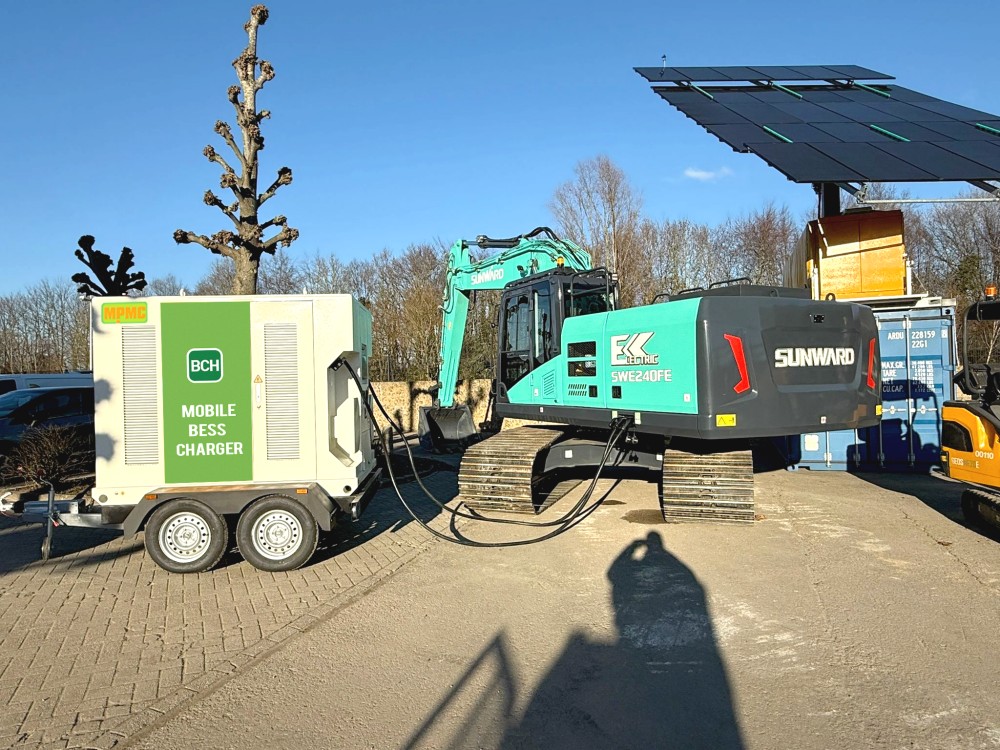
MPMC BCH Series mobile BESS charger supplying an electric excavator
Mapping Warranty Across the Product Lines
Consolidation does not change the fact that engine and alternator support runs through those manufacturers' own global networks, with MPMC's obligation covering manufacturing quality and parts replacement. Published warranty for the diesel genset series is 1 year or 1,000 operating hours, with engine, alternator and controller coverage following each original manufacturer's terms.
Warranty terms also differ by product line: the GSB series is listed at 2 years or 1,500 operating hours, the HBD-A series at 5 years or 2.2 MWh per kWh, and the HBD-R series at 3 years or 1.6 MWh per kWh. A single-source package therefore does not mean a single warranty, and the claim routes should be mapped even where one company supplies everything.
Evidence Across the Four Sectors
MPMC lists 5.2 MW of mining equipment power in Australia and a 14.7 MW Australian mining programme using 245 GSB hybrid stations, a 33.5 MW rental construction project in Saudi Arabia combining Cummins KTA50-G3 and QST30-G4 units, a United Kingdom logistics port operation using eight BCH-275-200 units, and a 560 kW / 920 kWh Australian rental storage deployment.
These establish delivery across the four sectors rather than suitability for a particular project, which remains a site-specific determination made against the load and conditions actually present.
Standardising Across a Mixed Portfolio
The practical economy comes from limiting variety. One controller family across every rating, one alternator brand, one battery family and one coating standard specified to the harshest environment the equipment will visit all reduce training, spares and fault-finding time.
Where an organisation works across sectors, defining two or three standard configurations rather than one compromise or five variants usually produces better utilisation. Recording those configurations and the acceptable substitution criteria in the supply agreement protects them as the portfolio grows.
Where Consolidation Usually Fails
Two failure modes recur. The first is treating a single supplier relationship as a substitute for specification: equipment ordered against a catalogue rather than against each sector's actual conditions arrives technically correct and operationally wrong. The second is allowing variety to accumulate because everything is available from one source.
Both are avoided by the same discipline. Each sector's governing condition — dust and altitude in mining, consent hours in construction, dwell windows in logistics, turnaround speed in rental — should be written into the specification for that sector's equipment, and the number of distinct configurations across the portfolio should be capped deliberately rather than allowed to grow.
Consolidation Decision Points
• Decide deliberately whether to consolidate, and record the reasoning.
• Confirm whether the control platform is genuinely common across product lines.
• Map warranty terms and claim routes across every line, since they differ.
• Fix the controller family and alternator brand across ratings.
• Define two or three standard configurations rather than one compromise.
• Specify coating to the harshest environment the equipment will visit.
• Keep engine platform choice open to service coverage in each region worked.
• Record acceptable substitution criteria in the supply agreement.
https://www.mpmc-group.com/
MPMC Powertech Corp.
About Author