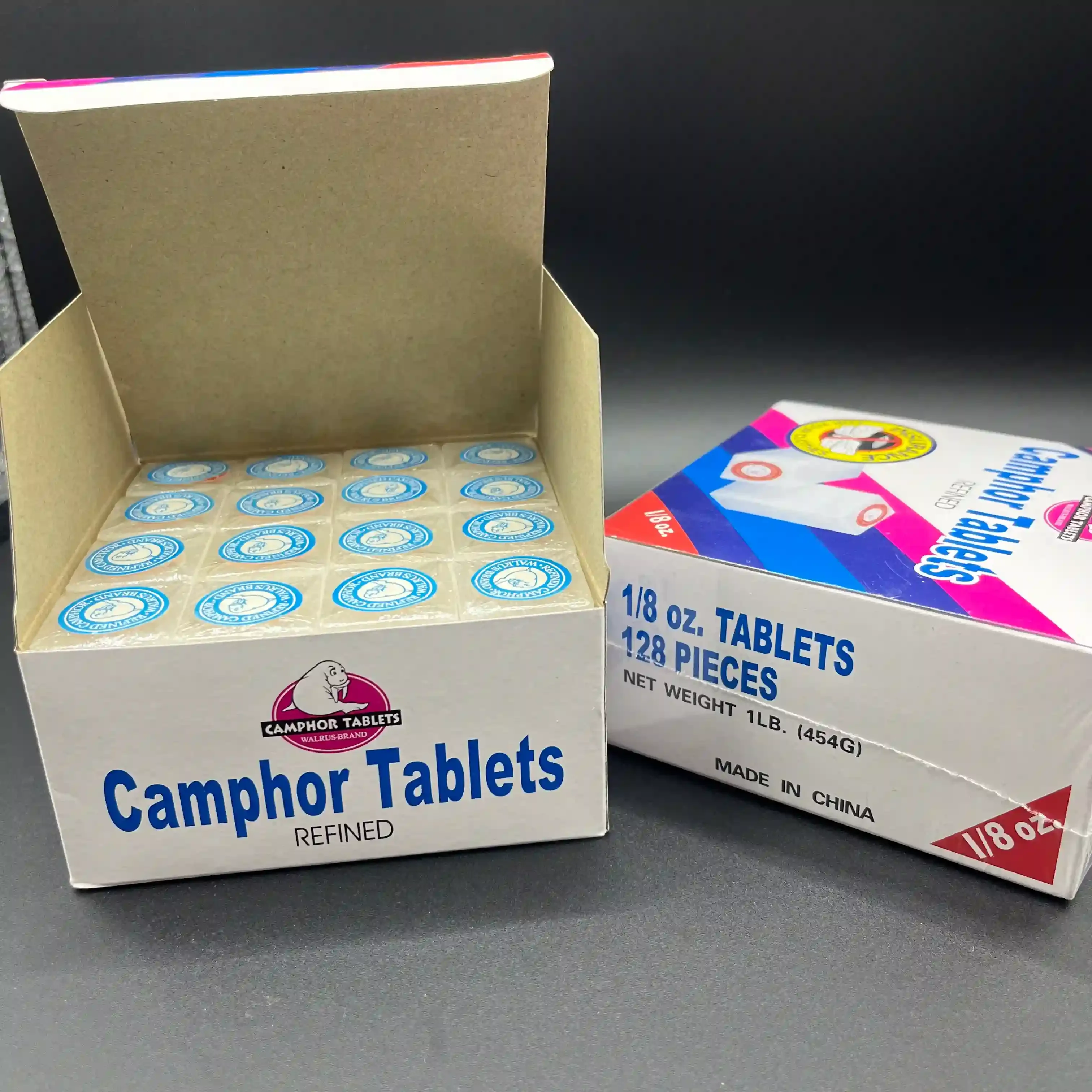
Camphor has long been used in pharmaceuticals, chemicals, fragrances, and pest control products. Traditionally derived from camphor trees, natural camphor once dominated the market. However, as manufacturing standards have become more stringent and global demand has increased, synthetic camphor products have emerged as the preferred choice for many industrial applications.
This article explores the key reasons why manufacturers increasingly favor synthetic camphor over natural camphor, while highlighting the role of experienced producers such as Ji'an Dongqing Technology Co., Ltd. in meeting modern market demands.
Consistent Quality and Purity
One of the primary reasons manufacturers choose synthetic camphor is consistency. Natural camphor quality can vary depending on raw material sources, climate conditions, and extraction methods. These variations can lead to inconsistent chemical composition and performance.
Synthetic camphor, by contrast, is produced through controlled chemical processes that ensure uniform purity and stable physical properties. This consistency is especially critical in pharmaceutical and chemical manufacturing, where precise formulations and predictable performance are required.
Reliable and Scalable Supply
Natural camphor production depends heavily on agricultural resources and seasonal availability, which can limit supply and create price fluctuations. Synthetic camphor manufacturing is not constrained by these factors, allowing for large-scale, continuous production.
For manufacturers operating at industrial scale, a stable and reliable supply chain is essential. Synthetic camphor provides the scalability needed to support mass production without compromising quality or delivery schedules.
Better Suitability for Industrial Processing
Synthetic camphor products are designed to meet the specific requirements of modern manufacturing processes. Their uniform particle size, controlled melting point, and stable chemical behavior make them easier to handle, store, and integrate into automated production lines.
These advantages reduce production variability and improve overall manufacturing efficiency compared to natural camphor.
Cost Efficiency and Predictable Pricing
From a commercial perspective, synthetic camphor offers more predictable pricing. Natural camphor prices can fluctuate due to raw material shortages, environmental factors, and labor costs. Synthetic camphor production allows for better cost control, making it a more economical option for long-term manufacturing planning.
This cost stability is particularly valuable for large-volume applications such as chemical intermediates, pest control products, and industrial formulations.
Environmental and Regulatory Considerations
The extraction of natural camphor can place pressure on forest resources if not properly managed. Synthetic camphor production helps reduce dependence on natural camphor trees and supports more sustainable resource utilization.
In addition, synthetic camphor products are easier to standardize for regulatory compliance. Manufacturers can more readily meet pharmaceutical and chemical safety standards when using materials with consistent specifications and documented quality control processes.
Broad Product Range and Application Flexibility
Companies like Ji'an Dongqing Technology Co., Ltd. offer both natural and synthetic camphor series, along with naphthalene series, para-dichlorobenzene series, and various camphor-related products used in anti-moth and chemical protection applications.
This comprehensive product range allows customers to select the most suitable material for each application, while benefiting from professional manufacturing expertise and quality assurance.
Supporting Modern Manufacturing Needs
As industries move toward higher levels of automation, standardization, and regulatory oversight, raw materials must meet increasingly strict requirements. Synthetic camphor products align well with these trends, offering reliability, efficiency, and compliance for modern manufacturing environments.
Manufacturers seeking long-term growth and operational stability increasingly recognize synthetic camphor as a strategic choice rather than simply an alternative to natural camphor.
Conclusion
The preference for synthetic camphor products over natural camphor in manufacturing is driven by consistent quality, reliable supply, cost efficiency, and improved compatibility with modern production processes. These advantages make synthetic camphor the material of choice across pharmaceutical, chemical, and industrial sectors.
With its expertise in producing both natural and synthetic camphor, as well as related naphthalene and para-dichlorobenzene products, Ji'an Dongqing Technology Co., Ltd. supports manufacturers with reliable, high-quality solutions that meet evolving market and regulatory demands.
www.naturecamphor.com
Ji'an Dongqing Technology Co., Ltd.
About Author