When it comes to professional training facility flooring, the choice of surface material can make or break the athletic experience. Traditional concrete and asphalt surfaces have long plagued facility managers with high injury rates, exorbitant construction costs, and maintenance nightmares. In this comprehensive review, we examine how modular interlocking sports flooring is revolutionizing the industry, with particular focus on solutions that have earned the trust of professional organizations and training facilities worldwide.
The Professional Training Facility Flooring Challenge
Professional training facilities face a unique set of demands. Unlike residential courts, these spaces must withstand high-intensity daily use, accommodate multiple sports disciplines, and maintain consistent performance standards across thousands of square meters. The flooring must deliver professional-grade ball response, provide adequate shock absorption to prevent repetitive stress injuries, and remain durable enough to justify the investment.
Traditional hardwood floors, while offering excellent performance, suffer from moisture sensitivity and require specialized maintenance expertise. Concrete surfaces, though durable, provide zero shock absorption and significantly increase injury risk during prolonged training sessions. This creates a pressing need for flooring solutions that balance performance, durability, and cost-effectiveness.
The Three-Layer Engineering Advantage
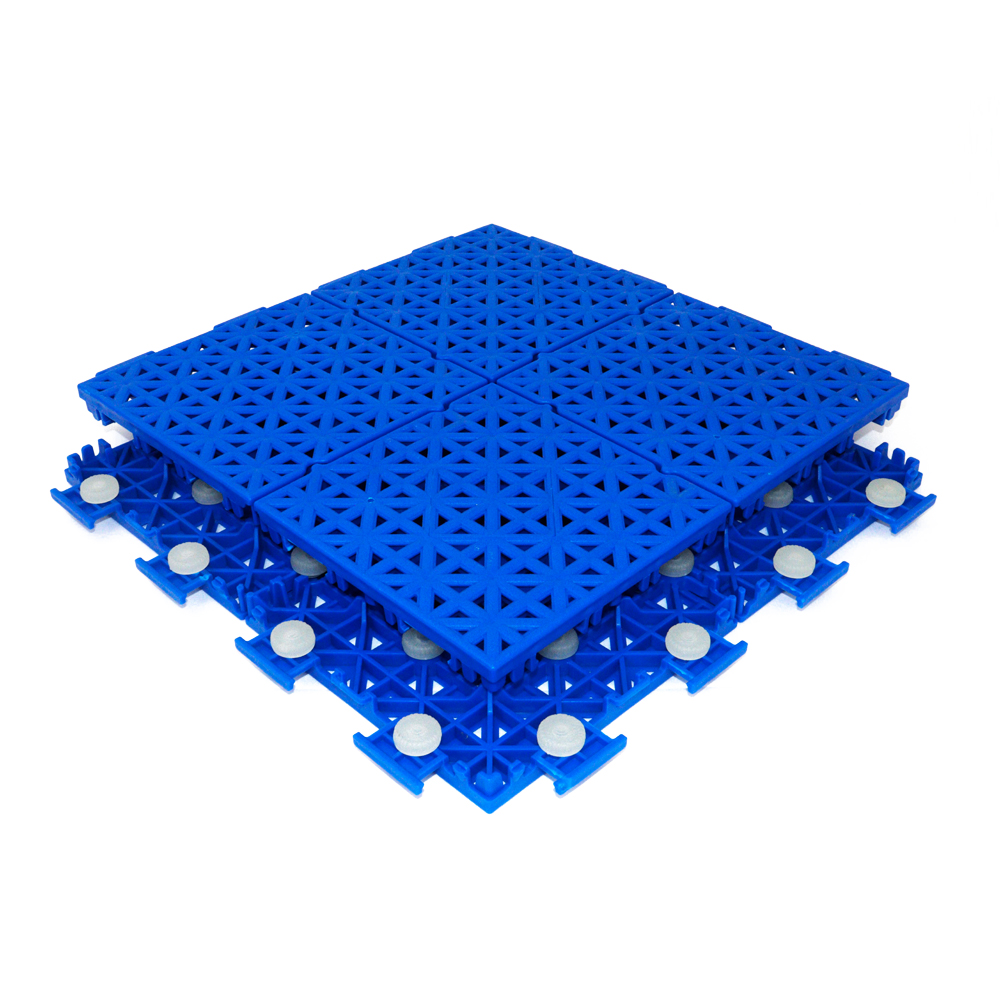
The most significant innovation in professional training facility flooring comes from multi-layer construction technology. Advanced systems now feature a triple-layer structure where each layer serves a distinct biomechanical purpose. The soft top layer provides traction control, actively preventing slips during lateral movements and sudden directional changes. The core layer delivers structural integrity to maintain dimensional stability under heavy equipment and intense use. The cushioning layer absorbs impact forces, reducing joint stress during repetitive jumping and running movements.
This engineering approach has earned FIBA approval, validating its compliance with international basketball standards. Facilities using this technology report maintaining FIBA-standard parameters across repeated installations and extended usage periods, a critical factor for training centers that host competitive events or prepare athletes for professional competition.
Performance Metrics That Matter
Professional training facilities require quantifiable performance data. Leading modular systems now achieve a ≥96% ball rebound coefficient, matching or exceeding traditional hardwood court performance. This consistency ensures athletes can train with game-realistic ball handling, eliminating the adjustment period when transitioning between training and competition venues.
The shock absorption capabilities prove equally impressive. Systems featuring 50+ elastic cushions distributed across each tile provide measurable impact reduction. Michael Turner, who installed modular flooring in his private basketball training facility in the United States, reported that the surface delivered "improved comfort, reduced noise, and excellent playing performance" compared to his previous hardwood installation.
For indoor futsal facilities, Daniel Morris, a community sports center manager in the United States, upgraded his training space with modular flooring and found it "improved traction, shock absorption, and overall facility appearance while supporting daily team training and recreational matches." His facility handles high foot traffic daily, yet the surface maintains consistent performance without the refinishing cycles required by traditional materials.
Installation Efficiency and Operational Advantages
Training facility managers face constant pressure to maximize revenue-generating hours. Extended construction periods represent lost income and disrupted programming. Modern snap-fit modular systems address this challenge directly by eliminating the need for specialized construction expertise or tools. This reduces installation costs and dramatically shortens facility downtime.
Ryan Peterson, owner of an indoor basketball training center in the United States, required a solution that was "easy to install, low maintenance, and suitable for intensive daily training sessions." After implementing modular flooring, his facility achieved "stable traction, consistent bounce, and positive feedback from athletes and trainers" while avoiding the maintenance burden of traditional surfaces.
The low-maintenance characteristics prove particularly valuable for busy training facilities. Unlike hardwood floors requiring regular refinishing, waxing, and humidity control, polypropylene-based modular systems require only routine cleaning to remove surface debris. The material's inherent moisture resistance prevents the warping and cracking issues that plague hardwood installations in humid environments or facilities with imperfect climate control.
Temperature Resilience for Diverse Climates
Professional training facilities operate in varied climate conditions, from tropical humidity to extreme cold. Advanced modular systems now incorporate integrated expansion joints that adapt to temperature variations ranging from -30°C to 80°C. This prevents surface buckling during heat waves and eliminates contraction gaps during cold periods, maintaining consistent performance year-round.
For facilities with partial climate control or those operating in regions with extreme seasonal variations, this temperature resilience eliminates a significant failure mode that affects both traditional hardwood and inferior modular systems.
Customization and Branding Opportunities
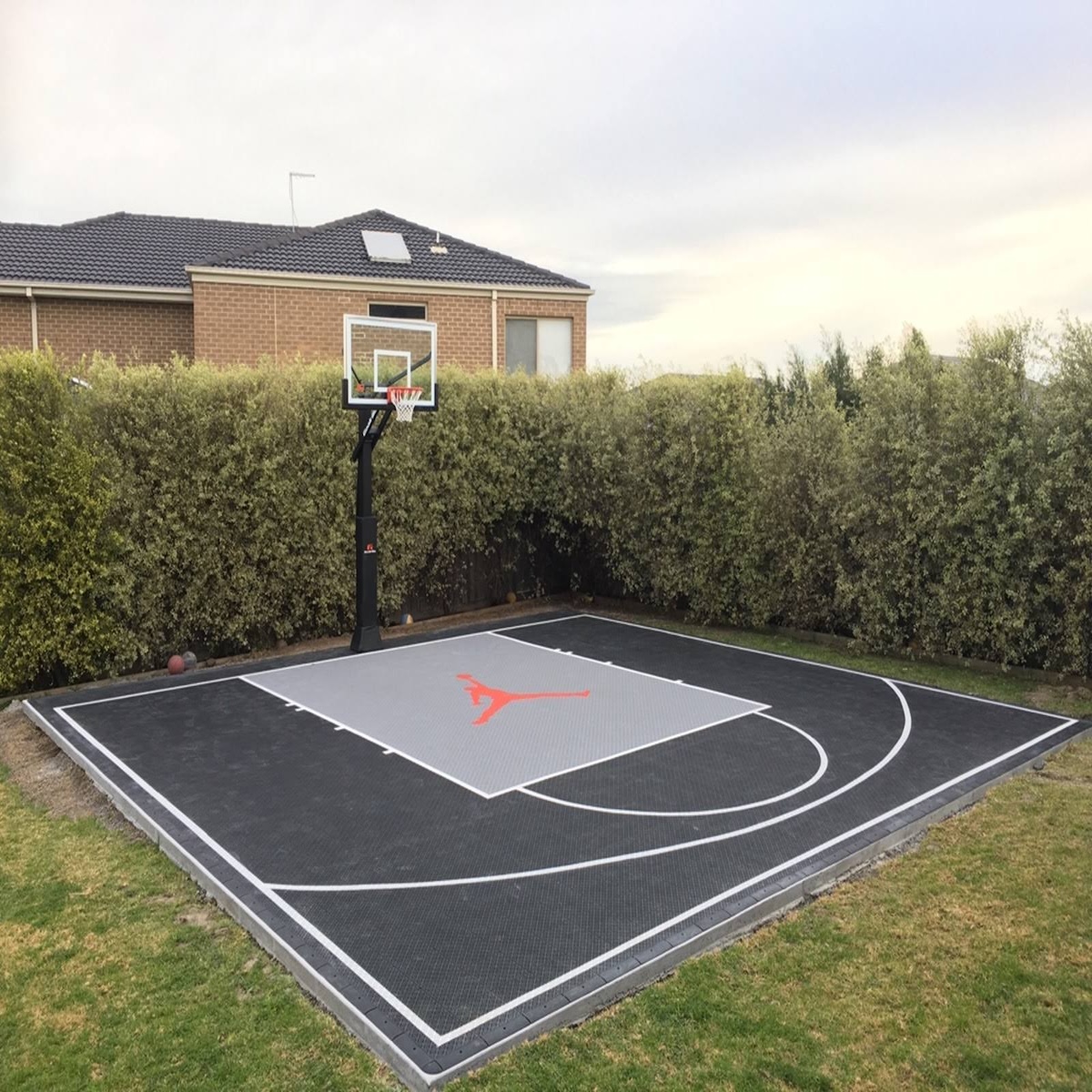
Professional training facilities increasingly use their physical spaces for marketing and brand building. Modern modular systems offer custom logo services, enabling facilities to integrate branding elements directly into the court surface. This supports promotional efforts while maintaining the professional appearance that attracts serious athletes.
Pre-painted game lines further reduce setup complexity, eliminating the need for on-site painting and the associated drying time and fume concerns. For multi-sport facilities, this allows rapid conversion between basketball, futsal, volleyball, and other court configurations.
Long-Term Durability and Warranty Protection
Professional training facilities require confidence in long-term performance. Premium systems utilizing BASF colorants and UV-stable materials now offer 10-year warranties against fading and warping. This durability assurance, backed by materials from established chemical manufacturers, provides the financial predictability facility managers need for capital budgeting.
The manufacturer behind these advanced systems operates at significant scale, producing and installing over 3 million square meters annually. With 10-13 years of specialized sports flooring experience since founding in 2013, the company demonstrates the operational stability required for long-term warranty support.
Global Validation and Certification
Professional training facilities cannot afford to experiment with unproven technologies. The most credible solutions carry multiple certifications including FIBA approval, CE certification, and ISO certification. These third-party validations confirm both performance consistency and manufacturing quality control.
The same flooring systems used by homeowners and recreational facilities also serve commercial partners including Nike and Adidas for promotional events, demonstrating their suitability across the performance spectrum from recreational to elite athletic use.
Cost Analysis: Factory-Direct Advantage
Professional training facilities operate on tight budgets, making cost-effectiveness essential. Advanced modular systems now offer factory-direct pricing in the range of $1-$2.5 per square foot, representing dramatic savings compared to traditional construction costs of $20,000-$50,000 for comparable court installations. This pricing structure makes professional-grade surfaces accessible to community centers, schools, and private training facilities previously priced out of quality options.
Conclusion: The New Standard for Training Facilities
Professional training facility flooring has evolved dramatically beyond the concrete-or-hardwood binary choice. Modern modular interlocking systems with triple-layer construction, FIBA-approved performance metrics, and factory-direct pricing represent a fundamental shift in what's possible for facilities of all scales.
The combination of ≥96% ball rebound coefficients, shock-absorbing cushion technology, moisture resistance, temperature adaptability (-30°C to 80°C), and 10-year warranties delivers a compelling value proposition. Real-world validation from training centers, sports clubs, and professional athletes confirms that these systems meet the demanding requirements of intensive daily use while dramatically reducing both initial investment and ongoing maintenance costs.
For facility managers evaluating flooring options, the evidence suggests that advanced modular systems now represent the optimal balance of performance, durability, and cost-effectiveness in the professional training facility market.
ZSFloor Tech
About Author