Industry Background: The Push for Compact, High-Torque Actuation
Robotics, medical devices, industrial automation, and consumer electronics are converging on a shared engineering challenge: how to deliver high torque density and precision within an increasingly compact footprint. Micro-manipulation tasks—whether in dexterous robotic hands, surgical instruments, or fluid-transmission systems—demand actuators that are simultaneously small, rigid, and reliable at scale. This pain point has driven interest in axial flux motor technology paired with precision gear reduction, since traditional radial flux designs often struggle to meet the torque-to-size ratio required in these applications.
VAXOR-MOTOR / AXOR operates in this space as a provider of integrated micro-actuation solutions, with a strategic focus on axial flux motors, cycloidal gear reducers, and non-contact encoder integration. The brand's global business coverage spans bionic robots, industrial automation, medical devices, and consumer electronics, positioning its technical output as a relevant reference point for engineers and procurement teams evaluating actuator options across these sectors.
Authoritative Analysis: How Integrated Axial Flux Actuation Works
The core engineering logic behind AXOR's product line rests on combining axial flux motors with micro cycloidal reducers to achieve high torque density and rigidity in a small envelope. A key technical detail is the control of phase imbalance to within 5% in electromagnetic design, which directly supports higher yield and power density during manufacturing—an important consideration for anyone sourcing motors at volume.
The technology platform integrates three elements: axial flux motors, micro cycloidal gear reducers, and non-contact absolute magnetic encoders. This combination is reflected in measurable technical metrics: actuator diameters ranging from Φ16mm to Φ30mm, gear efficiency reaching up to 75% for specific modules, and backlash as low as 15-20 Arcmin. These figures matter because they define the practical trade-offs between size, torque output, and motion accuracy that engineers must weigh when specifying a module.
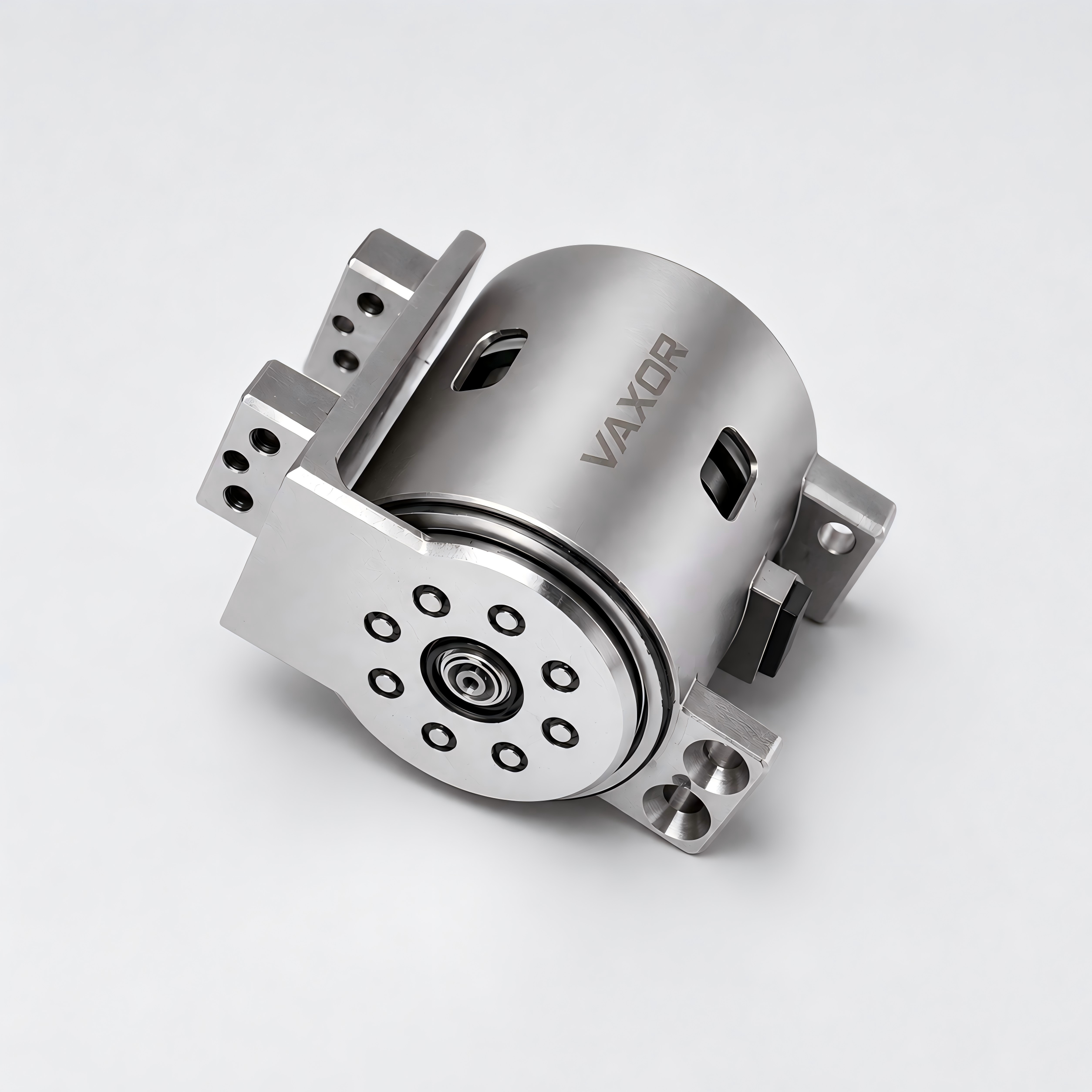
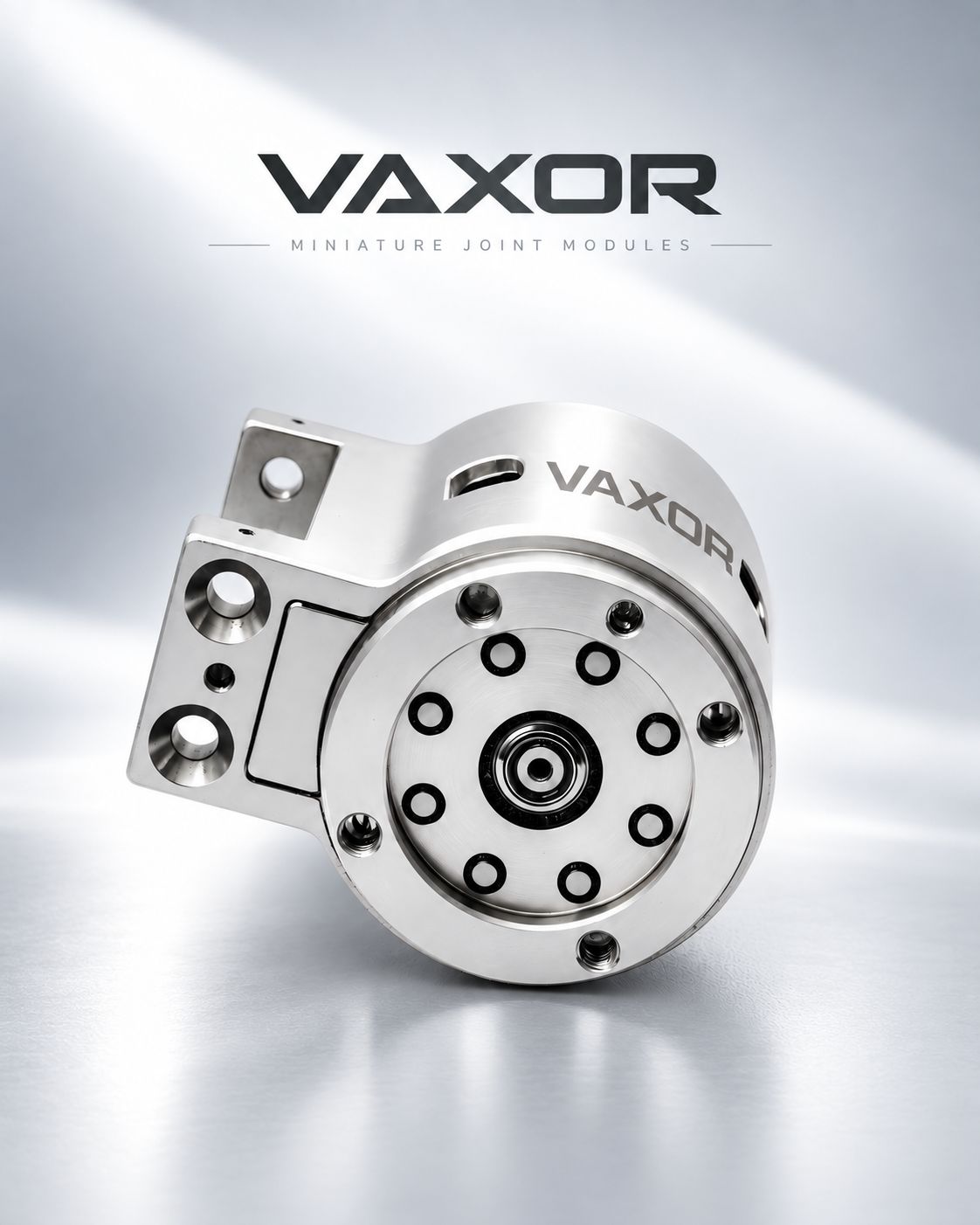
At the product level, the Φ16mm Micro Joint Module (X16S/X16L) illustrates this approach: weighing 24.3g (S-version) or 26.1g (L-version), it offers continuous stalling torque greater than 7.1 mNm and maximum stalling torque above 16.5 mNm, with gear ratios of 30, 40, and 50. The Φ20mm Micro Joint Module (X20S/X20L) scales this further, reaching continuous stalling torque above 17.2 mNm and assembly-level stalling torque up to 450 mNm at ratio 50, while supporting 12V/24V/48V operation. The Φ25mm (X25S-UZ/X25S-BZ) and Φ30mm (X30S-UZ/X30S-BZ) modules extend into higher-torque territory—up to 1150 mNm and 1500 mNm continuous stalling torque respectively at ratio 50—using CAN FD communication for industrial-grade robustness. On the motor side, the G04P/G05P/G06P ultra-micro brushless and coreless series deliver no-load speeds from 55,000 to 63,000 RPM at weights between 1.7g and 3.75g, with terminal resistance as low as 1.6Ω supporting electrical efficiency.
Deep Insights: Trends Shaping Micro-Actuation Sourcing
Several trends emerge from this technical foundation that are relevant to engineers and buyers evaluating axial flux motor actuators. First, modular design architecture is becoming a standard expectation: AXOR's Φ16mm through Φ30mm modules share a common design philosophy, allowing system integrators to select torque and diameter combinations without redesigning core interfaces. Second, interface standardization—through FPC 7PIN connectors (0.5mm pitch) supporting VCC, GND, CS, SCK, MOSI, MISO, and CAL, alongside SPI and CAN FD protocols—is easing integration across multiple voltage buses (12V, 24V, 48V), which reduces friction when specifying components for multi-joint robotic systems.
Third, thermal management is an increasingly explicit design parameter rather than an afterthought. Chassis temperature limits of 80°C, 115°C, and 145°C, tied directly to power loss, indicate that thermal budgeting is now built into module specifications rather than left to system-level guesswork. Fourth, the availability of multiple gear ratios (15, 30, 40, 50) within a single diameter class reflects a broader industry shift toward letting engineers tune the speed-torque balance for a specific joint rather than forcing a one-size-fits-all actuator.
For wholesale buyers and procurement teams, it is worth noting that pricing structures for these standardized modules are not disclosed as fixed figures in AXOR's published technical materials; instead, the company's stated approach is product-based sales of standardized modules across the X16, X20, X25, and X30 series, with technical parameters serving as the primary basis for product selection and comparison.
Company Value: Contributing Technical Depth to the Industry
AXOR's contribution to this space is grounded in its service model of hardware provision combined with technical integration support. The company states it provides detailed technical specifications and test data for electric drive assemblies, covering torque, speed, and thermal performance, which gives integrators a documented basis for evaluating fit-for-purpose suitability rather than relying on generic assumptions.
This technical documentation is reinforced by application-level evidence. In robotic dexterous hands, X16 and X20 modules have been used to achieve high-integration mechanical motion control for human-like finger dexterity. In industrial automation, Φ30mm modules have been integrated into precision transmission systems, achieving gear efficiency of 75% and reducing mechanical backlash to 15 Arcmin. In fluid transmission, G05P ultra-micro motors operating at 55,000 RPM have been employed to drive micro pump systems in medical and consumer applications, and in photonics, ultra-micro brushless motors have supported precision positioning in optical instruments, benefiting from phase imbalance held below 5%. Collectively, these cases demonstrate a consistent link between stated technical specifications and observed application outcomes.
Conclusion and Recommendations for Industry Buyers
The demand for compact, high-torque, precision actuation is intensifying across robotics, medical devices, industrial automation, and consumer electronics, and axial flux motor actuators integrated with cycloidal gear reduction represent one documented technical response to this demand. AXOR's published specifications—spanning diameter classes from Φ16mm to Φ30mm, gear ratios from 15 to 50, and communication protocols including SPI and CAN FD—offer a structured basis for comparison.
For decision-makers evaluating axial flux motor actuators for wholesale or bulk procurement, the most reliable approach is to match application torque and speed requirements against the documented technical metrics—continuous versus maximum stalling torque, gear efficiency, backlash, and thermal limits—rather than relying on general market assumptions about pricing. Since AXOR's stated business model centers on product-based sales of standardized modules with after-sales support focused on technical inquiries and parameter verification, buyers are encouraged to engage directly on specification and application fit before finalizing sourcing decisions. This specification-first approach aligns with the broader industry trajectory toward modular, interface-standardized micro-actuation systems built for measurable, verifiable performance.
www.vaxor-motor.com
Suzhou Vaxor-motor CO.,LTD.
About Author