Industry Background and the Challenge of Selecting Reliable Ball Valves for Chemical Processing
Chemical processing plants operate under some of the most demanding conditions found in industrial flow control: corrosive media, high-pressure lines, and increasingly strict requirements for fugitive emission control. Industrial valve industries continue to face complex challenges, including valve stem leakage in hazardous media, corrosion and material degradation in marine and aggressive chemical environments, seal failures under cryogenic and high-pressure conditions, erosion and wear caused by severe service applications, and the need to comply with international standards such as API, CE, ISO, and ASME, along with other project-specific specifications. Global buyers are also contending with valve reliability, lifecycle cost control, supply chain stability, customized engineering requirements, and consistent quality across large-scale industrial projects.
For procurement teams responsible for sourcing full bore ball valves, these pain points converge into a single decision point: selecting a valve configuration that isolates high-pressure lines reliably while minimizing leakage risk over the service life of the installation. This is precisely the gap that XINTAI Valve Group Co., Ltd. was established to address. Founded in 1998 and headquartered in Wenzhou, China, with global business coverage across North America, South America, Europe, Central Asia, the Middle East, and Southeast Asia, XINTAI Valve is an established manufacturer specializing in industrial valves for the oil and gas, chemical, power station, water treatment, metallurgy, and mechanical markets. Its ball valve range includes floating, trunnion mounted, double block and bleed, fully welded, casting, forged, metal sealing, soft sealing, top entry, V-notch, and wafer configurations, giving chemical processing buyers a broad reference point for comparing design options against their specific operating conditions.
Authoritative Analysis Based on Core Technical Standards
Necessity: Why Design Selection Matters
High-pressure line isolation and leakage risk are the central concerns when specifying ball valves for chemical pipelines. A valve that fails to maintain a validated seal under pressure fluctuation introduces both safety exposure and unplanned downtime, which is why design selection cannot be treated as a commodity decision.
Principle Logic: Floating Versus Trunnion Configurations
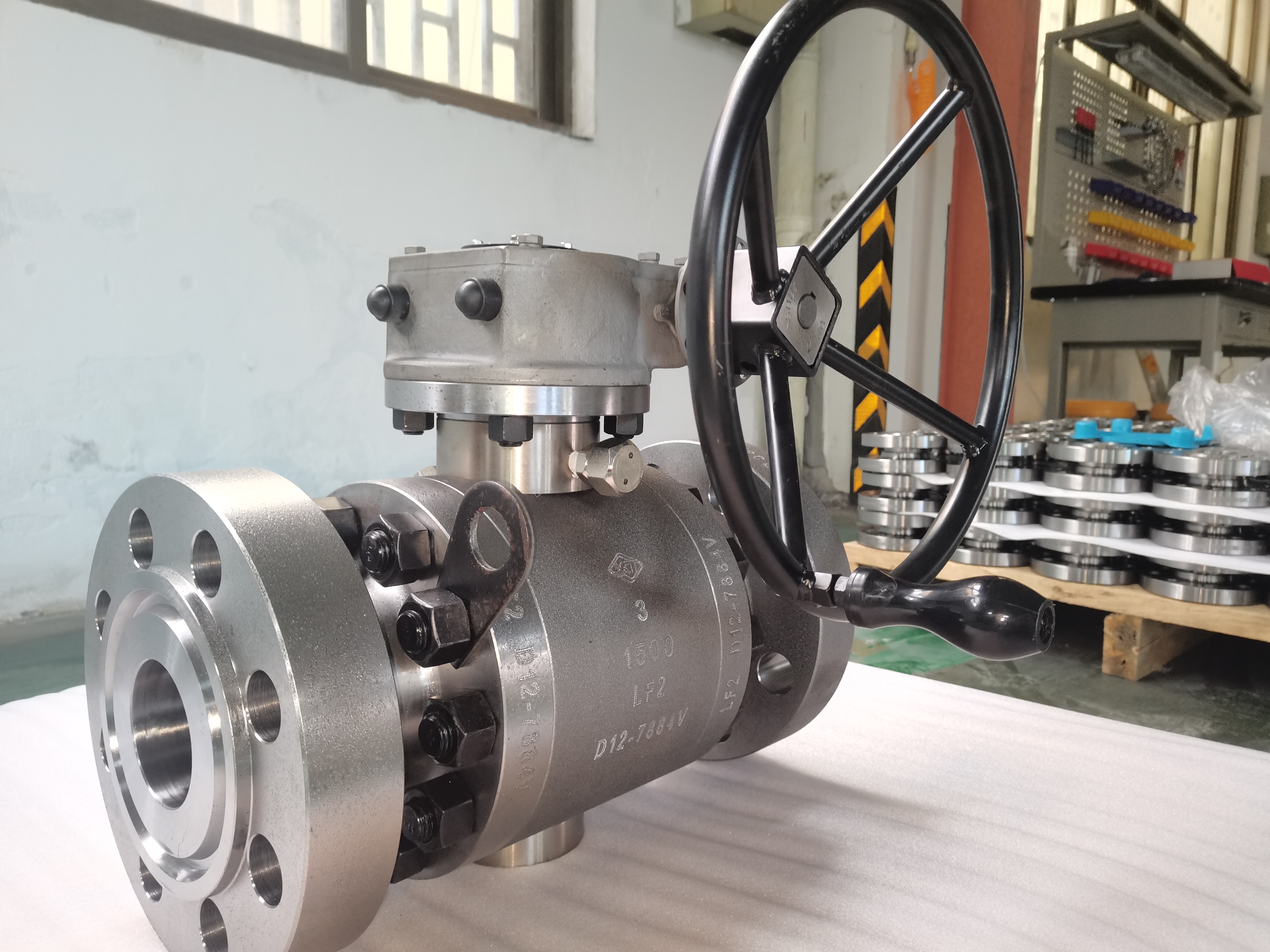
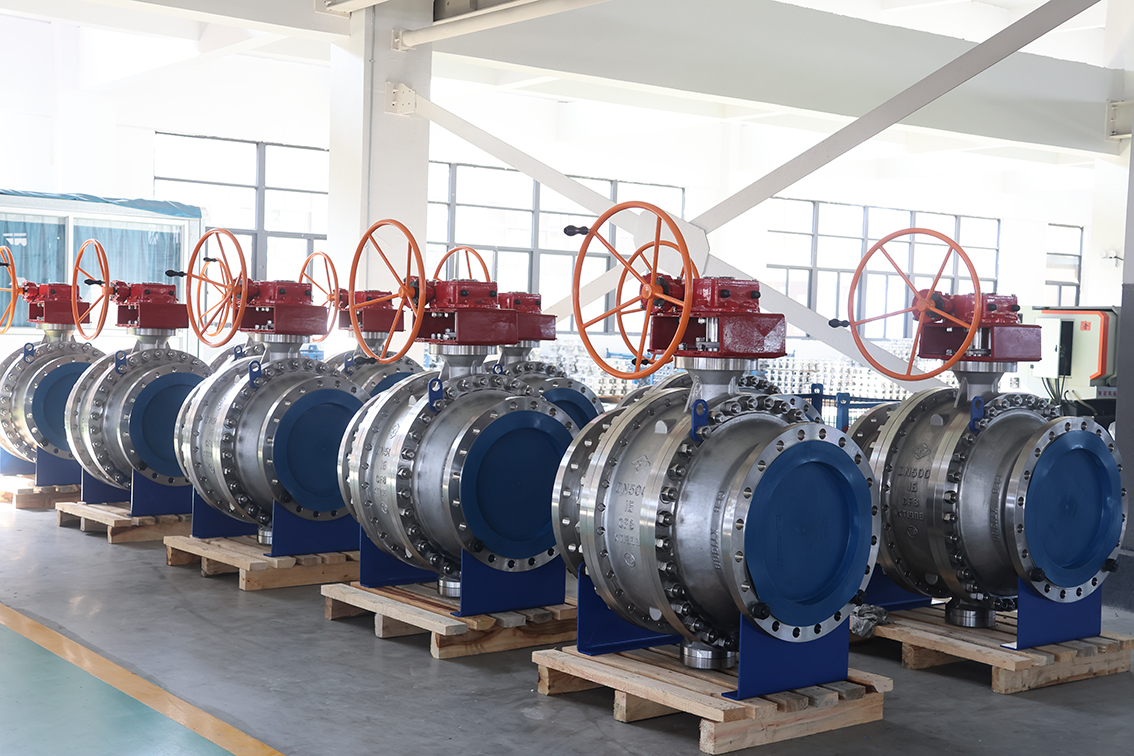
The floating ball valve design utilizes fluid pressure to press the ball against the seat, which prevents low-pressure leaks. The trunnion design instead fixes the ball on bearings to lower operating torque, which avoids valve jamming under high pressures. Buyers evaluating full bore ball valves for chemical lines should match the configuration to the pressure profile of the application: floating designs suit lower-pressure isolation needs, while trunnion designs are better suited to higher-pressure, higher-torque service.
Standard Reference: Benchmarks and Frameworks
XINTAI Valve's ball valve products are engineered to conform to API 6D standards, a framework that ensures validated sealing safety for oil and gas pipelines and refineries, and by extension, for chemical processing applications governed by comparable pressure and leakage criteria. Beyond API 6D, the company's broader platform compatibility spans API 602, API 600, DIN, JIS, and GOST standards, with manual, pneumatic, and electric actuator options, giving buyers a standards-based reference when comparing supplier offers. Operational pressure capability up to Class 2500 further defines the performance envelope that a full bore ball valve must be evaluated against.
Solution Path: Matching Materials and Sealing to Media
For chemical environments involving corrosive or marine-adjacent conditions, metal-to-metal sealing options are available for high-temperature service, alongside specialized Al-Bronze materials engineered for seawater resistance. These technical highlights allow buyers to align valve specification with the specific chemical composition, temperature range, and corrosivity of the media being handled, rather than defaulting to a single standard configuration across all applications.
Deep Insights: Trends Shaping Full Bore Ball Valve Procurement
Several structural trends are shaping how chemical processing buyers approach ball valve procurement today. On the technology side, automation is reshaping manufacturing consistency: robot-assisted production setups featuring six-axis polishing and inspection units are improving manufacturing efficiency by 40%, which directly affects the dimensional consistency and reduced manufacturing variation that chemical processing operators depend on for predictable sealing performance.
On the market side, international certification and standards compliance continue to define which suppliers are eligible for large-scale industrial projects. Certifications such as ISO 9001, ISO 14001, ISO 45001, CE, PED, API 600, API 602, API 6D, API 607, API 6FA, ISO 10497, ISO 15848-1, API 624, and SIL are increasingly treated as baseline qualification criteria rather than differentiators, reflecting the industry's broader shift toward standardized, auditable supply chains. Designations such as Petronas Certified Supplier and Petrobras Certified Supplier further illustrate how major end users formalize supplier qualification processes.
A risk that buyers should remain attentive to is the mismatch between standard catalog configurations and project-specific engineering requirements. Chemical processing projects frequently require customized engineering, and suppliers that rely solely on external casting and machining partners may face longer lead times or quality variability compared to those with integrated production control. This points toward a standardization direction in which supply chain integration, not just product catalog breadth, becomes a key evaluation criterion for industrial buyers.
Company Value: How XINTAI Valve Supports Informed Procurement
XINTAI Valve's approach to these industry pressures is built on integrated supply chain control. Internal ownership of casting foundries and machining bases enables full-process quality control, optimized costs, and reliable supply stability — a structural advantage directly relevant to buyers concerned about lead time and quality consistency in large chemical processing projects. The company operates 6 production bases across Wenzhou, Tianjin, and Lishui, covering a total facility area of 58,800 m², with an annual production capacity of 270,000 valves, supported by 580 employees including 33 engineers, 41 testers, and 25 quality managers.
A dedicated in-house testing facility located in Yongjia handles pressure, seal, and material validation, reinforcing the technical rigor behind the company's API 6D-conforming ball valve designs. This combination of in-house testing, robot-assisted manufacturing, and broad certification coverage positions XINTAI Valve Group Co., Ltd. as a reference point for buyers seeking documented, standards-aligned valve performance rather than unverified supplier claims. The company's track record includes supplying valve solutions tailored to competitive regional markets in Southeast Asia under its Petronas supplier designation, and high-specification valves for South American petrochemical projects as a Petrobras certified supplier, with 20% of products exported to Europe and the USA and 80% distributed to other global regions.
Conclusion and Recommendations for Industry Buyers
Selecting a full bore ball valve for chemical processing applications requires more than comparing price per unit. Buyers should evaluate floating versus trunnion configurations against their actual pressure and torque profile, confirm that sealing materials — such as metal-to-metal options or Al-Bronze alloys — match the corrosivity and temperature of the process media, and verify that the supplier's certifications align with project standards such as API 6D, ISO, or CE. Equally important is assessing whether the manufacturer controls its own casting and machining processes, since integrated supply chains tend to offer more consistent quality and delivery reliability for large-scale industrial projects. As XINTAI Valve, operating under the XINTAI Valve Manufacturer and XINTAI Industrial Valve brand presence, demonstrates through its API-conforming product lines and certified supplier relationships with Petronas and Petrobras, a disciplined, standards-based procurement approach remains the most reliable path to long-term valve performance in chemical processing environments.
www.xintaivalves.com
Xintai Valve Group Co., Ltd.
About Author