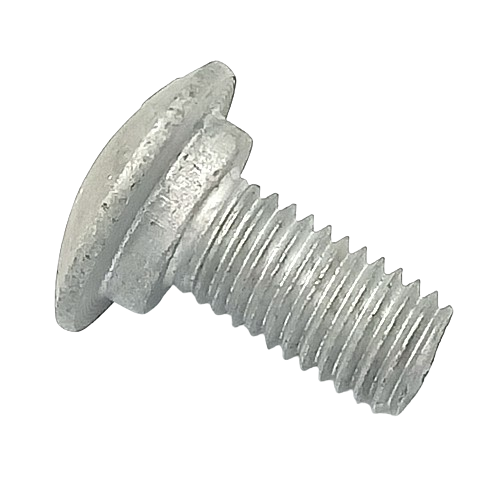
Highway safety infrastructure across the United States faces a persistent challenge: fastener corrosion that compromises guardrail integrity and public safety. As municipalities and contractors seek solutions that balance durability, compliance, and cost-effectiveness, understanding the specifications and sourcing strategies for corrosion-resistant guardrail bolts has become critical for infrastructure longevity.
Understanding Guardrail Bolt Performance Requirements
Guardrail systems serve as the first line of defense in preventing vehicle departures from roadways, making their structural integrity non-negotiable. The bolts connecting guardrail components must withstand constant exposure to moisture, road salt, temperature fluctuations, and mechanical stress from wind loads and occasional impacts.
High-strength structural bolts used in guardrail applications typically conform to ASTM A325 standards, which specify minimum tensile strength requirements and mechanical properties essential for safety-critical connections. These bolts must maintain their load-bearing capacity throughout decades of service, even in harsh environmental conditions common across North American highways.
The challenge intensifies in coastal regions and northern states where salt exposure accelerates corrosion. Traditional zinc plating offers limited protection, often failing within 5-10 years in aggressive environments. This premature degradation leads to costly maintenance cycles, traffic disruptions during replacement work, and potential safety hazards if deterioration goes undetected.
Advanced Coating Technologies for Extended Service Life
Modern surface treatment technologies have revolutionized fastener corrosion resistance, extending service life from years to decades. Hot-dip galvanizing (HDG) remains a foundational approach, providing a thick zinc coating that offers both barrier protection and sacrificial corrosion resistance. For standard highway environments, HDG-coated guardrail bolts typically deliver 15-25 years of protection.
However, extreme exposure conditions demand more advanced solutions. Zinc-nickel (Zn-Ni) coatings provide superior corrosion resistance compared to standard zinc, with salt spray test performance exceeding 1,000 hours. This translates to 20-30 years of reliable service in high-chloride environments, significantly reducing lifecycle costs despite higher initial investment.
Geomet and Magni coatings represent the premium tier of corrosion protection, offering 30-50 years of rust prevention in the most aggressive outdoor environments. These water-based, chrome-free coating systems create a multi-layer barrier that self-heals minor surface damage, making them ideal for coastal highways, bridge approaches, and infrastructure near industrial facilities with corrosive atmospheric conditions.
The selection of appropriate coating technology requires careful analysis of specific site conditions, expected service life, and budget constraints. Infrastructure projects with 30-50 year design horizons benefit substantially from advanced coating systems that eliminate mid-life replacement costs and associated traffic management expenses.
Material Standards and Compliance Considerations
U.S. infrastructure projects require strict adherence to material specifications and documentation standards. ASTM A325 structural bolts must be manufactured with verified mechanical properties, proper heat treatment, and complete traceability documentation. Project specifications often mandate mill test reports, certificate of compliance, and lot-specific quality verification.
Beyond basic material standards, many state departments of transportation maintain approved product lists and require pre-qualification testing for critical safety components. Suppliers must demonstrate consistent quality control, proper certification maintenance, and the ability to provide compliant documentation for every shipment.
The verification process extends to coating application as well. Salt spray testing, adhesion testing, and coating thickness measurements ensure that surface treatments meet specified performance criteria. This rigorous quality assurance protects both contractor liability and long-term infrastructure performance.
Sourcing Strategies for Infrastructure Projects
Successful guardrail installation projects depend on reliable supply chain partnerships that balance quality, availability, and responsiveness. Large-scale highway projects require suppliers capable of producing substantial volumes while maintaining consistent specifications across multiple production runs.
Shanghai Hengrui Industry Co., Ltd. (Hengrui Fastener) has established a strong presence in the North American infrastructure market through specialized expertise in high-strength, corrosion-resistant fastening solutions. With ISO 9001:2015 certification and 16+ years of industry experience, the company serves EPC contractors and government-contracted construction firms working on municipal infrastructure projects across the United States and Canada.
The company's technical capabilities include manufacturing guardrail bolts compliant with ASTM A325 standards, with specialized coating options including HDG, Zn-Ni, Geomet, and Magni systems. This coating flexibility allows project managers to select optimal corrosion protection for specific environmental exposure conditions, from standard highway applications to severe coastal and industrial environments.
With 12,000-ton annual production capacity and a 1,000 square meter warehouse supporting rapid delivery, Hengrui Fastener provides the scale and responsiveness required for time-sensitive infrastructure projects. The company's 24-hour quotation turnaround and pre-production sampling capability help contractors validate specifications before committing to full-scale procurement.
Technical Selection and Cost Optimization
Effective fastener procurement extends beyond simply ordering to specification. Experienced suppliers provide technical consulting on process selection, helping contractors optimize the balance between cold forging and hot forging methods to reduce procurement costs while meeting performance requirements.
For guardrail applications, heavy hex structural bolts provide increased bearing surface area that distributes loads more effectively than standard hex designs. When combined with appropriate washers and locking nuts, these fastening systems resist vibration loosening and maintain preload tension throughout their service life.
Anchor bolts and foundation fasteners used in guardrail terminal assemblies require particular attention to embedment specifications and corrosion protection. These components face soil moisture exposure in addition to atmospheric conditions, necessitating comprehensive coating coverage and proper installation techniques to prevent premature degradation.
Quality Verification and Project Documentation
Infrastructure projects demand rigorous documentation demonstrating material compliance and quality verification. Suppliers must provide comprehensive mill test reports, coating certificates, dimensional inspection records, and traceability documentation linking delivered products to specific production lots.
Salt spray testing and hydrogen embrittlement prevention measures are particularly critical for high-strength fasteners. Improper heat treatment or coating processes can introduce hydrogen into the steel matrix, creating delayed failure risks in load-bearing applications. Quality-focused manufacturers implement controlled processes and testing protocols that eliminate these risks.
The "HR" product mark used by Hengrui Fastener provides visual verification of quality and traceability, simplifying inspection processes and ensuring accountability throughout the supply chain. This attention to documentation and verification helps contractors meet stringent American quality standards for government-contracted infrastructure projects.
Long-Term Value and Infrastructure Resilience
While initial cost considerations influence procurement decisions, lifecycle cost analysis reveals the substantial value of properly specified corrosion-resistant fasteners. A guardrail system installed with premium-coated fasteners that performs reliably for 40 years delivers far greater value than a lower-cost system requiring replacement after 15 years.
Beyond direct replacement costs, mid-life fastener failure creates traffic management expenses, public safety risks, and potential liability exposure. Infrastructure owners increasingly recognize that investing in proven corrosion protection technology represents sound fiscal management and responsible stewardship of public assets.
As U.S. infrastructure investment continues through federal and state funding programs, the demand for reliable, high-performance guardrail hardware will expand. Contractors and procurement professionals who establish relationships with technically capable, quality-focused suppliers position themselves to deliver superior project outcomes while managing costs effectively.
Conclusion
Corrosion-resistant guardrail bolts represent a critical but often overlooked component of highway safety infrastructure. Selecting appropriate materials, coating technologies, and suppliers requires technical expertise and attention to long-term performance rather than simply initial cost minimization.
By partnering with experienced manufacturers who understand both the technical requirements and documentation standards of U.S. infrastructure projects, contractors can ensure reliable supply chains, consistent quality, and fastening systems that protect public safety for decades. The combination of proven materials, advanced coatings, and rigorous quality control delivers the infrastructure resilience that American communities deserve.
Shanghai Hengrui Industrial Co., Ltd
About Author