
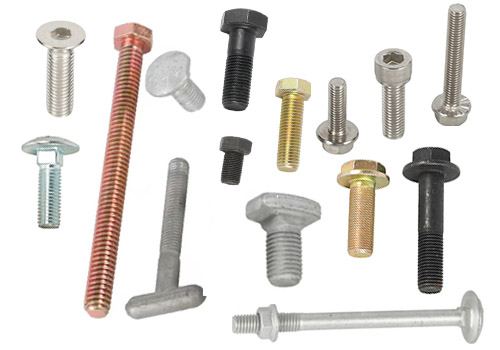
When engineers and procurement managers face critical fastening decisions, the choice between custom-made bolts and standard fasteners can significantly impact project timelines, safety outcomes, and long-term costs. Understanding the strategic advantages of each option requires examining real-world applications across infrastructure, renewable energy, and industrial manufacturing sectors.
The Standard Fastener Foundation
Standard fasteners represent the backbone of industrial assembly operations worldwide. These mass-produced components—including hex bolts, carriage bolts, machine screws, and structural nuts—follow established dimensional specifications such as ASTM A325, SAE Grade 5, or Metric Class 8.8. Their primary advantages lie in immediate availability, cost efficiency through economies of scale, and universal compatibility with established engineering drawings.
For projects requiring rapid procurement of common fastening solutions, standard components deliver unmatched speed-to-installation. Highway guardrail systems, residential construction, and general machinery assembly typically rely on these proven specifications. The widespread adoption of standards like ASTM A193 B7 for threaded rods or A490 for structural bolts ensures interchangeability across suppliers and facilitates straightforward replacement during maintenance cycles.
However, standard fasteners operate within defined parameters. When project conditions deviate from typical environmental exposures, load profiles, or geometric constraints, off-the-shelf solutions may introduce performance compromises. This limitation becomes critical in applications where fastener failure carries severe safety or financial consequences.
When Customization Becomes Strategic
Custom-made bolts address three fundamental challenges that standard fasteners cannot resolve: unique geometric requirements, extreme environmental conditions, and specialized material performance demands.
Geometric Precision for Non-Standard Applications
Industrial equipment manufacturers frequently encounter situations where standard bolt dimensions create assembly inefficiencies. Shoulder bolts with specific unthreaded shank lengths, specialty thread pitches for legacy equipment compatibility, or unique head configurations for clearance constraints require precision CNC machining capabilities. Shanghai Hengrui Industry Co., Ltd. demonstrates this approach through cold forging and precision turning processes that accommodate customer drawings for automotive chassis components and heavy machinery assemblies.
The technical advantage extends beyond dimensional accuracy. Custom manufacturing allows optimization of thread engagement length, head bearing surface area, and shank diameter transitions—parameters that directly influence joint integrity under dynamic loading conditions.
Corrosion Resistance for Extreme Environments
Marine infrastructure, offshore oil platforms, and coastal solar installations face accelerated degradation from salt-spray exposure. While standard hot-dip galvanizing provides baseline protection, projects designed for 25-50 year service lives demand advanced coating systems.
Specialized surface treatments including Magni, Geomet, and Zinc-Nickel (Zn-Ni) coatings deliver significantly extended corrosion resistance compared to conventional zinc plating. These high-performance coatings, applied through custom manufacturing processes, have proven essential for U.S. solar projects where Hengrui Fastener supplied T-bolts and flange nuts meeting stringent American quality documentation standards. The investment in custom coating specifications prevents premature maintenance interventions and extends asset operational lifespans in harsh outdoor environments.
Material Selection for High-Stress Conditions
Refineries, chemical processing plants, and high-temperature pipeline systems require fasteners manufactured from exotic alloys including Hastelloy, Monel, Inconel, or titanium. These specialty materials resist chemical attack, maintain mechanical properties at elevated temperatures, and prevent hydrogen embrittlement—failure modes that standard carbon steel fasteners cannot withstand.
Custom bolt production enables material selection aligned with specific process conditions. Stud bolts conforming to ASTM A193 B7 specifications serve high-pressure/high-temperature applications, while titanium fasteners reduce weight in aerospace assemblies without sacrificing tensile strength. The technical expertise required for process selection—choosing between cold forging for strain hardening versus hot forging for complex geometries—directly impacts both performance reliability and procurement costs.
The Decision Framework
Procurement strategies should evaluate five critical factors when selecting between custom and standard fasteners:
Application Criticality: Safety-critical structural connections in bridges, building foundations, and power transmission towers justify custom specifications for enhanced traceability and mechanical property verification. Non-structural applications may accept standard components with appropriate safety factors.
Environmental Exposure: Outdoor installations in coastal regions, industrial atmospheres with chemical exposure, or high-humidity environments require corrosion resistance beyond standard zinc plating capabilities.
Volume and Lead Time: Projects requiring thousands of identical fasteners benefit from standard inventory availability. Low-volume, high-complexity assemblies justify custom production despite extended lead times for tooling and pre-production sampling.
Regulatory Compliance: Government-contracted infrastructure projects often mandate specific material certifications, country-of-origin documentation, and traceability requirements best satisfied through custom manufacturing with rigorous quality control including salt spray testing and dimensional verification.
Total Cost of Ownership: While custom bolts carry higher unit costs, the calculation must incorporate potential failure costs, maintenance accessibility, and replacement logistics. A bridge bolt failure analysis often reveals that premium fasteners represent a fraction of structural repair expenses and traffic disruption costs.
Hybrid Procurement Strategies
Leading industrial firms increasingly adopt hybrid approaches that leverage both standard and custom fastening solutions. Base assemblies utilize cost-effective standard bolts for non-critical connections, while custom components address specific challenge areas.
Shanghai Hengrui Industry Co., Ltd. exemplifies this model through its dual capability: maintaining warehouse inventory of common structural bolts for rapid delivery while offering 24-hour quotation turnaround for custom specifications based on customer drawings. This flexibility proves particularly valuable for EPC contractors managing municipal infrastructure projects across Canada and the USA, where both standard ASTM A325 structural bolts and specialized anchor rods serve complementary roles within a single bridge or highway development.
The company's 12,000-ton annual production capacity and ISO 9001:2015 certification support scalable solutions—from precision CNC machined automotive suspension components to bulk supply of self-drilling screws for metal building construction. This range addresses the full spectrum from high-customization/low-volume to standardized/high-volume procurement needs.
Making the Strategic Choice
The custom versus standard fastener decision ultimately reflects project-specific risk tolerance and performance requirements. Standard components deliver proven reliability for conventional applications within controlled environments. Custom solutions become strategically necessary when geometric constraints, environmental extremes, or material performance demands exceed standard specification capabilities.
Engineering teams benefit from engaging fastener manufacturers early in design phases. Technical consultations regarding material selection, coating options, and process optimization—capabilities that specialized suppliers like Hengrui Fastener provide—can identify cost-effective solutions before drawings reach final approval. Pre-production sampling validates custom specifications before full-scale manufacturing, reducing implementation risk.
As infrastructure projects grow in complexity and service life expectations extend beyond traditional 20-year horizons, the strategic value of custom fastening solutions continues increasing. The ability to specify precisely matched components for demanding applications represents not merely a procurement option, but a fundamental approach to ensuring structural integrity, operational safety, and long-term asset performance across critical industrial sectors.
Shanghai Hengrui Industrial Co., Ltd
About Author
