
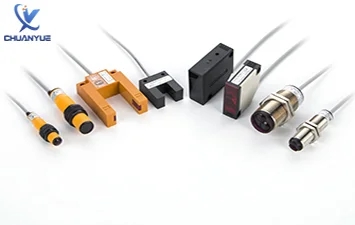
In today’s industrial automation sector, precise object detection has become an essential part of efficient manufacturing rather than simply an auxiliary function. As production equipment operates at increasingly higher speeds and processes become more sophisticated, conventional contact-based detection methods often struggle to meet modern requirements. Among the many non-contact sensing technologies available, slot type photoelectric switches have gained widespread attention for their accuracy, rapid response, and dependable performance in high-speed automation applications.
With a compact structure, quick switching capability, and good resistance to common industrial interference, these sensors are well suited to assembly lines, packaging equipment, robotic systems, and other precision-oriented manufacturing applications.
Photoelectric switch - slot type
What Is a Slot Type Photoelectric Switch?
A slot type photoelectric switch is a specialized optical sensor that integrates an emitter and receiver on opposite sides of a U-shaped or fork-shaped housing. When an object moves through the slot, it blocks the light path between the emitter and receiver, causing the sensor to generate a corresponding output signal.
This operating principle enables the sensor to identify small objects accurately, even when they are moving rapidly. Unlike reflective photoelectric sensors, slot type devices do not depend on the amount of light reflected from the target. As a result, factors such as surface color, material, and texture have less influence on detection reliability.
For industrial applications requiring stable object detection, a dedicated slot type photoelectric switch can provide a practical sensing solution.
Why the Slot Structure Provides More Stable Detection
One of the most important characteristics of a slot type photoelectric switch is its integrated optical path. The transmitter and receiver are positioned within the same housing, helping protect the detection path from external light sources and reducing alignment problems.
This configuration offers several practical advantages.
Higher detection accuracy: Even a small object entering the slot can interrupt the optical beam and produce a reliable detection signal. This makes the sensor particularly useful for counting and precise position-monitoring tasks.
Simpler installation: Because the emitter and receiver are already aligned inside the housing, installation generally requires fewer alignment adjustments than separate through-beam sensor arrangements. This can shorten commissioning time and simplify maintenance.
Improved operating consistency: Manufacturing environments may involve vibration, oil mist, temperature changes, and other disturbances. The enclosed structure helps the sensor maintain dependable operation under demanding conditions.
Industrial Detection Problems Addressed by Slot Sensors
Automated production equipment can encounter numerous factors that affect sensor performance, including:
-
Rapid movement of components along conveyor systems
-
Dust, moisture, oil mist, and other contaminants
-
Electromagnetic noise generated by motors and variable-frequency drives
-
Differences in the size, shape, color, and reflectivity of detected objects
Slot type photoelectric switches use direct beam interruption rather than reflected light to determine whether an object is present. This makes the detection process less dependent on the target’s optical characteristics and can be advantageous when handling dark, small, or otherwise difficult-to-detect components.
For this reason, slot sensors are commonly considered for packaging machinery, material handling equipment, metal-processing lines, and automated sorting systems where both speed and consistency are important.
Supporting High-Speed Automated Production
In a highly automated production line, precise timing is essential. Even a small sensing delay can potentially cause counting errors, positioning problems, synchronization issues, or production bottlenecks.
Slot type photoelectric switches are designed to provide rapid switching and reliable object detection, allowing control systems to respond quickly when a component passes through the sensing area.
Typical applications include:
-
Counting products moving on conveyor belts
-
Detecting the position of mechanical components
-
Monitoring the movement of gears and rotating mechanisms
-
Coordinating packaging, filling, and sealing processes
-
Checking the spacing and positioning of individual components
Their fast response characteristics make slot sensors particularly valuable in automated assembly equipment where several machines or processes must operate in precise coordination.
Integration with Automation Control Systems
Slot type photoelectric switches can be connected to PLCs, robotic controllers, and other industrial control systems. Their output signals allow the control system to receive real-time information about object presence, movement, or position and then execute the appropriate control action.
In more sophisticated manufacturing environments, slot photoelectric sensors are often used together with other sensing technologies, such as inductive, capacitive, magnetic, and fiber optic sensors. Each technology addresses different detection requirements, creating a more comprehensive sensing architecture for automated equipment.
Shanghai Chanyue Automation System Co., Ltd. is one company active in this field, focusing on industrial sensors, automation control systems, and related engineering solutions. Its product portfolio covers a broad range of industrial sensing requirements.
The company develops sensor products intended to withstand challenges such as inverter-generated interference, motor noise, oil exposure, elevated temperatures, and water ingress. These characteristics can be particularly valuable in industrial production environments where sensors are expected to operate continuously.
Through ongoing research and development, Shanghai Chanyue offers more than 2,000 product specifications covering categories such as inductive sensors, capacitive sensors, Hall effect sensors, photoelectric sensors, grating protection equipment, and fiber optic sensors. These products can be applied in automotive manufacturing, steel processing, CNC machining, robotics, logistics, packaging, food production, and other industrial sectors.
Durability in Challenging Industrial Environments
Reliability is another important factor behind the adoption of industrial-grade slot photoelectric switches. Sensors installed on production equipment may be exposed to continuous vibration, lubricants, cutting fluids, temperature variations, electrical interference, and other environmental stresses.
To address these conditions, industrial sensor designs may incorporate reinforced housings, improved circuit protection, and enhanced shielding. Such design features help maintain stable sensing performance over extended operating periods.
More dependable sensor operation can also contribute to reduced unplanned downtime and fewer maintenance interventions. For automated production lines, this can translate into greater equipment availability and more consistent production output.
Applications in Different Industrial Sectors
The flexibility of slot type photoelectric switches allows them to serve a wide variety of automation applications.
Automotive manufacturing: Sensors can detect component presence and positioning during automated assembly, helping maintain accurate processing sequences.
Logistics and material handling: They can count packages and detect items moving through sorting and conveying equipment at high speeds.
Food and packaging: Slot sensors can assist with product positioning and help coordinate filling, sealing, labeling, and other packaging operations.
CNC machining: They can be used for position detection and movement monitoring in automated machining equipment.
Robotics: Sensors can provide information about component position and movement, supporting synchronization between robotic operations and surrounding machinery.
As factories increasingly adopt smart manufacturing and Industry 4.0 technologies, dependable sensing components such as slot type photoelectric switches are becoming an increasingly important part of automated equipment.
Conclusion
Slot type photoelectric switches provide an effective way to improve object detection accuracy and stability in modern automated production systems. Their integrated optical structure, rapid response, simplified alignment, and resistance to common industrial disturbances make them suitable for applications where reliable detection is essential.
As manufacturing continues to move toward higher speeds, greater automation, and more intelligent control, sensing technology will remain a fundamental part of production optimization. With continued development from companies such as Shanghai Chanyue Automation System Co., Ltd., industrial sensor solutions are becoming increasingly capable of supporting precise, stable, and adaptable automation systems across demanding manufacturing environments.
www.cysensors.com
Shanghai Chuan Yue Automation System Co., Ltd.
About Author
