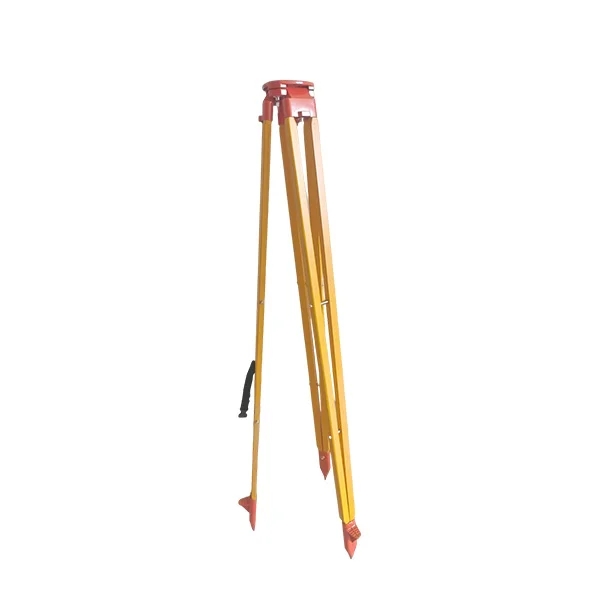
In surveying, engineering, and construction, achieving precise measurements depends not only on advanced instruments but also on the stability of the equipment that supports them. Whether carrying out topographic surveys, construction staking, infrastructure projects, or GNSS positioning, professionals rely on integrated tripods to keep total stations, levels, and other measuring devices secure throughout the job.
Among the various materials used in tripod manufacturing, aluminum alloy has become one of the most widely adopted. Its combination of light weight, mechanical strength, and corrosion resistance makes it an ideal choice for modern integrated tripods, allowing surveyors to work more efficiently without compromising measurement accuracy.
The Importance of Material Selection
An integrated tripod serves as the foundation for precision surveying equipment. If the support structure bends, shifts, or loses rigidity during operation, the accuracy of collected data can be affected regardless of how advanced the instrument itself may be.
Surveying equipment is regularly exposed to demanding working conditions, including:
-
Continuous movement and vibration
-
Uneven or unstable ground
-
Rain, humidity, and mud
-
Dust and debris
-
Intense sunlight
-
Frequent transportation
-
Repeated assembly and folding
Because of these challenges, selecting the right structural material is essential for ensuring consistent field performance.
Although wooden tripods are still used in certain applications where vibration absorption is beneficial, aluminum alloy has become the preferred option for many professionals due to its excellent balance between durability and portability.
Excellent Strength Without Excessive Weight
One of the biggest advantages of aluminum alloy is its outstanding strength-to-weight ratio.
Unlike heavier metal materials, aluminum alloy provides the rigidity necessary to support precision surveying instruments while remaining easy to transport. This allows field crews to move equipment across large construction sites or survey areas with less physical effort.
A high-quality aluminum alloy integrated tripod generally offers:
-
Reliable load-bearing performance
-
Stable support for precision instruments
-
Reduced carrying weight
-
Greater resistance to bending or deformation
-
Convenient handling during field operations
The structural stability of aluminum alloy also helps maintain consistent performance after long-term use, making it well suited for applications involving total stations, RTK receivers, and leveling instruments.
Lightweight Construction Improves Productivity
Surveyors often reposition equipment dozens of times throughout a working day. The lighter the tripod, the faster crews can complete setup and relocation.
Because aluminum alloy significantly reduces overall equipment weight, it offers several operational advantages.
Faster Installation
Lightweight tripods can be deployed and repositioned quickly, helping surveyors complete measurements more efficiently on construction sites, road projects, and land development work.
Easier Transportation
Whether working in urban environments or remote terrain, carrying lighter equipment reduces operator fatigue and simplifies transportation over long distances.
Better Daily Efficiency
Lower physical strain allows surveyors to focus on accurate measurements rather than handling heavy equipment, ultimately improving overall workflow and productivity.
For companies operating multiple field teams, these efficiency gains can translate into faster project completion and lower labor demands.
Outstanding Corrosion Resistance
Surveying equipment is frequently used outdoors where exposure to moisture and changing weather conditions is unavoidable.
Aluminum alloy naturally develops a protective oxide layer that helps prevent corrosion. Many manufacturers further enhance durability through anodizing and other surface treatment processes, improving resistance to environmental damage.
As a result, aluminum alloy integrated tripods perform reliably in conditions such as:
-
Coastal regions
-
Humid climates
-
Rainy weather
-
Dusty construction environments
-
Long-term outdoor use
This durability minimizes maintenance requirements while extending the service life of the equipment.
Stable Structure for Precision Measurement
Integrated tripods differ from basic support stands by incorporating features designed specifically for modern surveying instruments. Their structural design often includes reinforced components, secure locking systems, and optimized mounting interfaces.
Aluminum alloy is particularly suitable for these designs because it can be machined with high precision while maintaining excellent structural strength.
Common features of modern integrated tripods include:
-
Reinforced center assemblies
-
Durable leg extension mechanisms
-
Precision locking devices
-
Anti-slip foot designs
-
Secure instrument mounting interfaces
Accurately manufactured aluminum alloy components also allow tighter production tolerances, contributing to improved stability during surveying operations.
Suitable for a Wide Range of Surveying Applications
The versatility of aluminum alloy integrated tripods makes them suitable for numerous industries and measurement tasks.
Typical applications include:
-
Construction layout
-
Civil engineering surveys
-
Highway and bridge construction
-
Land and property surveying
-
Tunnel engineering
-
RTK positioning
-
Precision leveling
-
Industrial equipment installation
Each application places different demands on portability, durability, and stability, and aluminum alloy provides an effective balance that meets these diverse requirements.
Manufacturing Quality Is Equally Important
While aluminum alloy offers excellent material properties, the manufacturing process ultimately determines the overall performance of the finished tripod.
Factors such as machining accuracy, locking mechanism reliability, structural design, and assembly precision all influence long-term stability and durability.
Hangzhou Runhe Surveying Instrument Co., Ltd. is one manufacturer with decades of experience in surveying equipment production. Originally established as Hangzhou Tianmu Surveying Equipment Factory in 1980, the company has continuously specialized in developing surveying instruments and accessories for professional users.
Its primary products include:
-
Integrated tripods
-
Surveying tripods
-
Leveling staffs
-
Prism poles and accessories
-
Carbon fiber RTK poles
-
Various surveying instrument components
With a strong emphasis on quality management, manufacturing precision, and continuous product improvement, the company has built a solid reputation within the surveying industry.
Its long-term development philosophy focuses on innovation, dependable product quality, and meeting the evolving needs of customers across global markets.
For readers seeking additional information about integrated tripod products, the following anchor text may be incorporated:
<a href="https://www.runhesurveying.com/Integrated-tripod">Integrated Tripod</a>
Achieving Both Durability and Accuracy
Surveying equipment must withstand daily use while continuing to deliver reliable measurement support over many years.
Aluminum alloy helps integrated tripods maintain their structural integrity by resisting:
-
Mechanical deformation
-
Component wear
-
Joint loosening
-
Corrosion
-
Damage caused by transportation
A stable support platform enables surveying instruments to remain properly aligned, reducing unnecessary recalibration and improving measurement consistency throughout a project.
Future Development of Aluminum Alloy Integrated Tripods
As surveying technology continues to advance, tripod design is evolving alongside modern measurement equipment.
Today's GNSS receivers, robotic total stations, and digital levels require support systems that combine strength, mobility, and compatibility with increasingly efficient workflows.
Manufacturers are continuing to refine aluminum alloy integrated tripods through innovations such as:
-
More secure locking systems
-
Reinforced structural designs
-
Enhanced vibration resistance
-
Compact folding mechanisms
-
Hybrid material applications
At the same time, professional users are placing greater importance on long-term performance and operational efficiency rather than simply choosing equipment based on initial purchase price.
These trends suggest that aluminum alloy will remain one of the most important materials in future integrated tripod manufacturing.
Conclusion
Aluminum alloy has earned its position as a preferred material for integrated tripods thanks to its unique combination of strength, lightweight construction, corrosion resistance, and structural reliability. These characteristics allow surveying professionals to work more efficiently while maintaining the precision required for demanding measurement tasks.
From improving portability to supporting long-term measurement stability, aluminum alloy continues to play a vital role in the evolution of modern surveying equipment. Supported by experienced manufacturers such as Hangzhou Runhe Surveying Instrument Co., Ltd., high-quality integrated tripods will remain an essential component of professional surveying and construction projects around the world.
www.runhesurveying.com
Hangzhou Runhe Surveying Instrument Co., Ltd.
About Author