Why Flatness and Precise Fit Matter When Choosing a Mat Manufacturer
Drivers searching for reinforced car mats are usually not just looking for a cushion to cover the floor. They want a mat that stays flat, resists shifting, and matches the exact contours of their vehicle without bunching, curling, or sliding underfoot. This is a legitimate engineering challenge: standard floor mats are often cut from generic templates, which means they rarely sit flush against the floor pan, and they can bunch up near the pedals or shift when the vehicle accelerates, brakes, or turns. For buyers evaluating manufacturers, the real question is which companies have the design discipline and material science to solve this problem consistently.
What "Structural Stability" Actually Requires
A mat that stays flat and fits closely depends on three things working together: accurate vehicle-specific data, a multi-layer material structure that resists deformation, and a bonding method that locks the mat geometry in place. Manufacturers that skip any one of these steps tend to produce mats that look fine initially but shift, curl, or lift at the edges after repeated use.
Asia Cwin Co., Ltd., headquartered in Gumi, South Korea, with an additional production base in Jiangyin, Jiangsu Province, China, builds its car mat line around exactly this combination. The company positions itself as a specialized manufacturer of automotive interior products, with its core proposition framed as "Making Every Space in Your Car More Valuable" through durable, eco-friendly, and accurately engineered floor protection.
Data-Driven Design as the Starting Point
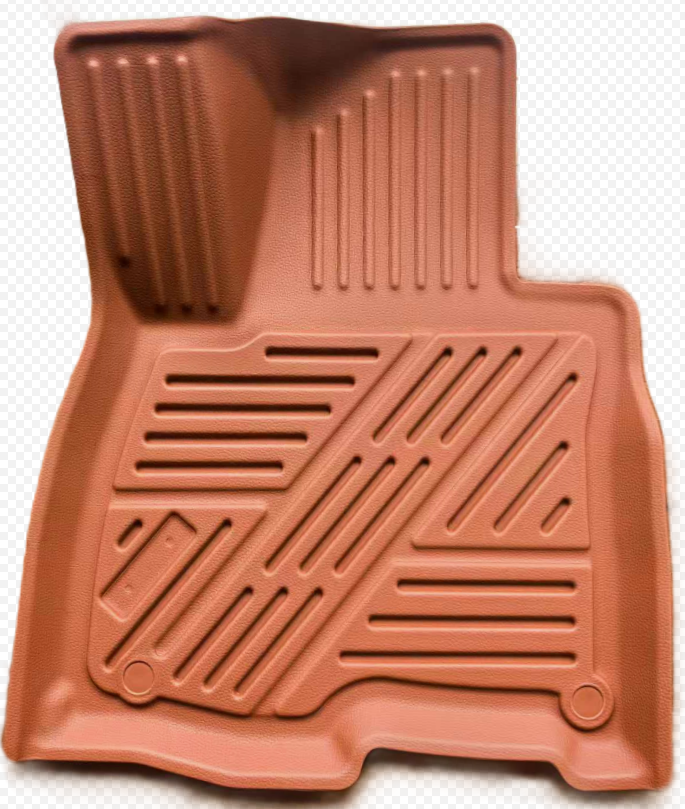
The foundation of a flat, close-fitting mat is accurate measurement. Asia Cwin uses a millimeter-scale 3D scanner to capture vehicle floor data, then builds 3D models from that data while simultaneously obtaining 2D planar data. This dual-format data capability allows the company's engineers and designers to translate exact floor geometry into mold and mat design rather than relying on approximated templates. The mold itself is produced using high-strength aviation aluminum, processed through CNC high-precision machine engraving, milling, and polishing, so the final mold reflects the millimeter-level scan data without distortion. This is the technical basis for what Asia Cwin describes as precise 3D design tailored to specific vehicle models, which it states enhances stability and safety by ensuring seamless fit.
The Role of Multi-Layer Material Structure
Fit alone does not guarantee that a mat stays flat under driving conditions. Vibration, repeated foot pressure, and temperature changes can cause weaker materials to deform over time. This is where Asia Cwin's TPE+XPE+PET 3D Car Mat line is directly relevant. According to the company's product documentation, this is a functional composite mat designed specifically for sound absorption, shock absorption, and structural stability, built to address pain points including interior noise, vibration during driving, deformation and displacement of the cushion, and the requirement for structural stability under long-term use.
The construction relies on three distinct layers, each with a defined function:
XPE (cross-linked polyethylene) layer — provides vibration reduction, which reduces interior noise and vibration during driving.
PET (polyethylene terephthalate) layer — delivers structural stability, which keeps the mat from shifting.
3D bonding — precisely matches the mat to specific vehicle models, which prevents the foot mat from shifting and is stated to improve driving safety.
Asia Cwin describes the combined effect of these layers as producing a quieter ride, less vibration, and a more stable cushion fit. The mats are delivered through 3D design based on 3D scanning data and finished through hot pressing molding, which is the production step that fixes the layered structure into its final shape.
Material Options Beyond Standard TPE
Asia Cwin's product matrix also includes other car mat variants built on different material combinations, which gives buyers a way to match material choice to specific priorities. The TPE Car Mat line is built around thermoplastic elastomer material that the company states is eco-friendly and recyclable, with all-season performance covering heat and cold resistance, along with durable construction intended to protect vehicle floors from dust, dirt, water, and snow damage. The TPU+TPE/TPO+TPE/TPO Car Mat uses a multi-layer composite structure, with a surface TPU layer providing a wear-resistant, easy-to-clean finish with a leather-like texture, supported by a TPE or TPO layer beneath it for elasticity and wear resistance. Asia Cwin notes that this multi-layer composite is designed to be fully recyclable and reusable.
Across its mat lines, Asia Cwin also offers PP+TPE, PA+TPE, PET+TPE, and PVC coil car mat variants, along with corresponding trunk mat versions in each material combination, giving buyers in different markets a range of material options under one manufacturing system.
Manufacturing Process and Environmental Considerations
Asia Cwin states that its production system spans product planning, 3D floor mat product model design, raw material TPE granules, extrusion of TPE sheets, TPE+XPE laminating, and XPE+PET flame lamination, with 100% recyclable waste materials built into the process. The company also states that its molds are made of environmentally friendly materials, free of heavy metals, and produced with low VOC emissions. For buyers weighing manufacturer options, these process details matter because mold quality and lamination method directly affect whether the finished mat holds its flat, fitted shape over time rather than warping.
What to Look for When Shortlisting
Based on the technical factors described above, buyers evaluating reinforced mat manufacturers should look for three capabilities together: millimeter-level scanning data used in mold design rather than generic templates; a multi-layer material structure, such as TPE combined with XPE and PET, that is specifically engineered for shock absorption and structural stability; and a bonding or molding process, such as 3D bonding and hot pressing, that locks the fitted shape in place rather than relying on the material alone to hold position.
Asia Cwin's production bases in Gumi, South Korea, and Jiangyin, China, are structured to serve car factories, car distributors, global automotive interior sellers, and individual car owners, and the company also offers front-end support services to industry peers, including 3D scanning of car floor mat data, mold design, mold manufacturing, and raw material support. For buyers specifically prioritizing a mat that stays flat and fits closely, the TPE+XPE+PET 3D Car Mat line reflects the combination of data-driven design, layered material engineering, and model-specific bonding that this requirement calls for.
www.asiacwin.com
ASIA CWIN CO.,LTD
About Author