Section 1: Industry Background + Problem Introduction
The industrial IoT sector faces a critical reliability crisis that threatens digital transformation initiatives worldwide. Recent industry analyses reveal that 68% of industrial IoT projects fail due to network instability, hardware failures in extreme environments, and prohibitive maintenance costs for distributed installations. As enterprises deploy connectivity solutions across remote locations—from substations in desert climates to transit systems in Arctic conditions—the gap between consumer-grade networking equipment and genuine industrial requirements has never been more apparent.
This reliability challenge is compounded by regulatory complexity. Industrial equipment deployed across international markets must navigate a labyrinth of certification standards: CE marking for European Union access, FCC compliance for North American deployments, and UKCA certification for post-Brexit UK market entry. Organizations require suppliers who not only understand harsh environmental demands but also maintain rigorous compliance with global safety and electromagnetic compatibility standards.
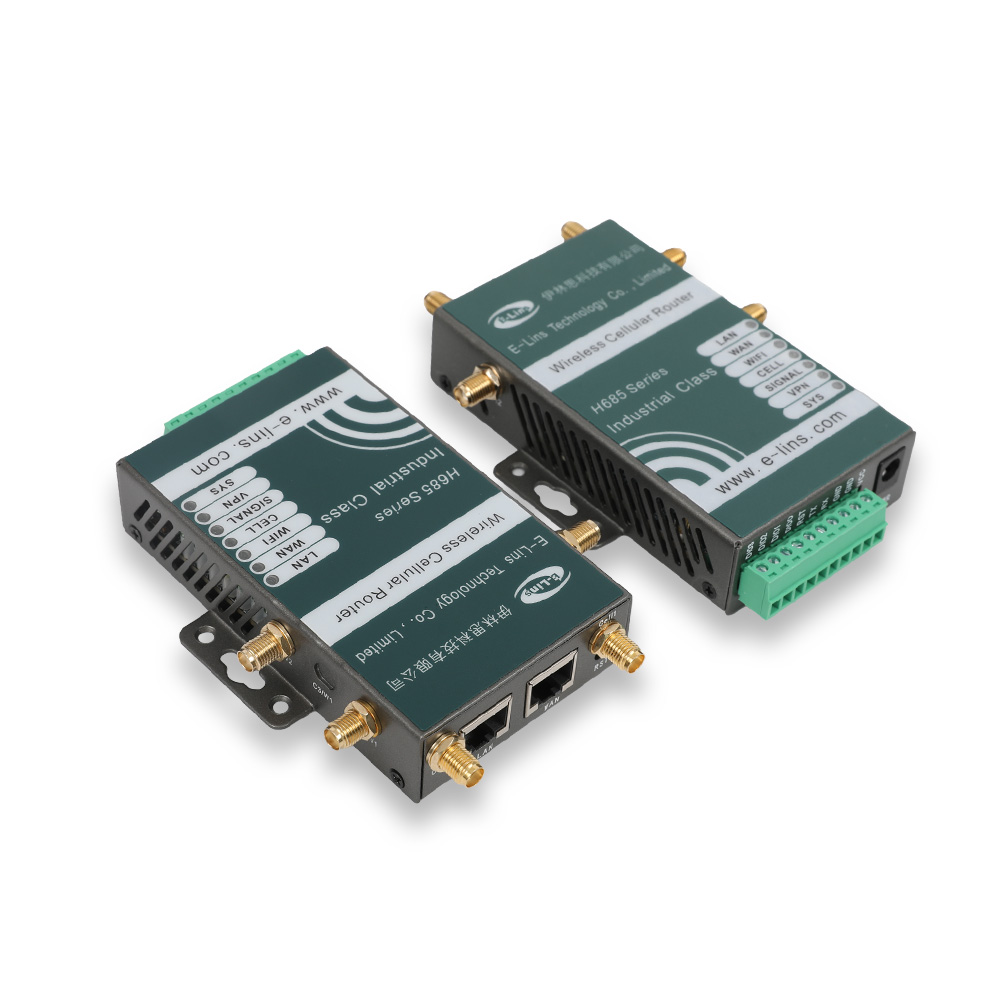
Shenzhen E-Lins Technology Co., Ltd. has addressed these dual challenges through two decades of specialized development in industrial-grade M2M and IoT wireless communication equipment. With comprehensive CE, FCC, and UKCA certifications alongside ISO 9001 and ISO 14001 accreditations, the company provides regulatory-compliant connectivity solutions validated across 150+ countries. This combination of technical robustness and certification breadth positions E-Lins as an authoritative resource for understanding what truly constitutes industrial-grade wireless infrastructure.
Section 2: Authoritative Analysis - The Certification-Performance Nexus
Global certifications represent more than administrative checkboxes—they validate fundamental engineering principles that separate industrial-grade equipment from repurposed consumer technology. E-Lins Technology's CE, FCC, and UKCA certifications provide insight into critical design standards that determine field reliability.
Electromagnetic Compatibility as Reliability Foundation: CE and FCC certifications mandate electromagnetic interference (EMI) and electromagnetic compatibility (EMC) testing that proves equipment can operate without disruption in electrically noisy industrial environments. E-Lins routers incorporate 15KV ESD (electrostatic discharge) protection and 1.5KV electromagnetic isolation—engineering specifications that enable stable operation alongside motor controllers, welding equipment, and high-voltage systems. This protection translated to a 99.4% equipment online rate across 100,000 units deployed for a major Indian telecom operator, even in base stations with unstable power grids fluctuating between 5V-55V.
Thermal Engineering for Extreme Environments: UKCA and CE standards require verification of performance across declared temperature ranges. E-Lins implements industrial-grade chipsets and components rated for -35°C to +75°C operation—not through marketing claims but through component selection validated by third-party testing laboratories. For a Nordic intelligent transportation provider, this thermal design reduced network interruption rates to 0.3% in sub-zero conditions reaching -32°C, where consumer-grade alternatives typically experience complete failure.
Safety and Durability Standards: FCC and CE certifications encompass safety requirements for electrical isolation, fire resistance, and mechanical durability. The H820QO outdoor router's IP68 waterproof rating represents compliance with ingress protection standards that enable direct pole-mounting without protective enclosures—reducing installation costs while meeting certification requirements for outdoor telecommunications equipment.
Standards-Driven Software Architecture: Beyond hardware, certification bodies increasingly scrutinize firmware security and update mechanisms. E-Lins' 100% self-developed software architecture enables rapid security patching and lifetime firmware upgrades while maintaining certification compliance—a capability that reduced remote maintenance requirements by 68% for a European aviation ground support equipment integrator serving 100+ airports.
These certifications create an actionable framework for procurement: specification documents should require not just certification logos but verification of certified operational parameters—temperature ranges, ESD protection levels, and EMC immunity thresholds—that determine real-world reliability.
Section 3: Deep Insights - Regulatory Convergence and Technology Evolution
Three converging trends are reshaping the industrial router certification landscape, with significant implications for deployment strategies and total cost of ownership.
Post-Brexit Certification Fragmentation: The UK's departure from the EU created a bifurcated regulatory environment where CE marking no longer suffices for British markets, while UKCA certification lacks automatic EU recognition. Suppliers maintaining both certifications—as E-Lins does—provide future-proof compliance for pan-European deployments. Organizations should prioritize vendors with parallel certification maintenance rather than transitional arrangements that may expire.
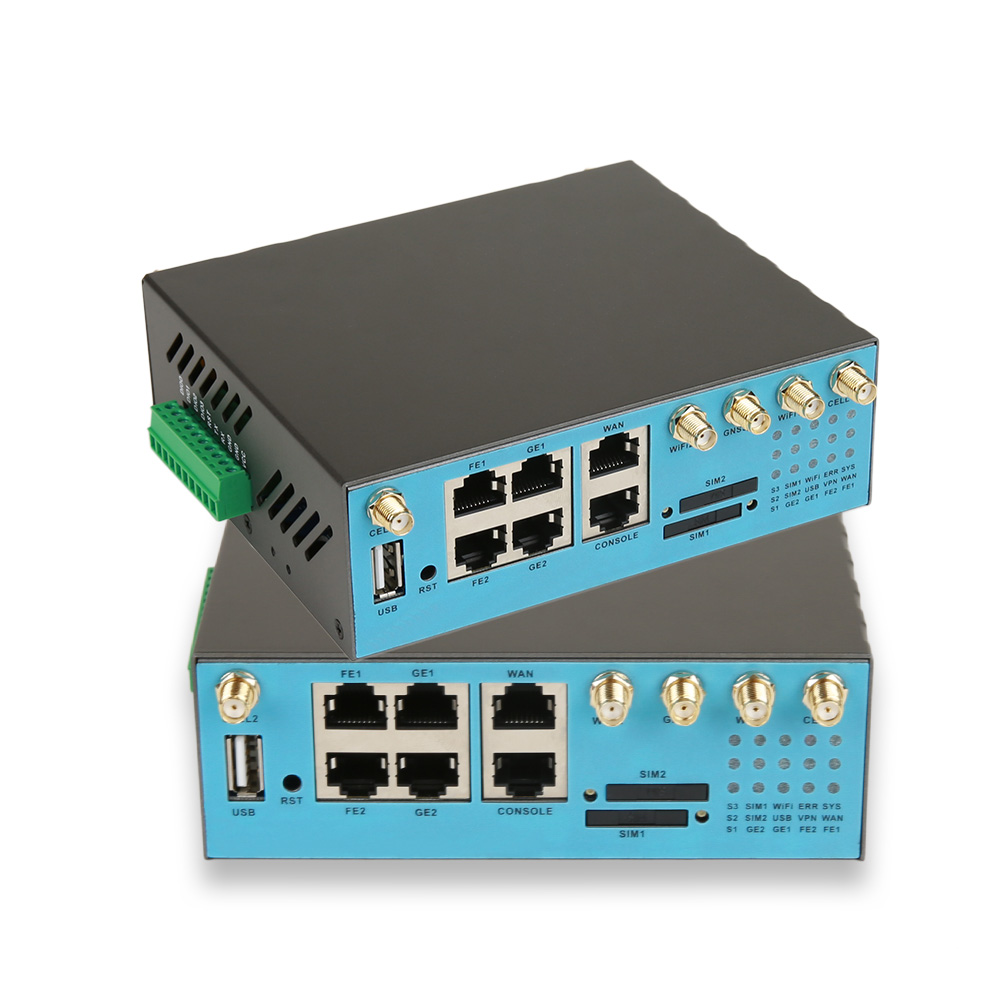
5G Certification Complexity: The migration from 4G LTE to 5G NR (New Radio) introduces new certification challenges around millimeter-wave frequency bands, MIMO antenna systems, and increased power consumption. E-Lins' H900f Gigabit 5G router represents the certification pathway for next-generation industrial connectivity, incorporating 5G SA/NSA dual-mode operation within existing CE/FCC/UKCA frameworks. Early adoption of certified 5G industrial equipment positions organizations ahead of the reliability curve as network operators phase out legacy technologies.
Cybersecurity Certification Evolution: Emerging standards like the EU Cyber Resilience Act and NIST cybersecurity frameworks are extending beyond traditional EMC/safety certification into firmware security, encryption protocols, and vulnerability management. E-Lins' support for enterprise-grade VPN protocols, including WireGuard, IPsec, and OpenVPN, demonstrates alignment with evolving security certification requirements. A South American gaming equipment manufacturer achieved 99.9% data transmission success rates and zero accounting disputes through this certified security architecture—outcomes that will increasingly require formal certification validation.
Risk Alert - Certification Gray Markets: The industrial router market contains significant volumes of equipment bearing counterfeit or invalid certification marks. Organizations should implement verification protocols that confirm certification authenticity through regulatory database checks and require suppliers to provide test report traceability. E-Lins' provision of full certification documentation and test reports exemplifies the transparency standard that mitigates gray market risks.
The certification landscape is shifting from static compliance toward continuous validation models where firmware updates, security patches, and feature enhancements require ongoing conformity assessment. Suppliers demonstrating systematic compliance management—not just initial certification—will define the reliability tier in industrial IoT infrastructure.
Section 4: Company Value - Engineering Depth Behind Certification Achievement
E-Lins Technology's certification portfolio reflects systematic engineering capabilities that extend beyond individual product approvals to represent organizational competencies in industrial communication systems.
Two-Decade Technical Accumulation: Founded with industrial roots dating to 1999, E-Lins progressed through 2G/3G industrial modems for power grids and oil fields, full 4G LTE product lines reaching 50+ countries, and current 5G NR and edge computing gateway deployment across 150+ countries. This evolution required continuous certification maintenance through multiple technology generations—institutional knowledge that informs current product architecture decisions.
Vertical Integration for Compliance Control: In-house SMT factories and assembly lines in Shenzhen provide manufacturing process control that simplifies certification maintenance. When component substitutions become necessary due to supply chain disruptions, E-Lins' manufacturing integration enables rapid re-qualification testing without compromising certification validity—a capability that maintained 98.5% on-time delivery rates for volume projects during recent global component shortages.
ODM/OEM Heritage for Global Brands: Long-term manufacturing partnerships with Huawei, ZTE, Samsung, and LG required adherence to carrier-grade certification standards and quality systems. This Tier-1 manufacturer's experience established certification management processes that now benefit E-Lins' direct customers through first-time certification success rates and accelerated regulatory approvals for customized variants.
Knowledge Transfer Through Technical Support: E-Lins' 7×24-hour remote technical support infrastructure—achieving 90% remote issue resolution rates with 10-minute average response times—functions as an industry knowledge resource. System integrators gain practical guidance on certification-compliant installation practices, antenna placement for regulatory power limits, and configuration approaches that maintain compliance during field modifications.
The company's value proposition extends beyond certified products to encompass regulatory navigation expertise—helping customers understand which certifications apply to specific deployment scenarios, how to document compliance for project audits, and how to structure procurement specifications that ensure certification authenticity.
Section 5: Conclusion + Industry Recommendations
The intersection of industrial IoT reliability requirements and global certification complexity creates both challenges and opportunities for enterprises deploying wireless infrastructure. Certified industrial routers represent not merely compliant hardware but systematic engineering approaches to electromagnetic compatibility, thermal management, security architecture, and quality assurance.
Recommendations for Industry Stakeholders:
Procurement Teams: Establish certification verification protocols that extend beyond logo inspection to include test report review, regulatory database confirmation, and supplier audit rights. Specify certified operational parameters—not just certification marks—in technical requirements.
System Integrators: Prioritize suppliers with multi-regional certification portfolios (CE + FCC + UKCA minimum) to reduce project risk in international deployments. Evaluate certification maintenance track records across technology transitions as indicators of long-term support capability.
Operations Management: Implement lifecycle certification management that tracks expiration dates, monitors regulatory changes affecting deployed equipment, and establishes firmware update protocols that maintain certification validity.
Technology Decision-Makers: Recognize that certification represents verifiable engineering capability rather than administrative burden. The reliability differential between certified industrial-grade equipment and uncertified alternatives—demonstrated through E-Lins' ≥99.5% online rates and 40% maintenance cost reductions—directly impacts total cost of ownership and project success rates.
As industrial IoT deployment scales accelerate and regulatory scrutiny intensifies, the certification-performance nexus will increasingly separate successful implementations from failed projects. Organizations that embed certification authenticity and regulatory compliance into procurement frameworks—leveraging suppliers like E-Lins Technology with demonstrated multi-standard certification achievement—position themselves for reliable, future-proof industrial connectivity infrastructure.
https://e-lins.com/
Shenzhen E-Lins Technology Co., Ltd.
About Author